








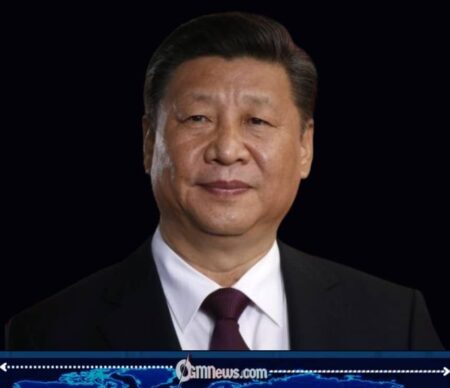
Multipolar Order discussions intensified this week after Chinese President Xi Jinping reportedly asserted that the world can move on without the United States, a statement widely interpreted as a direct reflection of Beijing’s growing confidence in reshaping global power dynamics. While the remark itself was concise, its implications were enormous, immediately sparking reactions across diplomatic, economic, and political circles already watching the increasingly tense relationship between China and the United States.
The statement aligns closely with China’s long-running campaign to promote what it describes as a fairer international system less dependent on Washington’s influence. Beijing has consistently argued that global governance, trade systems, and international partnerships should not revolve around a single superpower. Supporters of China’s position view the message as a call for balance in global affairs, while critics interpret it as an unmistakable attempt to weaken American leadership and elevate China as the alternative center of influence.
China’s push for a Multipolar Order has gained visibility through organizations and alliances that challenge Western dominance in finance and diplomacy. China has expanded its role within BRICS while strengthening partnerships across Africa, the Middle East, Latin America, and parts of Asia through infrastructure financing, trade agreements, and energy cooperation. Beijing’s Belt and Road Initiative has also become a major symbol of its broader geopolitical ambitions, though some participating countries have expressed concerns about debt exposure and long-term dependence on Chinese financing.
At the same time, the United States remains deeply embedded in the global economy despite repeated predictions of decline. The U.S. dollar still dominates international trade and reserve banking, American military alliances continue to shape global security structures, and U.S.-based technology firms maintain enormous international influence. Analysts note that while China’s rise is undeniable, replacing America’s global role entirely would require more than economic expansion; it would demand widespread trust in Chinese institutions, governance systems, and long-term political stability.
China: Beijing Suggests the United States Has Become Replaceable
United States officials and Western analysts have increasingly framed China’s rhetoric as part of a broader strategic contest over the future direction of global governance. In recent years, tensions between Beijing and Washington have expanded beyond trade disputes into technology restrictions, military positioning in the Indo-Pacific region, semiconductor competition, and diplomatic rivalry over influence in developing nations. Xi Jinping’s remarks therefore arrive within an already charged geopolitical environment where nearly every public statement carries symbolic weight.
China’s leadership has frequently promoted the idea that nations should diversify partnerships and avoid overreliance on Western economies. Some countries, particularly within the Global South, have welcomed this message as an opportunity to gain leverage and reduce vulnerability to sanctions or external pressure tied to Western financial systems. Others remain cautious, arguing that replacing one dominant power with another may not necessarily create a more balanced world order. In many capitals, the debate is less about choosing sides and more about securing strategic flexibility in an increasingly divided global landscape.
Economic realities also complicate the political rhetoric. Despite ongoing rivalry, the Chinese and American economies remain deeply interconnected through manufacturing, trade, investment, and consumer markets. Global supply chains still depend heavily on cooperation between both nations, meaning any serious attempt at complete separation would likely produce widespread economic disruption far beyond Beijing or Washington. This reality has created an unusual international atmosphere where governments publicly compete while remaining privately dependent on one another.
The public reaction online has been equally revealing. While geopolitical experts debated the long-term consequences of Xi’s statement, social media users transformed the moment into a wave of memes, jokes, and satirical commentary about the “world’s biggest breakup.” Some users joked that global politics now resembles a reality television finale where every country is trying to decide whether to stay loyal to America, switch alliances, or quietly avoid the argument altogether.
For now, Xi Jinping’s remarks have achieved one immediate result: they forced the global conversation back toward the question of who will shape the next era of international leadership. Whether the future truly becomes a Multipolar Order or remains centered around the United States, the rivalry between Washington and Beijing is increasingly defining the political and economic direction of the modern world. OGM News will continue monitoring developments as world powers navigate a rapidly shifting balance of influence.
https://shorturl.fm/5TtQZ