






















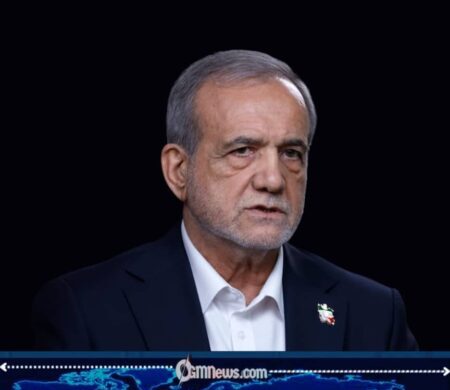
Iranian President Masoud Pezeshkian has appealed to citizens across Iran to reduce electricity consumption, describing energy conservation as a necessary national response during a period of mounting pressure on the country’s infrastructure. In a public address, Pezeshkian asked households to consider using fewer lights and less power in daily life.
The president framed the request as a simple but important contribution to national resilience. He argued that small changes in individual homes could collectively ease pressure on the country’s power grid at a time when electricity demand remains high.
Pezeshkian remarks come as Iranian officials warn that damage to infrastructure and external pressure are placing additional strain on already fragile domestic systems.
Claims of Foreign Pressure on Infrastructure
Pezeshkian said the United States and Israel have targeted Iranian infrastructure as part of a broader effort to weaken the country economically and politically. He accused both governments of attempting to isolate Iran by placing pressure on critical services.
Iranian officials have increasingly argued that attacks on infrastructure are intended to create hardship for ordinary citizens rather than simply damage strategic facilities. The government says such actions are aimed at reducing public confidence in national institutions.
While the United States and Israel have not publicly confirmed responsibility for the specific incidents mentioned by Pezeshkian, the accusations have added to already heightened regional tensions.
A Longstanding Energy Challenge
Iran has faced periodic electricity shortages for several years due to rising domestic demand, aging transmission systems, and underinvestment in parts of the energy sector. Seasonal spikes in consumption have often led to temporary outages in urban areas.
Experts say the country’s power network has become more vulnerable as sanctions and economic restrictions have complicated efforts to modernize infrastructure. This has made the energy system increasingly sensitive during periods of political or military strain.
Pezeshkian’s appeal suggests the government is attempting to manage the situation through public cooperation before introducing more restrictive measures.
Public Cooperation as a National Strategy
Rather than immediately imposing broad rationing, Iranian authorities appear to be encouraging voluntary reductions in electricity use. Officials believe widespread public participation could help reduce pressure on the national grid in the short term.
Pezeshkian’s message focused on the idea that ordinary citizens can play a direct role in stabilizing the country during a difficult period. By emphasizing household choices, the government is framing conservation as a civic responsibility.
State media have echoed that message, portraying energy saving as part of a broader effort to maintain domestic stability during a time of uncertainty.
Regional Tensions Shape Domestic Policy
The energy appeal comes against the backdrop of continuing tensions between Iran and its regional rivals. Recent months have seen increased rhetoric and security concerns involving both Washington and Tel Aviv.
Iranian officials have repeatedly linked domestic disruptions to international pressure, arguing that foreign governments are using economic and infrastructure strain as part of a wider strategy against Tehran.
Although electricity conservation may appear to be a domestic issue, the president’s remarks show how closely internal policy has become tied to regional geopolitical developments.
What the Appeal Could Mean Going Forward
Pezeshkian’s statement highlights the growing challenge of balancing public needs with national security concerns. If infrastructure pressure continues, the government may be forced to consider stronger measures to protect the energy system.
Analysts say public reaction to the conservation appeal could become an important indicator of confidence in the new administration’s ability to manage crisis conditions. Much may depend on whether citizens view the request as practical or political.
For now, the president’s message signals that Iran is preparing its population for a period in which everyday household behavior could become part of a larger national strategy.

https://shorturl.fm/OuQpG