




















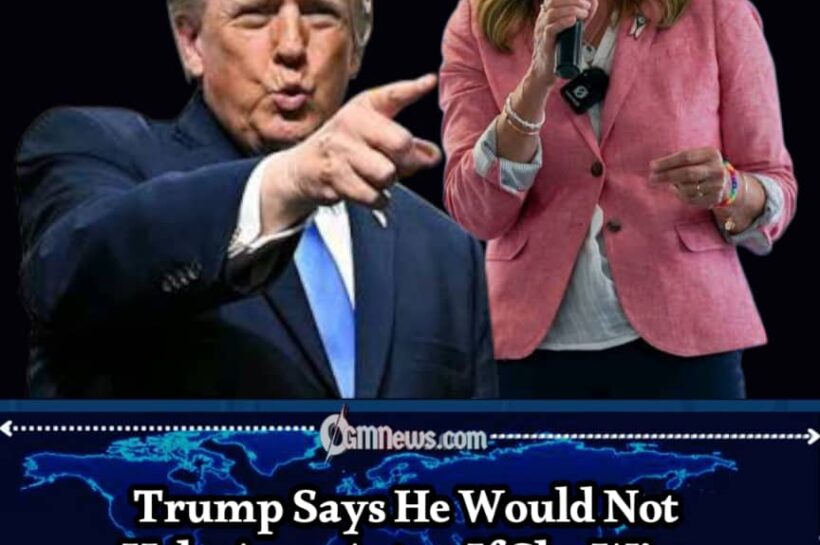



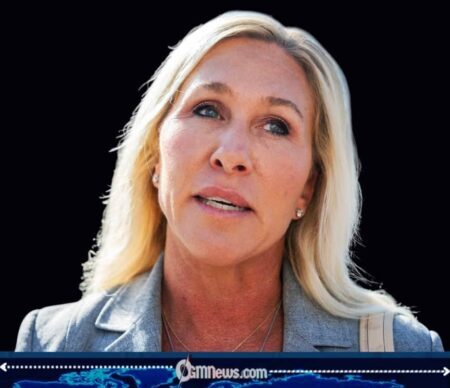
Representative Marjorie Taylor Greene has revealed that President Donald Trump, currently serving a second term in office, called her a “traitor,” exposing an unexpected fracture between two figures once seen as closely aligned within the Republican Party. Greene, long regarded as one of the president’s most outspoken defenders in Congress, said the accusation came after she raised concerns about the administration’s priorities.
Responding publicly, Greene challenged the meaning of the word itself, declaring that a traitor is “an American that serves foreign countries.” Her remarks immediately drew national attention because they suggested that a dispute once confined to policy differences had evolved into a more personal and ideological confrontation.
The exchange has become one of the most closely watched internal conflicts within the conservative movement, raising questions about political loyalty and the future direction of the “America First” coalition.
From Strong Alliance to Public Disagreement
For years, Greene was considered one of President Trump’s most dependable allies on Capitol Hill. She frequently defended his policies, repeated his messaging, and positioned herself as one of the clearest voices of the populist wing of the Republican Party.
That relationship appeared to shift as Greene began voicing frustration with what she viewed as growing inconsistencies in the administration’s domestic and foreign policy positions. While she continued to support much of the president’s agenda, her criticism became increasingly visible in recent months.
Political analysts say the relationship changed from unquestioned loyalty to a more complicated dynamic, where Greene began asserting her own political identity apart from the White House.
Greene’s Definition of Political Loyalty
Greene’s response to the accusation reflected a broader argument about national priorities. By saying that a traitor is someone who “serves foreign countries,” she appears to suggest that American leaders should focus more heavily on domestic concerns before international commitments.
Her statement resonated among some conservative voters who believe Washington has become too focused on overseas conflicts while neglecting economic pressure, border security, and internal social challenges. Supporters of Greene argue that her remarks reflect frustration shared by parts of the Republican base.
Critics, however, say the language risks deepening division within the party by turning policy disagreements into questions of patriotism and personal loyalty.
Foreign Policy at the Center of the Rift
Several reports suggest foreign policy may be at the center of the growing dispute. Greene has recently questioned the administration’s handling of international conflicts and has expressed concern that some decisions could pull the United States into deeper global entanglements.
Her remarks appear to reflect a wider debate within the Republican Party over how the “America First” doctrine should be applied during President Trump’s second term. Some members support a more assertive international posture, while others favor a more restrained approach.
The disagreement highlights how foreign policy has become an increasingly sensitive issue inside a movement that once appeared united under a single political message.
Reactions Across Washington
The clash has generated an immediate reaction across Washington. Some Republicans have downplayed the disagreement, describing it as a temporary dispute between two strong personalities with largely shared political goals.
Democrats, meanwhile, have pointed to the exchange as evidence of growing tension inside the Republican coalition. Some lawmakers argue the dispute reflects deeper uncertainty about the direction of the administration and its relationship with traditional supporters.
Observers say the public nature of the disagreement makes it especially significant because internal conflicts within political movements are often handled privately rather than through open confrontation.
What the Dispute Could Mean Going Forward
Political strategists say the rift between Greene and President Trump may have wider implications beyond the immediate headlines. Greene remains influential among grassroots conservatives, and her criticism could resonate with voters who are questioning aspects of the administration’s current direction.
Some analysts believe the conflict may be temporary and eventually resolved, given the political overlap between both figures. Others suggest it could signal a larger struggle over who defines the next phase of conservative politics in America.
Whether the disagreement fades or grows, it has already revealed that even within one of the country’s most disciplined political movements, loyalty can become complicated when policy differences begin to surface.
[…] […]