










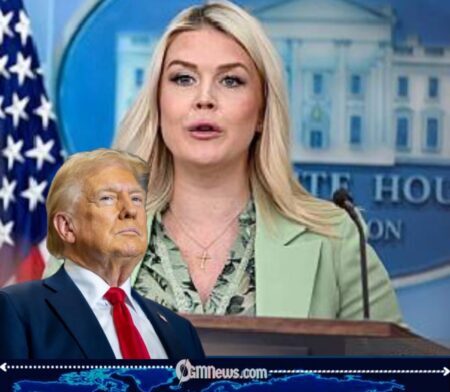
Whitehouse Secretary Karoline Leavitt has drawn national attention after questioning why some Americans continue to express skepticism toward the promises of Donald Trump. Her remarks have reignited discussion on political trust, voter expectations, and the relationship between leadership communication and public confidence.
Leavitt’s comments come at a time when debates over credibility and accountability remain central in American politics. She suggested that despite repeated policy messaging from the administration, a portion of the public remains unconvinced.
The statement has prompted renewed analysis among political observers, who view it as part of a broader conversation about how trust is formed and maintained in modern governance.
Leavitt Questions Continued Public Doubts
Whitehouse Secretary Karoline Leavitt, speaking in a recent exchange, questioned why skepticism toward presidential promises persists among segments of the American public. She noted that official communications from the administration consistently outline policy goals and priorities.
Her remarks focused on what she described as a gap between policy messaging and public perception. According to Leavitt, this disconnect raises important questions about how political information is received and interpreted.
Supporters of Leavitt argue that her comments reflect frustration over what they see as persistent distrust despite ongoing policy efforts. Critics, however, say her framing underestimates the reasons behind voter skepticism.
Public Trust and Political Experience at the Center of Debate
Political analysts note that skepticism toward government promises is not unusual, especially in highly polarized environments. Many citizens base their trust on long-term experiences rather than short-term statements.
In this context, Whitehouse Secretary Karoline Leavitt’s remarks highlight a broader challenge: aligning political messaging with public expectations. Experts suggest that trust is typically built through consistent outcomes rather than communication alone.
The discussion reflects ongoing tensions between government institutions and segments of the electorate who remain cautious about political assurances.
Trump’s Policy Record Revisited in Public Discussion
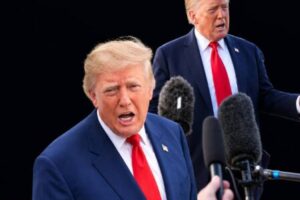
The debate has also brought renewed attention to President Donald Trump’s governance style during his second term. Supporters argue that his administration continues to advance its policy agenda across domestic and international priorities.
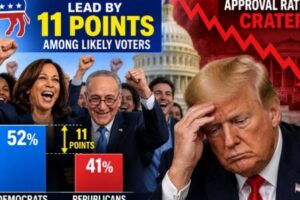
However, critics point to past policy shifts and unmet expectations as reasons for continued skepticism. They argue that historical performance plays a significant role in shaping present-day trust.
This divergence in interpretation illustrates the broader polarization surrounding presidential leadership and policy evaluation in the United States.
Reactions to Leavitt’s Statement
Reactions to Whitehouse Secretary Karoline Leavitt’s comments have been mixed across political and media circles. Some view her remarks as a legitimate defense of the administration’s efforts to communicate its agenda clearly.
Others argue that questioning public skepticism overlooks legitimate concerns held by voters who base their views on previous experiences with political promises. They suggest that trust must be earned over time through consistent delivery.
The exchange has therefore become part of a wider debate over accountability, communication, and public perception in governance.
Broader Implications for Political Communication
Observers say the remarks by Whitehouse Secretary Karoline Leavitt reflect a growing challenge in modern politics: bridging the gap between official messaging and public belief. In an era of rapid information flow, skepticism is often amplified by competing narratives.
Experts emphasize that rebuilding trust requires more than messaging; it depends on visible outcomes and sustained policy implementation.
Without these, skepticism is likely to persist regardless of communication strategies.
As the discussion continues, the issue of political trust remains central to understanding voter behavior and the evolving relationship between leaders and the public.
Logging in is a breeze and the site stability is amazing even during peak hours....