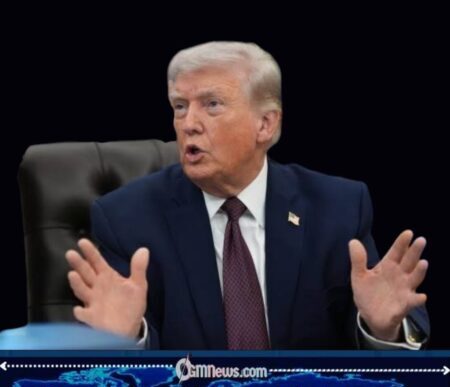


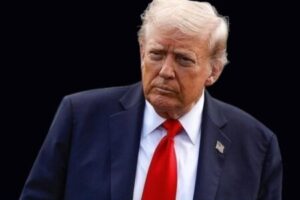


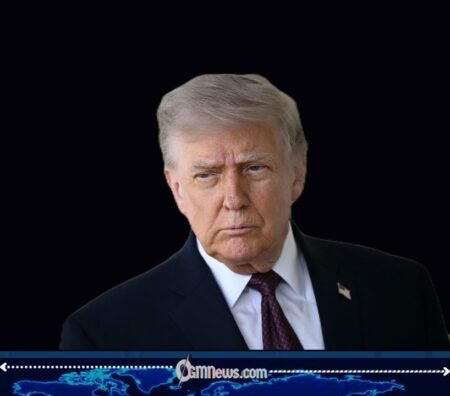
Donald Trump has asserted that Iran has “agreed to everything” in ongoing negotiations with the United States, including the removal of its enriched uranium stockpile. Speaking in a phone interview, the president outlined what he described as a breakthrough understanding that would see both nations cooperate on retrieving and transferring the material to U.S. custody. However, within hours of his remarks, Iranian officials issued a firm denial, underscoring the fragile and contested nature of the discussions.
Trump Outlines Claimed Breakthrough Agreement
President Trump presented the development as a major diplomatic achievement, stating that Iran had accepted terms that would eliminate the need for military confrontation. According to him, both countries would collaborate directly to retrieve enriched uranium from Iranian facilities.
He emphasized that the process would not involve American ground troops, a point he reiterated when pressed during the interview. Instead, he referred vaguely to “our people” working jointly with Iranian counterparts. Trump framed the arrangement as a cooperative effort made possible by mutual agreement, suggesting that diplomacy had averted a potentially more confrontational alternative.
Contradiction from Tehran
Shortly after Trump’s comments, Iran’s foreign ministry issued a statement rejecting the president’s claims. The statement described enriched uranium as a matter of national sovereignty, comparing it to Iranian soil and insisting it would not be transferred under any circumstances.
The sharp rebuttal highlights the persistent gap between Washington’s public assertions and Tehran’s official position. Iranian authorities have consistently maintained that their nuclear program is non-negotiable in terms of sovereignty, even while engaging in broader diplomatic discussions with international partners.
Dispute Over Terms of Uranium Transfer
Central to the disagreement is the question of what would happen to Iran’s enriched uranium. Trump stated that the material would ultimately be transported to the United States after joint retrieval operations.
Iran, however, has categorically denied that any such transfer has been agreed upon or even considered. This divergence raises questions about whether the two sides are negotiating from fundamentally different assumptions or whether discussions remain at an exploratory stage without finalized commitments.
Broader Security Commitments and Regional Implications
In the same interview, Trump claimed that Iran had agreed to halt its support for proxy groups, specifically mentioning Hezbollah and Hamas. Such a concession, if confirmed, would mark a significant shift in Iran’s regional strategy.
However, no independent confirmation has emerged from Iranian officials regarding these claims. Analysts note that commitments of this magnitude would likely require extensive negotiations and verification mechanisms, suggesting that any agreement—if it exists—may still be far from finalized.
Timeline and Ongoing Negotiations
Trump indicated that U.S. and Iranian representatives are scheduled to meet over the weekend, hinting that a formal announcement could follow soon. He also stated that the United States would maintain its blockade measures until a deal is conclusively reached.
The timeline suggests that negotiations are ongoing and potentially fluid. Diplomatic observers caution that public statements made ahead of formal agreements can complicate talks, especially when both sides present conflicting narratives about progress.
Disagreement Over Financial Incentives
Reports from Axios suggested that the Trump administration had considered releasing up to $20 billion in frozen Iranian assets as part of a deal. Trump, however, firmly denied any such arrangement, stating that the United States would not pay “10 cents.”
This denial adds another layer of complexity to the negotiations, as financial incentives have historically played a role in nuclear agreements. The absence of clarity on this issue further underscores the uncertainty surrounding the reported deal.
Media Engagement and Public Messaging
Trump’s remarks were made during an interview with CBS News, reflecting the administration’s effort to shape public perception of the negotiations. His confident tone contrasted sharply with the immediate rebuttal from Tehran, illustrating the challenges of managing diplomatic communication in real time.
The conflicting statements have drawn attention from international observers, with many awaiting clearer signals from official negotiation channels rather than public interviews.
The stark contrast between President Trump’s assertions and Iran’s official response underscores the uncertain state of U.S.-Iran negotiations. While Washington portrays a near-complete agreement, Tehran’s denial suggests that significant differences remain unresolved. As talks continue, the credibility and clarity of both sides’ positions will be crucial in determining whether a substantive deal can be achieved.