




















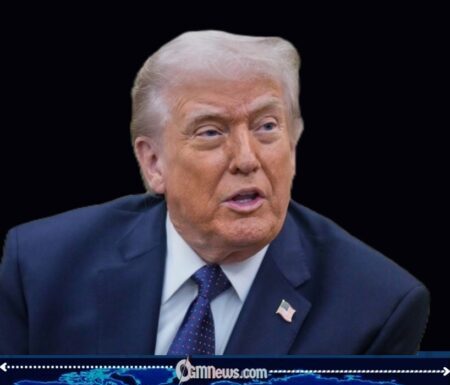
The current U.S. president, Donald Trump, has announced that the United States will begin blockading the Strait of Hormuz and intercepting vessels linked to toll payments to Iran, marking a significant escalation in tensions following unsuccessful diplomatic negotiations. The decision comes after high-level talks in Pakistan failed to produce a lasting agreement to end the ongoing conflict.
In a statement released Sunday, President Trump declared that the U.S. Navy would immediately begin efforts to block ships entering or leaving the strategic waterway, while also targeting vessels suspected of complying with what Washington describes as unlawful Iranian toll demands. The move underscores growing friction over maritime control, nuclear concerns, and global trade security in one of the world’s most critical shipping routes.
Strategic Importance of the Strait of Hormuz
The Strait of Hormuz is widely regarded as one of the most vital chokepoints in global trade, particularly for oil transportation. A significant percentage of the world’s petroleum exports pass through this narrow corridor, making any disruption a matter of international concern.
Any blockade or military activity in the region carries immediate implications for global energy prices and supply chains. Analysts warn that even partial restrictions could lead to sharp economic consequences, affecting both developed and developing economies reliant on stable oil flows.
Trump Administration Response to Alleged Iranian ‘Toll System’
According to intelligence assessments and maritime analysts, Iran has implemented a de facto toll system in the strait, requiring vessels to pay fees in exchange for safe passage. Reports suggest that ships have been instructed to provide documentation and accept escorted transit under the supervision of the Islamic Revolutionary Guard Corps.
President Trump has strongly condemned the arrangement, describing it as illegal extortion. His administration argues that such actions undermine international maritime law and threaten the principle of free navigation in international waters.
Breakdown of Diplomatic Efforts
The blockade announcement follows the collapse of negotiations between U.S. and Iranian representatives in Islamabad. Talks were led by Vice President JD Vance, who confirmed that Iran declined to accept key U.S. conditions, particularly regarding nuclear restrictions.
Although both sides had agreed to a temporary ceasefire just days earlier, the inability to reach consensus on nuclear issues proved decisive. President Trump noted that while several points were discussed, the core concern—nuclear development—remained unresolved.
Military Posture and Escalation Risks
The U.S. president stated that the Navy would not only enforce a blockade but also neutralize maritime threats, including mines allegedly deployed by Iranian forces. He warned that any hostile action against U.S. or civilian vessels would prompt a forceful military response.
This heightened posture raises concerns among international observers about the risk of direct confrontation. Military analysts caution that operations in such a confined and heavily trafficked waterway increase the likelihood of unintended escalation.
International Reactions and Coalition Efforts
While President Trump indicated that allied nations would support the operation, there has been some discrepancy regarding participation. The United Kingdom has clarified that it does not support a blockade but remains committed to maintaining freedom of navigation.
Officials suggest that the U.K., alongside partners such as France, is working to assemble a broader international coalition focused on securing the waterway rather than restricting it. Discussions reportedly involve more than 40 nations, many aligned with NATO interests.
Global Economic and Security Implications
The unfolding situation has drawn widespread attention from global markets and policymakers. Any sustained disruption in the Strait of Hormuz could significantly impact oil prices, inflation, and shipping costs worldwide.
Beyond economic concerns, the developments also highlight broader geopolitical tensions involving nuclear policy, regional influence, and maritime security. The coming weeks are expected to be critical in determining whether diplomatic channels can be revived or whether military actions will intensify.
President Trump’s directive to blockade the Strait of Hormuz represents a major turning point in U.S.-Iran relations and signals a shift toward a more assertive military strategy. As international actors weigh their responses, the balance between enforcing maritime security and avoiding broader conflict remains delicate.
[…] […]