







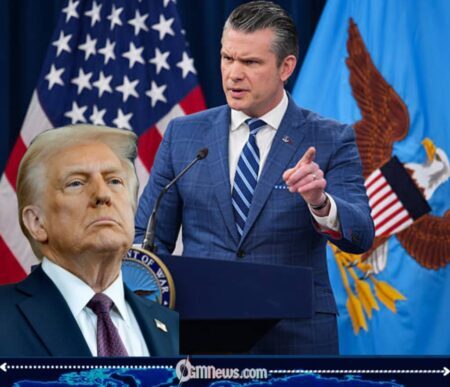
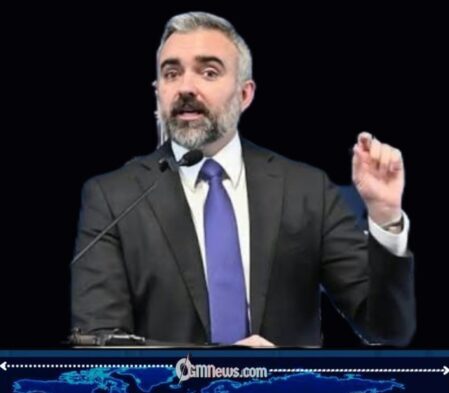
Pete Hegseth has brought renewed attention to a critical moment in U.S. foreign policy, revealing that President Donald Trump was fully prepared to authorize a military strike on Iran. In a candid statement, Hegseth disclosed that a specific target had already been identified, emphasizing the immediacy of the potential action.
His remark—“we had a target set locked and loaded”—offers a rare glimpse into the level of military readiness and the seriousness of considerations within the U.S. leadership. The revelation places Hegseth at the center of ongoing discussions about national security decision-making.
Pete Hegseth’s Statement and Its Significance
Pete Hegseth’s disclosure underscores how close the United States may have been to initiating direct military action. By confirming that preparations had advanced to the stage of target selection, he highlighted the operational depth behind the scenes.
Such statements carry weight because they suggest more than rhetorical posturing. Pete Hegseth’s account indicates that the situation had moved into a phase where execution could occur with minimal delay, reflecting both preparedness and intent within strategic circles.
Understanding the Military Context
From Hegseth’s perspective, the phrase “locked and loaded” signals a completed chain of military planning. This typically involves intelligence validation, logistical coordination, and readiness of strike assets under the supervision of defense authorities.
While specific operational details remain undisclosed, his comments imply that the United States had aligned its military capabilities to act swiftly if directed. This level of readiness is often reserved for scenarios considered highly urgent or strategically significant.
Broader U.S.–Iran Tensions
Pete Hegseth’s remarks must be understood within the longstanding tensions between the United States and Iran. Disputes over nuclear ambitions, regional power dynamics, and security concerns have consistently strained relations.
By highlighting this moment of near-action, Hegseth has effectively drawn attention to how volatile the relationship has become. His statement reinforces the idea that diplomatic standoffs can quickly evolve into military considerations.
Implications Highlighted by Hegseth
Through his revelation, Pete Hegseth indirectly points to the far-reaching consequences such a strike could have triggered. A U.S. attack on Iran might have escalated into a broader regional conflict, affecting global stability and economic systems.
His comments also reflect the role of deterrence in international relations. By demonstrating readiness, the U.S. may have aimed to influence Iran’s actions without necessarily executing the strike—an approach often debated among policy experts.
Hegseth’s Role in Shaping the Narrative
Ultimately, Hegseth’s statement has become central to understanding this high-stakes moment. By revealing the extent of preparedness, he has contributed to a broader conversation about how close nations can come to conflict behind closed doors.
His account not only sheds light on internal decision-making but also underscores the delicate balance between military readiness and diplomatic restraint in global affairs.

Logging in is a breeze and the site stability is amazing even during peak hours....