









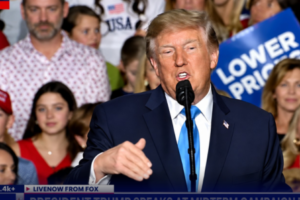

















President Donald Trump has escalated his criticism of late-arriving ballots, claiming without evidence that they could “steal the election” in upcoming contests. Legal experts warn that his attacks on absentee and late ballots may have broader consequences, potentially threatening early voting systems that have become widely used across battleground states. The Supreme Court, which often faces election-related disputes, is reportedly monitoring the situation with growing unease.
Several justices have expressed concern privately that Trump’s rhetoric could undermine public confidence in the integrity of early voting and absentee ballots. They fear that states may face pressure to limit voting access or implement stricter deadlines, raising constitutional questions about voter rights and equal protection under the law.
Political analysts suggest that Trump’s messaging is part of a broader strategy to challenge the legitimacy of votes before they are even counted. The timing of these attacks could influence state legislatures considering reforms or litigation aimed at regulating vote counting.
The Legal Implications of Targeting Ballot Timing
Lawyers argue that any attempt to restrict late-arriving ballots could face swift constitutional challenges. Federal courts have historically protected voters’ rights to submit ballots that comply with state-established deadlines, even if those ballots arrive after Election Day due to postal delays or other issues.
States have adopted early voting and absentee procedures to make participation more accessible, particularly for voters with mobility challenges or demanding schedules. Attempts to curtail these practices may not only affect voter turnout but also prompt lawsuits that could reach the Supreme Court.
Election law experts emphasize that the courts must weigh both voter access and the risk of fraud—a risk that, according to multiple studies, remains statistically negligible. Curtailing late or early voting could create greater legal and administrative complications than the purported problems Trump cites.
Supreme Court Signals Alarm
Several unnamed Supreme Court clerks and former clerks have indicated that justices are reviewing the potential national consequences of Trump’s rhetoric. One concern is that limiting access to late ballots might set a precedent for undermining early voting or other non-traditional methods.
The court’s scrutiny also extends to state officials who may feel compelled to change procedures or enforce stricter rules in response to political pressure. Such changes could provoke legal challenges, delay election results, and create confusion among voters.
Observers say that the Supreme Court’s careful approach reflects the delicate balance between maintaining electoral integrity and protecting the fundamental right to vote. Any action perceived as partisan could damage public trust in the judiciary.
Risks to Early Voting Access
President Donald Trump has repeatedly warned that early voting is “susceptible to fraud,” despite no evidence supporting such claims. Legal scholars note that this messaging could discourage voters from casting ballots early or lead states to adopt unnecessary restrictions.
Voter advocacy groups are closely monitoring the rhetoric, arguing that it could suppress participation among historically marginalized communities who rely on early voting. Public confidence in the electoral system is critical to preventing disputes that could spiral into litigation or political unrest.
Election officials warn that changes motivated by fear rather than evidence risk creating chaos at polling places and in mail-in ballot processing centers. Historical patterns suggest that early voting is a secure and efficient method of increasing voter participation.
Partisan Divide Intensifies
President Donald Trump continues to dominate headlines with claims that are driving a partisan divide over voting access. Republican lawmakers have echoed some of his criticisms, while Democrats push back with proposals to protect mail-in and early voting.
The ideological clash has intensified debates in legislatures over deadlines, ballot processing, and voter identification requirements. Legal scholars caution that any unilateral restrictions could be quickly challenged under federal law.
Media coverage has amplified the political tension, often framing the debate as a struggle between safeguarding elections and ensuring broad voter access. Analysts warn that the polarization could affect not only the upcoming midterms but also the 2028 presidential election cycle.
Judicial and Public Response
President Donald Trump’s attacks have prompted responses from multiple sectors. Election officials, judges, and civic organizations have repeatedly stressed that the integrity of early and absentee voting has been well-established.
At the same time, Supreme Court justices appear attentive to the potential fallout of limiting access to ballots. Internally, discussions focus on how to balance state authority, voter rights, and national confidence in the electoral process.
President Donald Trump’s critics argue that these attacks are part of a broader strategy to undermine democratic norms. By questioning the legitimacy of late or early ballots, he risks eroding public trust in election outcomes, raising questions about the role of rhetoric in influencing electoral law and public perception.
Looking Ahead
President Donald Trump’s rhetoric is likely to keep courts and legislatures on edge as election cycles approach. The Supreme Court faces the challenge of navigating politically charged claims without appearing partisan.
Legal observers predict that any attempts to restrict early or late ballots will trigger litigation, potentially leading to rapid judicial review. Meanwhile, public debates around access, security, and fairness are expected to intensify.
President Donald Trump’s messaging strategy underscores the growing intersection between politics and judicial oversight in the United States, highlighting the importance of both legal safeguards and civic awareness in protecting democratic processes.
[…] […]