



























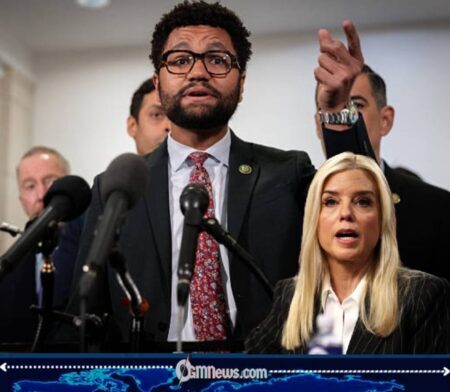
Rep. Maxwell Frost has become the focal point of a growing political confrontation after strongly criticizing Attorney General Pam Bondi over her refusal to testify before Congress.
The dispute centers on congressional demands for sworn testimony from the Attorney General regarding matters tied to Justice Department operations and oversight responsibilities.
Frost’s remarks have intensified public attention on the standoff, placing him at the forefront of the debate over transparency and accountability. His comments have since circulated widely in political circles, fueling discussions about the limits of congressional oversight and executive branch cooperation.
Frost Demands Accountability Under Oath
Rep. Maxwell Frost argued that public officials with significant authority must be willing to appear before lawmakers and answer questions under oath. He framed the refusal to testify as a serious obstacle to congressional oversight.
In his remarks, Maxwell Frost stated that lawmakers require sworn testimony because of concerns about trust and transparency. His language reflected deep frustration over what he views as a lack of cooperation from the Justice Department leadership.
The statement has drawn both support and criticism, further elevating Frost’s visibility in the ongoing political debate.
Intensifying Tensions Between Congress and the Justice Department
The standoff involving Maxwell Frost highlights long-standing tensions between Congress and the executive branch. Lawmakers argue that testimony from senior officials is essential for effective oversight of federal agencies.
Supporters of congressional inquiry say that refusing to testify undermines democratic accountability and weakens institutional transparency. They maintain that oversight hearings are a constitutional responsibility of Congress.
On the other hand, the Justice Department has historically defended its position in similar disputes by citing procedural constraints and the need to preserve the integrity of ongoing matters.
Legal and Constitutional Questions at Stake
The confrontation has raised broader constitutional questions regarding congressional authority and executive privilege. Legal analysts note that while Congress has broad oversight powers, enforcing testimony from high-ranking officials can be legally and politically complex.
Some experts warn that escalating such disputes could deepen institutional tensions between branches of government. Others argue that firm oversight is necessary to ensure public confidence in federal institutions.
The disagreement continues to highlight the delicate balance between accountability and separation of powers in U.S. governance.
Political Reactions Intensify Around Frost’s Comments
Reactions to Rep. Maxwell Frost’s statements have been sharply divided. Supporters praise his willingness to challenge senior officials and demand greater transparency in government operations.
Critics, however, argue that his remarks were overly confrontational and risk further politicizing oversight processes. They suggest that institutional disputes should be handled through formal legislative channels rather than public accusations. Despite the controversy, Frost’s role in the debate has positioned him as a prominent voice in ongoing discussions about government accountability.
Broader Implications for Oversight and Governance
The dispute involving Maxwell Frost underscores broader national debates about transparency, institutional trust, and congressional oversight powers.
As the standoff continues, analysts suggest the outcome could influence how future disputes between Congress and executive agencies are handled. The situation may also shape expectations for cooperation between federal institutions in politically sensitive inquiries.
For now, the disagreement remains unresolved, with Frost continuing to press for sworn testimony while the Justice Department maintains its current position.


[…] […]