











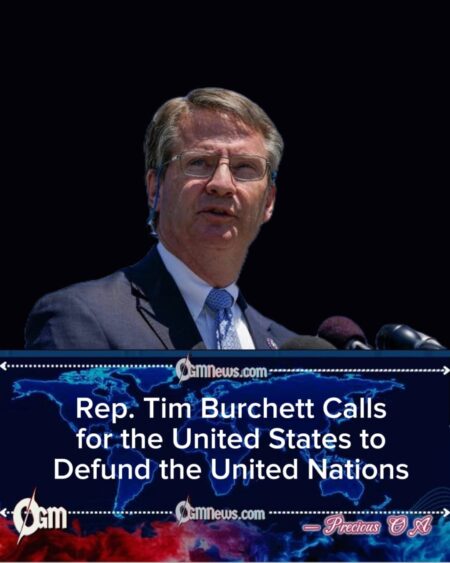
Rep. Tim Burchett publicly called for the United States to reconsider its financial support for the United Nations, arguing that American taxpayers should not continue funding an organization he believes does not always align with U.S. interests. Rep. Tim Burchett said the issue deserves serious debate in Congress as lawmakers evaluate the country’s international commitments and spending priorities.
The Tennessee congressman’s remarks come amid renewed discussions in Washington about the role of international organizations in global diplomacy. Some lawmakers have increasingly questioned whether institutions created in the aftermath of World War II still operate effectively in today’s geopolitical environment.
The United Nations, founded in 1945, remains one of the world’s largest international organizations, bringing together nearly every sovereign nation to address issues ranging from peacekeeping and humanitarian aid to global health and environmental challenges.
Debate Over U.S. Contributions
Rep. Tim Burchett argued that the United States contributes a significant share of the organization’s budget and therefore has the right to demand stronger accountability. Rep. Tim Burchett said American taxpayers deserve transparency about how international funds are used and whether those expenditures produce meaningful results.
The United States is historically one of the largest financial contributors to the United Nations, supporting both the organization’s regular operating budget and its peacekeeping missions around the world. These funds help sustain programs related to conflict prevention, humanitarian assistance, and global development.
Supporters of continued funding say U.S. participation ensures that Washington maintains influence in global decision-making. They argue that withdrawing financial support could reduce America’s ability to shape international policies and diplomatic outcomes.
Rep. Tim Burchett Criticizes UN Policies
Rep. Tim Burchett said his concerns stem partly from disagreements with certain positions taken by the United Nations on international political issues. Rep. Tim Burchett suggested that the organization has occasionally adopted resolutions or policies that he believes do not reflect American values or strategic priorities.
Critics of the United Nations within Congress have raised similar concerns in the past, particularly regarding how some member states influence decision-making in international forums. They argue that the structure of the organization sometimes allows governments with vastly different political systems to shape global policies.
Rep. Tim Burchett emphasized that his call for defunding is intended to spark discussion about reform rather than simply disengaging from international diplomacy.
Role of the United Nations in Global Affairs
Despite criticism from some political leaders, the United Nations continues to play a central role in coordinating international responses to crises. Its agencies oversee humanitarian programs that provide food, medical assistance, and shelter to millions of people affected by conflict and natural disasters.
Peacekeeping missions authorized by the UN operate in multiple regions, attempting to stabilize areas experiencing armed conflict or political instability. These missions often involve troops and personnel from dozens of participating countries.
The organization also serves as a diplomatic platform where governments can negotiate agreements on issues such as climate policy, nuclear nonproliferation, and economic cooperation.
Rep. Tim Burchett Pushes for Policy Reassessment
Rep. Tim Burchett argued that reassessing the United States’ financial relationship with the United Nations could encourage reforms within the organization. Rep. Tim Burchett said Congress should examine whether current funding levels reflect American strategic interests and priorities.
Some lawmakers have proposed linking funding to specific reforms or performance benchmarks. These proposals aim to encourage institutional improvements while maintaining a degree of U.S. participation in international decision-making.
Rep. Tim Burchett noted that debates about the role of international institutions are likely to continue as global political dynamics evolve.
Ongoing Discussion in Washington
The proposal to reconsider funding for the United Nations is expected to generate continued debate among lawmakers, diplomats, and policy experts. Different perspectives exist regarding the value of international organizations and the benefits of American engagement.
Supporters of maintaining strong ties with the UN argue that global challenges such as pandemics, climate change, and humanitarian crises require coordinated international responses that individual countries cannot manage alone.
As discussions unfold in Congress, the broader question of how the United States should balance national interests with global cooperation remains a central theme in American foreign policy.

https://shorturl.fm/vJtLQ