


























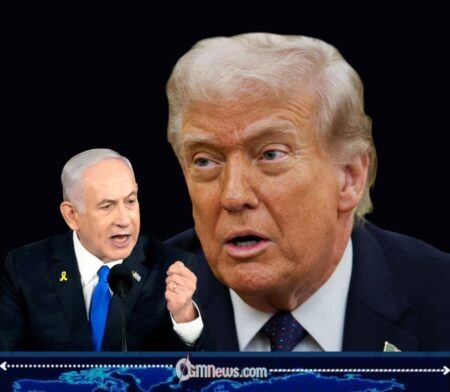
President Donald Trump said his motivation for engaging in conflict with Iran “might be a little different” from that of Israeli Prime Minister Benjamin Netanyahu, highlighting subtle differences in strategic priorities between the United States and Israel. President Donald Trump explained that while both countries share concerns about Iran’s regional influence and military capabilities, their national interests and security calculations are not always identical.
The remarks quickly attracted attention from political observers and international analysts who closely monitor relations between Washington and Jerusalem. Historically, the United States and Israel have maintained a strong alliance, particularly regarding security issues in the Middle East.
At the same time, experts note that even close allies can approach the same conflict with different strategic objectives. National leaders often balance domestic political considerations, regional alliances, and long-term geopolitical goals when deciding how to respond to international crises.
Strategic Differences Among Allies
President Donald Trump emphasized that although the United States supports Israel’s security concerns, Washington also evaluates global stability, energy markets, and broader diplomatic relationships when determining its approach. President Donald Trump suggested that these factors sometimes shape American decisions differently from those made by Israeli leadership.
Foreign policy analysts frequently point out that alliances do not always require identical strategies. Countries may cooperate closely while still pursuing policies that reflect their own national priorities and strategic interests.
In the Middle East, these dynamics are particularly complex because regional conflicts often involve multiple actors, overlapping alliances, and long-standing geopolitical tensions.
President Donald Trump Highlights U.S. Perspective
President Donald Trump explained that U.S. involvement in the conflict is driven by several considerations, including protecting American personnel in the region and preventing escalation that could threaten international stability. President Donald Trump said the United States must evaluate both immediate security threats and long-term consequences before taking action.
Observers note that the United States often balances military responses with diplomatic efforts aimed at preventing broader regional wars. Decisions made in Washington can influence global markets, alliance structures, and security arrangements far beyond the Middle East.
President Donald Trump also indicated that maintaining flexibility in policy decisions is essential during periods of international crisis, particularly when events can change rapidly on the ground.
Regional Implications of the Conflict
The confrontation with Iran has already produced ripple effects throughout the Middle East, affecting diplomatic relations, energy markets, and regional security strategies. Governments across the region are closely monitoring how the conflict evolves and what it might mean for future alliances.
Several countries have called for restraint and renewed diplomatic dialogue to prevent further escalation. International organizations have also expressed concern about the humanitarian and economic consequences of prolonged conflict.
Experts say that conflicts involving major regional powers often create uncertainty that can influence global trade routes, energy prices, and political stability.
International Reactions and Diplomatic Efforts
President Donald Trump acknowledged that global reactions to the conflict have varied widely, with some governments supporting stronger action while others advocate negotiations and de-escalation. President Donald Trump said the United States continues to evaluate diplomatic options alongside its military strategy.
Diplomatic channels between multiple countries remain active as leaders attempt to prevent the situation from expanding into a wider regional war. Negotiations often involve complex discussions about sanctions, security guarantees, and regional influence.
International observers emphasize that diplomatic engagement can sometimes reduce tensions even when military operations are ongoing.
Looking Ahead to Future Developments
As the situation continues to unfold, policymakers and analysts are carefully watching how the conflict may evolve in the coming weeks and months. Strategic decisions made by major powers could significantly shape the future political landscape of the Middle East.
Energy markets, global trade routes, and security alliances all remain sensitive to developments in the region. Any escalation could have consequences far beyond the immediate conflict zone.
For now, world leaders are balancing military considerations with diplomatic efforts in hopes of preventing a broader confrontation while addressing the complex security challenges that continue to shape the region.

The weekly tournaments here keep me coming back because the prize pools are surprisingly generous....