






























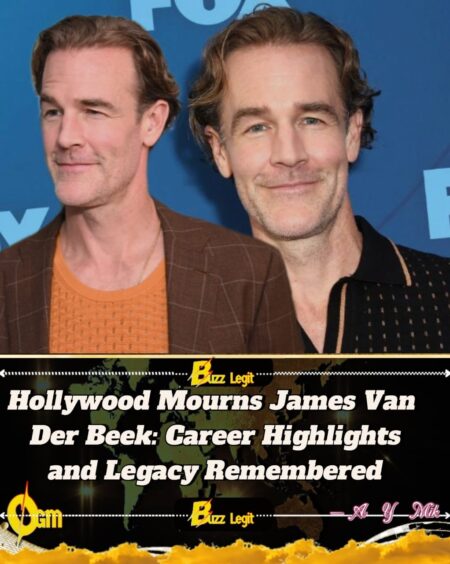
Hollywood James Van Der Beek, the actor who rose to international fame as Dawson Leery in the hit teen drama Dawson’s Creek, has died at the age of 48, his family announced on February 11, 2026. In a message shared on social media, his wife, Kimberly Van Der Beek, said he passed away peacefully after meeting his final days “with courage, faith, and grace,” without immediately disclosing a cause of death.
Van Der Beek’s passing marks the end of a career that spanned more than two decades and brought him recognition as both a cultural touchstone of the late 1990s and a versatile performer who embraced a range of roles across television and film. His death has generated an outpouring of tributes from colleagues, fans and friends worldwide.
Television Icon and Cultural Phenomenon
James David Van Der Beek became a household name in 1998 when he was cast as Dawson Leery, the introspective aspiring filmmaker at the center of Dawson’s Creek, a series that became a defining show of its era. The WB drama, which aired from 1998 to 2003, was credited with reshaping teen television and launching a generation of actors into the spotlight.
Following the success of Dawson’s Creek, Van Der Beek broadened his career with notable roles in films such as Varsity Blues and The Rules of Attraction, and later on television appearing in comedies and dramas that showcased his range. Critics highlighted his ability to move between earnest leading roles and self-aware comedic performances, notably in Don’t Trust the B—- in Apartment 23 and other projects.
Despite the challenge many actors face transitioning from teen fame, Van Der Beek continued to work steadily, earning respect in the industry for his dedication and versatility. His presence on screen retained a devoted audience who ran the gamut from long-time fans to newer viewers.
Health Battle and Legacy
In November 2024, Van Der Beek publicly shared that he was battling stage 3 colorectal cancer, a diagnosis he had kept private for more than a year after it was first discovered during a routine screening. He spoke openly about his experience with treatment and the profound reflections it inspired about life and mortality.
In the months that followed, he became an advocate for awareness around early cancer detection and shared candid insights about the emotional and physical challenges of his journey, earning admiration for his candor and resilience. Family and friends often spoke of his courage and sense of humor even in the face of serious illness.
Shortly after his passing was announced, a fundraising campaign began to support his widow and their six children. Within hours, public support drove the initiative well past its initial goal, reflecting the deep impression he left on fans and colleagues alike.


UGzrBFjwbgJgETzy