













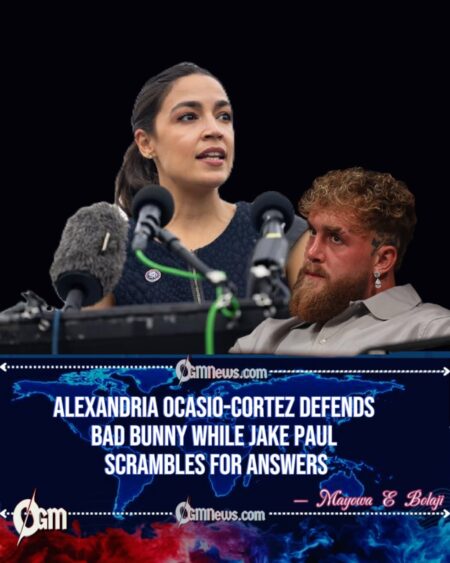
Rep. Alexandria Ocasio-Cortez, D-N.Y., has taken a firm stance in defense of Puerto Rican musician Bad Bunny following controversial comments by social media personality and boxer Jake Paul. The dispute arose after Bad Bunny’s widely acclaimed performance during the Super Bowl halftime show, which celebrated Latin culture on one of America’s largest entertainment stages. Ocasio-Cortez emphasized the importance of recognizing the citizenship and cultural contributions of Puerto Rican artists, spotlighting broader conversations about identity, representation, and inclusion in the United States.
Rep. Alexandria Ocasio-Cortez Responds to Jake Paul
Rep. Alexandria Ocasio-Cortez swiftly addressed Jake Paul’s remarks questioning Bad Bunny’s U.S. citizenship, using her platform to clarify the legal and historical facts. Ocasio-Cortez reminded the public that Puerto Ricans, including Bad Bunny, are U.S. citizens by birth under the Jones-Shafroth Act of 1917.
Through social media and public statements, Ocasio-Cortez condemned the remarks as misleading and culturally insensitive. “Artists like Bad Bunny enrich our nation and deserve acknowledgment, not baseless challenges to their citizenship,” Ocasio-Cortez stated, emphasizing the need for factual discussion when addressing matters of identity and representation.
Public Backing for Rep. Alexandria Ocasio-Cortez
Following her comments, Rep. Alexandria Ocasio-Cortez received widespread support across social media and news outlets. Constituents and advocates praised her for defending Puerto Rican identity and raising awareness about common misconceptions regarding U.S. citizenship for residents of territories.
Many commentators highlighted how Ocasio-Cortez’s intervention helped shift the conversation from divisive rhetoric to cultural recognition. By centering the discussion on facts and respect, Ocasio-Cortez positioned herself as a defender of artists and communities often misrepresented or misunderstood in mainstream media.
Rep. Alexandria Ocasio-Cortez on Cultural Significance
Rep. Alexandria Ocasio-Cortez stressed that Bad Bunny’s performance was more than entertainment—it was a moment of cultural pride. She noted that challenging the citizenship of a Puerto Rican artist diminishes the impact of such achievements and undermines the visibility of Latin representation on global stages.
Ocasio-Cortez highlighted that her defense of Bad Bunny was part of a broader commitment to ensuring that cultural contributions from marginalized communities are properly recognized and celebrated in the U.S. media landscape.
Legal and Political Context According to Rep. Alexandria Ocasio-Cortez
Rep. Alexandria Ocasio-Cortez provided context for the legal status of Puerto Rican citizens, explaining that while Puerto Rico is a U.S. territory, its residents enjoy full citizenship rights, except for certain voting limitations in federal elections. She used this clarification to counter the false narratives implied by Paul’s comments.
Political analysts noted that Ocasio-Cortez’s intervention underscores the importance of accurate public discourse on citizenship and identity. By centering her statements on historical and legal facts, Ocasio-Cortez reinforced the credibility of her advocacy while educating the public on U.S. territorial policy.
Broader Implications Highlighted by Rep. Alexandria Ocasio-Cortez
Rep. Ocasio-Cortez’s involvement in the debate has sparked a wider conversation about identity, representation, and media responsibility. She emphasized that questioning the citizenship of Puerto Rican artists not only spreads misinformation but also risks marginalizing entire communities.
Ocasio-Cortez’s stance serves as a reminder that public figures have a responsibility to approach sensitive topics with accuracy and respect. Her defense of Bad Bunny illustrates how elected leaders can use their influence to promote understanding and inclusivity in cultural and political discourse. Rep. Alexandria Ocasio-Cortez’s intervention in the Jake Paul–Bad Bunny controversy highlights her commitment to defending Puerto Rican identity and promoting cultural recognition in the United States. By combining legal context with a clear message of respect, Ocasio-Cortez has positioned herself as a leading voice in the ongoing dialogue about citizenship, representation, and media accountability.
Her actions reaffirm the importance of thoughtful leadership in protecting artists, celebrating diversity, and ensuring that public discourse remains grounded in facts and fairness.

Logging in is a breeze and the site stability is amazing even during peak hours....