
























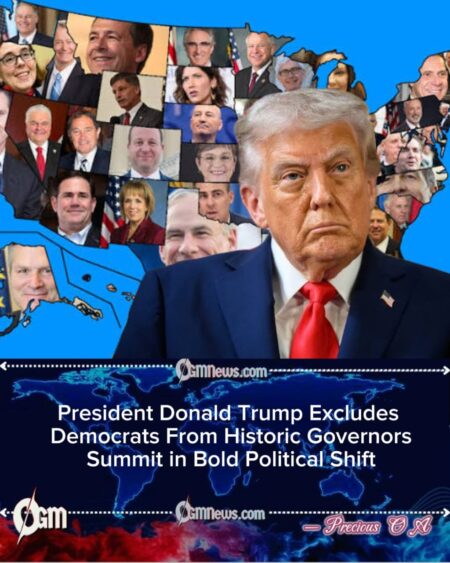
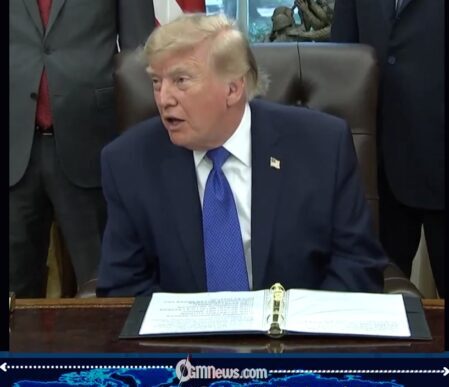
President Donald Trump is set to host the annual governors meeting at the White House without extending invitations to Democratic governors, a move that sharply departs from a long-standing bipartisan tradition. The decision, confirmed by administration officials, has immediately sparked debate in political circles over executive norms, partisanship, and the symbolic role of the presidency in fostering unity among state leaders.
The annual gathering has historically served as a rare forum where governors from both parties engage directly with the president on shared national challenges, from infrastructure and public safety to disaster preparedness and economic development. By excluding Democratic governors, the administration is signaling a recalibration of that tradition, framing the meeting instead as a strategic policy alignment with Republican-led states.
President Donald Trump has defended the move privately, according to aides, arguing that Democratic governors have consistently opposed his agenda and used previous meetings as political stages rather than constructive policy discussions. Supporters within the White House say the president is prioritizing efficiency and ideological clarity over symbolic gestures of bipartisanship.
A Shift From Bipartisan Norms
The annual governors meeting dates back decades and has typically emphasized cooperation across party lines, even during periods of intense political division. Past presidents from both parties used the event to project national cohesion, often highlighting areas of agreement while setting aside partisan disputes.
President Donald Trump has long criticized what he describes as performative bipartisanship, and this decision aligns with his broader governing philosophy. Advisers argue that the president sees little value in engaging leaders who, in his view, are committed to opposing his policies regardless of compromise.
Critics, however, warn that abandoning the bipartisan nature of the meeting risks deepening political polarization at a time when coordination between federal and state governments remains critical. They argue that excluding Democratic governors could complicate responses to national emergencies that require cross-party collaboration.
Political Reactions Across the Spectrum
Reaction from Democratic leaders has been swift and sharply critical, with several governors accusing the White House of undermining democratic norms and turning a national forum into a partisan event. Some have suggested the move reflects broader efforts to marginalize opposition voices within federal decision-making.
President Donald Trump allies in Congress have largely praised the decision, framing it as a long-overdue acknowledgment of what they call entrenched partisan obstruction from Democratic-led states. They argue that Republican governors are more aligned with the administration’s priorities on issues such as border security, energy development, and regulatory reform.
Independent analysts note that while the meeting itself carries limited formal authority, its symbolic value is significant. The exclusion of Democrats may resonate strongly with the president’s political base while simultaneously reinforcing concerns among moderates about escalating partisanship.
President Donald Trump and the White House Strategy
White House officials describe the upcoming meeting as policy-focused rather than ceremonial, emphasizing discussions on economic growth, public safety, and federal-state cooperation within Republican-led jurisdictions. They insist the decision is not meant as a permanent exclusion but as a reflection of current political realities.
President Donald Trump is expected to use the gathering to highlight policy achievements and reinforce shared messaging ahead of a pivotal political period. Advisors see the meeting as an opportunity to present a unified front with governors who actively support his legislative and executive initiatives.
Some administration insiders acknowledge that the optics of the decision are controversial but argue that the president is prioritizing results over appearances. They maintain that Democratic governors remain free to engage with federal agencies through other established channels.
Historical Context and Precedent
Historically, even during eras of divided government, presidents have maintained open lines of communication with governors from both parties. The annual meeting has often been cited as an example of federalism in action, balancing national leadership with state-level autonomy.
President Donald Trump has previously challenged similar traditions, including selective engagement with bipartisan congressional groups and redefined norms around executive outreach. Supporters view these actions as a necessary disruption of outdated political customs.
Political historians caution that while traditions evolve, their abrupt abandonment can carry long-term consequences. They note that once bipartisan forums are dismantled, rebuilding trust and cooperation can become significantly more difficult.
Implications for Federal-State Relations
The decision raises broader questions about the future of federal-state relations under an increasingly polarized political climate. Governors play a central role in implementing federal policies, making sustained communication essential regardless of party affiliation.
President Donald Trump critics argue that limiting direct engagement may hinder coordination on issues such as disaster response, healthcare administration, and infrastructure funding. They warn that partisan barriers could slow policy execution at the state level.
Supporters counter that effective governance does not require ceremonial inclusivity and that states opposed to the administration’s agenda have often resisted cooperation regardless of dialogue. They argue that clarity of alignment may, in fact, streamline policy implementation.
Looking Ahead
As the governors meeting approaches, attention will remain focused on how the White House frames the event and whether any outreach to Democratic leaders follows. The decision has already become a talking point in broader debates about leadership style and national unity.
President Donald Trump is likely to continue emphasizing loyalty and policy alignment as key criteria for engagement, reinforcing a governing approach that prioritizes ideological cohesion. Whether this strategy yields tangible policy benefits or deepens political divides remains to be seen.
For now, the exclusion of Democratic governors marks another notable departure from presidential precedent, underscoring how evolving political strategies are reshaping long-established norms in Washington.

[…] […]