

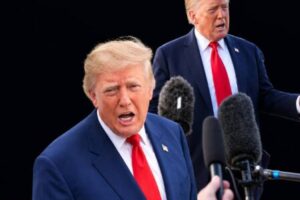

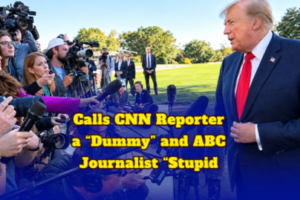










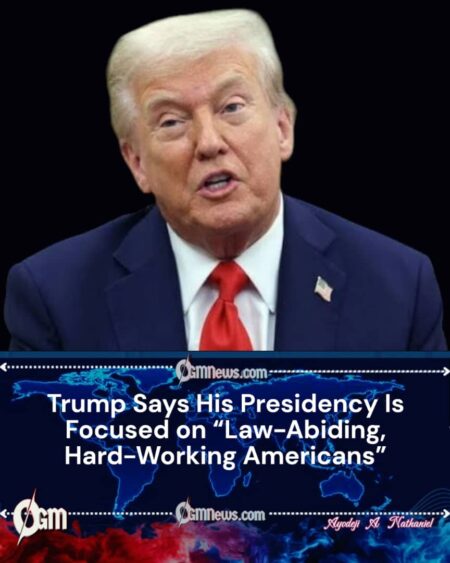
President Donald Trump, the current U.S. president serving his second term, has declared that his administration is reversing what he described as years of governance that favored insiders, illegal aliens, and foreign powers over ordinary Americans. In a forceful statement, the president said his leadership now centers on restoring order, economic stability, and national sovereignty on behalf of law-abiding citizens.
The remarks, which quickly drew national attention, underscore a central theme of President Trump’s political identity: positioning himself as a champion of everyday Americans against entrenched interests and external influence.
Claim of a System That Favored Insiders
President Trump said the country had previously been “run for insiders,” arguing that political elites benefited at the expense of the broader population. According to him, these insiders shaped policies that weakened accountability and eroded trust in government institutions.
The administration maintains that reforms introduced during Trump’s second term are aimed at dismantling these structures, increasing transparency, and shifting power away from Washington decision-makers toward voters and local communities.
Immigration and Urban Impact
A significant portion of the president’s statement focused on illegal immigration. He accused past policies of allowing large numbers of undocumented migrants into major cities, which he said strained public services and disrupted local economies.
Supporters of the administration argue that stricter border enforcement and immigration controls are necessary to protect jobs and maintain public order. Critics counter that immigration’s economic and social effects are complex and caution against broad generalizations that may overlook humanitarian considerations.
Economic Consequences and Public Anxiety
President Trump also linked prior governance to economic hardship, saying that policies driven by special interests “destroyed savings” for many Americans. The administration frames its economic agenda as one focused on stabilizing household finances through job creation, domestic investment, and reduced reliance on foreign powers.
Economists note that inflation, savings rates, and economic confidence are influenced by a wide range of domestic and global factors, making it difficult to attribute outcomes to a single policy approach. Nonetheless, economic security remains a central concern for voters.
Foreign Influence and National Sovereignty
President Donald Trump’s remarks extended beyond domestic issues to foreign policy, with Trump asserting that foreign powers had benefited disproportionately from past U.S. decisions. He said his administration is reasserting American sovereignty through tougher trade, defense, and diplomatic stances.
The White House argues that this approach strengthens national security and protects strategic industries. Opponents warn that an overly confrontational posture could strain alliances and global cooperation.
A Pledge to Law-Abiding Americans
At the core of the statement, President Trump positioned himself as an advocate for “law-abiding, hard-working Americans who make this nation run.” The administration says policies on law enforcement, immigration, and economic growth are designed to reward compliance with the law and contribution to society.
This framing resonates strongly with the president’s political base, while critics argue it risks deepening divisions by portraying policy disagreements in moral terms rather than practical ones.
Public Trust and Political Debate
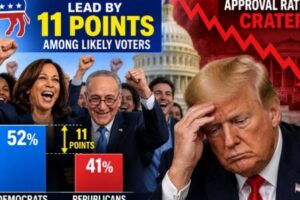
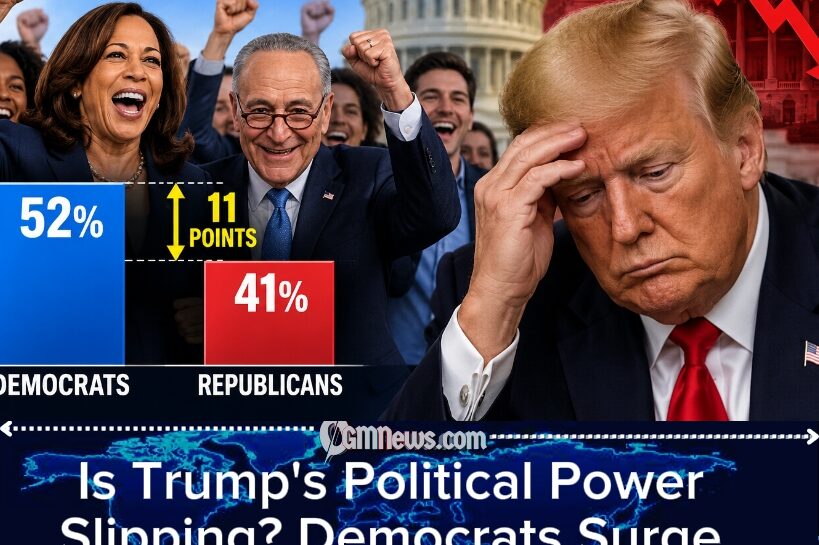
Following the statement, a public poll question circulated asking Americans how much they trust President Trump today, offering responses ranging from full trust to none at all. The poll reflects the polarized nature of the current political climate, in which perceptions of leadership are sharply divided.
Political analysts say such polling questions often serve as engagement tools rather than scientific measurements, but they highlight how trust in leadership remains a defining issue of Trump’s second term.

Logging in is a breeze and the site stability is amazing even during peak hours....