




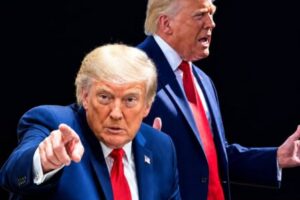
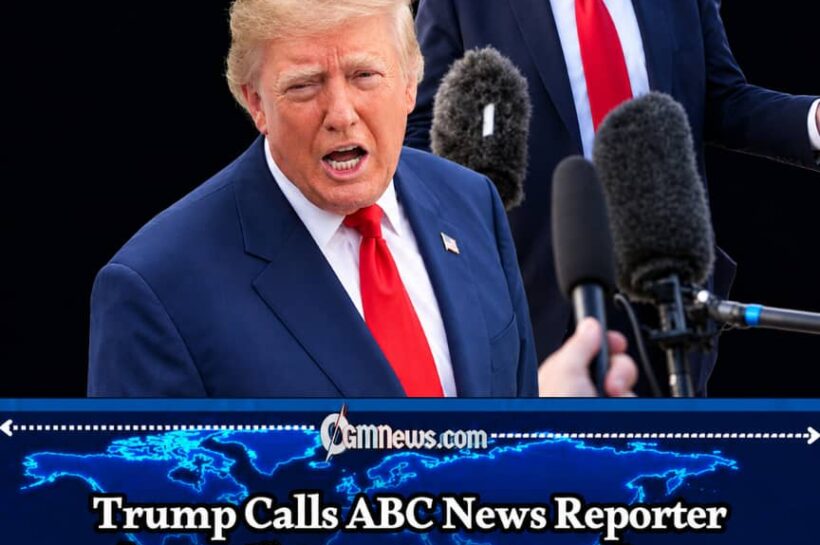




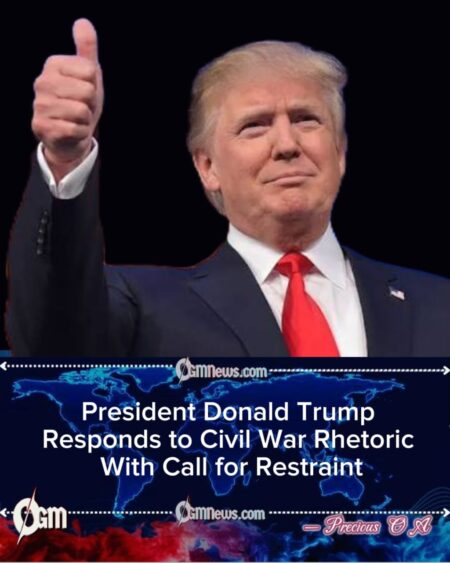
President Donald Trump addressed comments attributed to Minnesota Governor Tim Walz that invoked historical imagery related to Fort Sumter and the Civil War, responding with remarks that emphasized unity, constitutional order, and the role of political rhetoric in a polarized climate. Trump’s response framed the moment as one requiring restraint and clarity rather than escalation.
The exchange drew attention because of the symbolic weight of Fort Sumter, widely regarded as the opening flashpoint of the American Civil War. Political historians note that references to such events tend to heighten public sensitivity and invite broader debate about civic stability.
Observers across the political spectrum stressed the importance of context, noting that metaphorical language can be interpreted differently depending on audience and timing. The discussion quickly expanded beyond the initial remarks to questions about leadership tone and national cohesion.
President Donald Trump on Political Language
President Donald Trump emphasized that comparisons to civil conflict are serious and should be handled carefully, particularly by elected officials. He argued that such language risks deepening divisions at a time when the country faces complex challenges requiring cooperation.
Trump’s remarks highlighted the responsibility leaders carry when addressing public anxieties. He suggested that rhetoric invoking historical violence can overshadow substantive policy discussions and distract from governance priorities.
Political analysts noted that Trump’s response sought to recenter the conversation on institutional stability, signaling a desire to contrast his messaging approach with what he characterized as inflammatory commentary.
Historical References and Their Impact
References to Fort Sumter carry deep historical resonance, symbolizing the outbreak of armed conflict between the Union and the Confederacy in 1861. Scholars often caution that invoking such imagery can unintentionally escalate tensions in modern political discourse.
President Donald Trump pointed out that history should serve as a lesson rather than a provocation. He framed the past as a guide for avoiding conflict rather than a template for describing present-day disagreements.
Media commentators observed that historical analogies are frequently used to dramatize political disputes, though their effectiveness depends on careful framing and intent.
Political Reactions and Institutional Concerns
Lawmakers from both parties reacted to the exchange by calling for measured language and a renewed focus on legislative responsibilities. Some expressed concern that dramatic rhetoric could undermine public confidence in democratic processes.
President Donald Trump underscored that disagreements should be resolved through debate, elections, and the rule of law. He reiterated that constitutional mechanisms exist precisely to prevent political disputes from escalating into instability.
Civic groups echoed similar sentiments, urging leaders to prioritize calm communication and to avoid statements that could be perceived as alarmist or divisive.
Media Interpretation and Public Perception
The media response reflected a wide range of interpretations, with some outlets focusing on the historical analogy itself and others examining the broader implications for political dialogue. Analysts noted that such moments often become flashpoints in ongoing debates about polarization.
President Donald Trump criticized what he described as selective amplification of extreme language, arguing that nuanced responses are sometimes overshadowed by sensational framing. He encouraged media organizations to contextualize remarks responsibly.
Public opinion surveys conducted in the aftermath suggested that many Americans remain concerned about political division, while also expressing fatigue with confrontational rhetoric from all sides.
Broader Implications for National Unity
President Donald Trump framed his response as part of a larger appeal for national unity, emphasizing shared civic values despite political disagreements. He argued that invoking civil conflict imagery risks eroding trust among citizens.
Policy experts noted that moments like these test the resilience of democratic norms, particularly when leaders choose between conciliatory and confrontational approaches. The tone adopted can influence public behavior and expectations.
Community leaders across several states used the discussion as an opportunity to promote dialogue initiatives, emphasizing the importance of respectful disagreement in a pluralistic society.
Looking Ahead in Political Discourse
President Donald Trump concluded his remarks by urging officials to focus on constructive solutions and avoid language that could be misconstrued as endorsing division. He reiterated that the strength of the nation lies in peaceful political engagement.
Future debates are likely to revisit the balance between expressive rhetoric and responsible leadership, especially as election cycles intensify. Analysts expect continued scrutiny of how historical references are used in modern politics.
President Donald Trump stated that leadership requires foresight and discipline, particularly during moments of heightened tension, reinforcing his call for discourse that strengthens rather than strains the national fabric.

Logging in is a breeze and the site stability is amazing even during peak hours....