























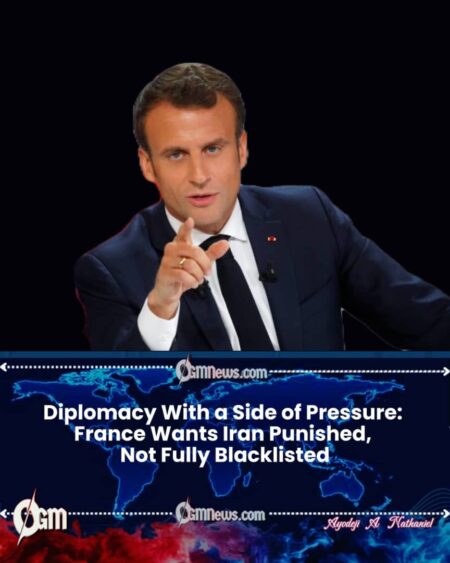
France has announced that it will support sanctions on Iranian officials over the violent repression of nationwide protests, pursue asset freezes, and press for the Islamic Revolutionary Guard Corps (IRGC) to be designated as a terrorist organisation at a meeting of European Union foreign ministers in Brussels later this week. The emerging EU initiative responds to widespread international concern about Iran’s crackdown on demonstrators and human rights violations.
The move signals a shift in European policy toward Tehran and reflects mounting pressure within EU capitals for decisive action against Iranian actors implicated in the suppression of protests and regional destabilising activities. While not yet final, the discussions in Brussels are expected to result in expanded targeted sanctions and renewed debate on the IRGC designation.
France’s Stance on Sanctions and the IRGC Listing
France, which has been a vocal critic of Iran’s repression, is aligning with other EU states in advocating sanctions on individuals and entities implicated in the violent response to protests across Iran. These planned measures include travel bans and asset freezes on senior officials and commanders linked to rights abuses.
Beyond sanctions, France — alongside Italy and other member states — is pushing for the IRGC to be formally added to the EU’s list of terrorist organisations. Such a designation would extend far beyond conventional sanctions, imposing stricter legal and financial barriers and aligning EU policy with that of the United States, Canada, and Australia, which have already designated the IRGC as a terrorist group.
European Parliament and Broader EU Pressure
The push in Brussels builds on momentum from the European Parliament, which overwhelmingly condemned Iran’s violent suppression of protest movements earlier this month and urged stronger EU action, including the terrorist designation for the IRGC. That resolution, passed with substantial support, reflects broad concern among lawmakers about human rights violations and the role of Iranian security forces.
However, the council of EU foreign ministers requires unanimous agreement from all 27 member states to officially list the IRGC. While countries such as Italy, Germany, and the Baltic states have supported the move, other members — including France and Spain — have expressed caution, citing legal and diplomatic considerations.
Context: Iranian Crackdown and Human Rights Outcry
The renewed European push comes amid widespread protests in Iran over economic hardship and political repression. Human rights organisations and international bodies report that thousands of demonstrators have been killed or detained in recent months as security forces — including the IRGC and Basij militia — crack down on dissent.
France and other EU capitals have repeatedly condemned these actions as “unbearable and inhumane,” and have summoned Iranian diplomats to register their protest, reflecting deep diplomatic discontent with Tehran’s handling of the unrest.
Iran’s Reaction and Diplomatic Tensions
Iran has already warned of “destructive consequences” if the EU moves ahead with a formal terrorism designation for the IRGC, calling such proposals irresponsible and threatening diplomatic fallout. Tehran has summoned foreign ambassadors in protest and warned that punitive measures could undermine bilateral relations.
Despite these warnings, EU officials in Brussels have indicated that the violence and loss of life in Iran make enhanced action imperative, although some member states remain hesitant about the legal hurdles and potential repercussions.
Prospects at the Brussels Foreign Ministers’ Meeting
The meeting of EU foreign ministers in Brussels this week is expected to produce a package of sanctions on around 20 Iranian individuals and entities, reflecting a broadening of restrictive measures under existing EU human rights and foreign policy frameworks. Discussions will include both immediate punitive steps and the ongoing debate over IRGC’s formal terror listing.
Diplomats say consensus could be difficult to achieve before Thursday’s formal session, as legal requirements and political sensitivities persist. Nonetheless, the debate underscores growing European willingness to escalate pressure on Tehran in response to the violent repression of peaceful protest movements and human rights abuses.


[…] […]