



















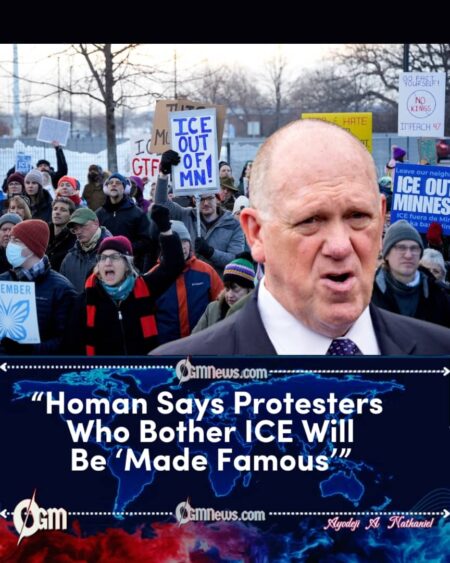
Tom Homan, the Trump administration’s border czar and former acting director of Immigration and Customs Enforcement (ICE), announced that he is advocating for the development of a database that would publicly identify individuals arrested for interfering with federal immigration enforcement efforts. In comments made on a national television program, Homan said officials are considering measures to “make them famous,” referring to those charged with obstruction, impeding, or assault during anti-ICE protests in Minnesota and other states.
The proposal has stirred fresh controversy amid ongoing tensions between federal immigration enforcement operations and local authorities, particularly in Minneapolis and Saint Paul. Supporters of Homan’s approach say it would deter unlawful interference, while critics warn it could chill protest activity and raise concerns about privacy and civil liberties.
Homan’s Statement and Rationale
Tom Homan told Fox News’ The Ingraham Angle that protesters who cross the line into criminal conduct while opposing ICE operations should face public accountability. Homan said his aim is to compile a database of arrested individuals and widely publicize their names and images, potentially sharing them with news outlets, employers, schools, and community networks.
“There’s a difference between lawful protest and interfering with federal officers,” Homan said in the interview, arguing that once protests escalate into obstruction or assault, participants lose protection under peaceful assembly norms. He framed the publicity plan as a tool to reinforce the rule of law and protect federal agents carrying out their duties.
Context: Ongoing Anti-ICE Protests in Minnesota
The backdrop to Homan’s comments is a months-long series of protests and confrontations involving federal immigration agents and demonstrators in and around Minneapolis–Saint Paul. These actions followed major changes in federal immigration enforcement policy and increased ICE activity in sanctuary jurisdictions. After a fatal shooting of a Minnesota resident by an ICE agent earlier this year, unrest intensified, prompting legal challenges and public outcry.
Local authorities, civil rights groups, and immigrant communities have criticized some federal tactics, arguing they have led to constitutional concerns, including warrantless arrests and racial profiling, particularly against Somali and Latino residents.
Supporter Perspectives on “Making Them Famous”
Proponents of Homan’s proposed database frame it as both a deterrent and a transparency mechanism. They argue that when individuals knowingly impede law enforcement or assault federal agents, the public has a right to know who is responsible. Some supporters have suggested that naming and documenting those charged could dissuade others from similar conduct, especially as enforcement operations have dramatically increased arrests under a stringent immigration agenda.
Advocates for ICE also note that recent enforcement efforts have focused on individuals with criminal histories or suspected involvement in serious crimes, though federal officials have been inconsistent in providing detailed arrest data.
Criticism and Civil Liberties Concerns
Critics of Homan’s remarks and the proposed public database raise significant civil liberties issues. Legal analysts warn that publicly branding individuals accused of crimes before conviction risks undermining due process and could lead to retaliation against protest participants, regardless of whether charges ultimately stick.
Opponents also argue that such a database could have chilling effects on lawful protest activity and peaceful dissent, essential components of democratic expression. Civil liberties groups say that identifying arrested individuals publicly—especially without conviction—can lead to harassment, employment consequences, and long-term social stigma.
Local Government and Community Reactions
Local leaders in Minnesota, including elected officials in Minneapolis and Saint Paul, have expressed concern about both aggressive federal enforcement and Homan’s rhetoric. Many argue that federal actions have already strained relations with local communities and law enforcement, and efforts to “name and shame” protest participants could further erode trust.
Advocacy organizations representing immigrant populations have also condemned the proposal, stressing that many community members already fear unjustified police and immigration enforcement actions. They maintain that heightened public identification strategies could compound these fears and lead to reduced cooperation with local authorities on public safety issues.
Legal and Political Implications
The plan to assemble a public database of arrested individuals touches on a complex intersection of criminal justice, constitutional rights, and political expression. Legal scholars note that while law enforcement agencies routinely release information about arrests in many cases, publishing lists tied to political protests raises unique questions about free speech protections and privacy.
Political analysts suggest Homan’s comments reflect broader tensions within the Trump administration’s enforcement priorities and its confrontational stance toward local resistance. How federal and local courts may address challenges arising from public identification of protest arrestees remains unclear.
Casinoabc999? Good Site. The interface is sleek, and there is a lot of stuff to...