






















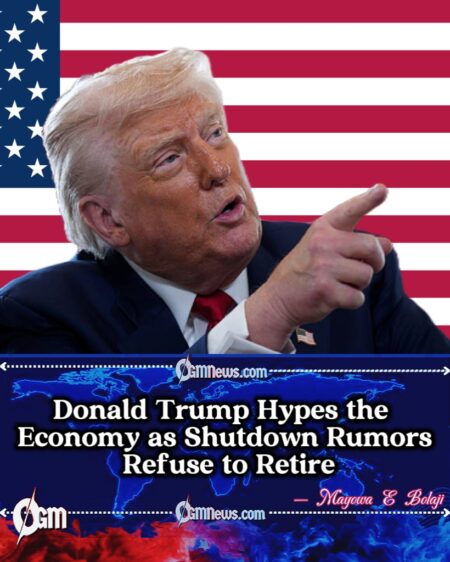
President Donald Trump, the current U.S. president serving a second term, on Tuesday highlighted a newly released economic report showing positive growth indicators, even as Washington grappled with renewed warnings of a possible federal government shutdown.
The contrasting developments underscored the fragile balance between economic optimism and political uncertainty that continues to define the administration’s second-term agenda.
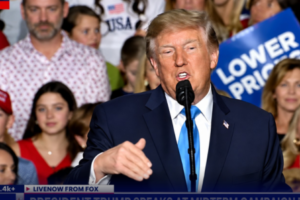
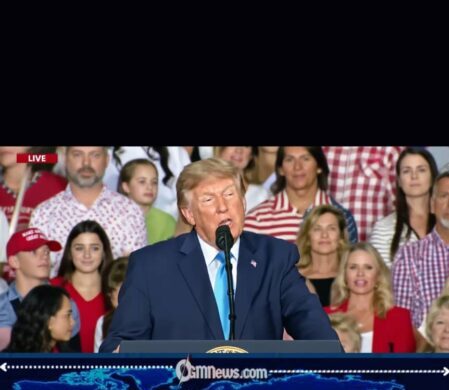
Speaking shortly after the report’s release, President Trump framed the data as evidence that his economic policies are delivering results for American workers and businesses.
However, lawmakers and policy analysts cautioned that unresolved budget disputes could undermine these gains if a shutdown disrupts federal operations in the coming weeks.
Economic Report Shows Signs of Momentum
The economic report cited by the president pointed to steady job creation, moderate inflation, and resilient consumer spending despite global uncertainties. According to administration officials, these indicators suggest that the U.S. economy remains on a stable growth path, supported by domestic production and consumer confidence.
Economists noted that while growth is not without challenges, the data reflects a level of resilience that has helped the United States weather recent market volatility. Sectors such as manufacturing, energy, and services showed incremental improvements, reinforcing the administration’s argument that its economic framework is producing measurable outcomes.
President Trump’s Response and Policy Emphasis
President Trump used the report to reiterate his commitment to tax discipline, deregulation, and domestic investment. He argued that these policies have helped strengthen businesses and protect jobs, particularly in key industrial regions.
In his remarks, the president also emphasized the importance of maintaining economic stability through legislative cooperation. While praising the report’s findings, he urged Congress to act responsibly to ensure that fiscal disagreements do not derail economic progress.
Shutdown Warnings Cast a Shadow
Despite the upbeat economic data, warnings of a potential government shutdown have grown louder as budget negotiations stall. Disagreements over federal spending priorities and funding timelines have raised concerns that parts of the government could face temporary closure if lawmakers fail to reach an agreement.
Past shutdowns have disrupted public services, delayed payments, and unsettled markets. Analysts warned that even the threat of a shutdown can dampen investor confidence and slow economic activity, particularly if uncertainty drags on.
Congressional Divisions and Negotiations
Negotiations on Capitol Hill remain tense, with both parties holding firm on key spending issues. While some lawmakers have expressed optimism that a last-minute deal could avert a shutdown, others acknowledge that significant gaps remain.
Moderate voices in Congress have called for compromise, stressing that prolonged political standoffs could undermine public trust and economic stability. Behind closed doors, discussions continue as leaders search for common ground before funding deadlines expire.
Market and Public Reactions
Financial markets responded cautiously to the mixed signals, balancing optimism from the economic report with unease over political gridlock. While major indices remained relatively stable, analysts noted that prolonged uncertainty could increase volatility.
Among the public, reactions were similarly divided. Supporters of the administration welcomed the positive economic news, while critics questioned whether the gains could be sustained without bipartisan cooperation on fiscal policy.
Outlook Amid Opportunity and Risk
Looking ahead, economists suggest that the administration’s ability to sustain economic momentum will depend largely on political stability.
Avoiding a government shutdown is widely seen as a critical test of governance in President Trump’s second term.
As negotiations continue, the coming days are expected to determine whether economic optimism can be translated into lasting confidence. The outcome will not only shape short-term market sentiment but also influence broader perceptions of leadership and policy effectiveness.
[…] […]