



























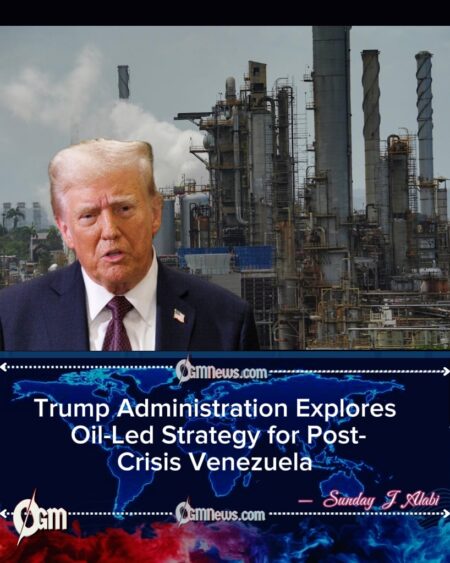
President Donald Trump, now serving his second term as U.S. president, is set to meet senior oil industry executives at the White House on Friday amid growing attention on Venezuela’s battered oil sector. The discussions come as Washington reassesses its energy and geopolitical strategy following dramatic developments in Caracas and renewed debates over how Venezuela’s enormous oil wealth could be brought back into global markets.
According to sources cited by Reuters, the meeting will focus on rebuilding Venezuela’s degraded oil infrastructure and exploring pathways to sharply increase crude output. With Venezuela holding the world’s largest proven oil reserves, the issue has become central to the administration’s foreign policy and energy objectives, raising far-reaching economic, legal and diplomatic questions.
Trump Administration Engagement with Oil Industry Leaders
The planned White House meeting will bring together President Trump and executives from leading oil companies to evaluate the technical and commercial challenges facing Venezuela’s oil industry. Years of underinvestment, mismanagement and sanctions have left production capacity severely diminished despite the country’s vast underground reserves.
Trump Administration officials view private-sector expertise as critical to any effort to rehabilitate Venezuela’s oil fields, pipelines and refineries. Industry input is expected to shape policy options ranging from limited technical assistance to broader investment frameworks, should political and legal conditions permit expanded involvement.
Venezuela’s Oil Sector After Years of Decline
Venezuela was once a cornerstone of global oil supply, but output has collapsed over the past decade. Ageing infrastructure, skilled labor flight and prolonged economic crisis have reduced production to a fraction of historical levels, leaving facilities in urgent need of repair and modernization.
Despite these setbacks, Venezuela’s reserves remain unmatched globally, making the country a strategic prize in energy markets. U.S. officials argue that restoring production could stabilize global supply while reshaping Venezuela’s economic future, though critics warn of complex sovereignty and governance concerns.
Political Upheaval and U.S. Objectives
Raising Venezuela’s crude output has emerged as a key objective for President Trump following a dramatic U.S. military operation in Caracas that resulted in the seizure of President Nicolás Maduro, while much of the existing state apparatus remained in place. The administration has signaled that energy policy will play a central role in shaping Venezuela’s post-crisis trajectory.
Officials close to the White House suggest that increased oil production could be used both as an economic lever and as a means of influencing the country’s political transition. However, the approach has drawn scrutiny from international observers concerned about precedent and international law.
The Role of U.S. Oil Companies
At present, Chevron stands as the only major U.S. oil company still operating in Venezuela, under tightly defined arrangements. Other American giants, including Exxon Mobil and ConocoPhillips, were once major producers before their assets were nationalized during the era of former president Hugo Chávez nearly two decades ago.
The White House meeting is expected to revisit the history of those nationalizations and assess whether conditions might eventually allow a broader return of U.S. firms. Any such move would likely require new legal guarantees and political stability to address longstanding disputes over property rights and compensation.
Trump’s Long-Standing Views on Oil and Military Power
President Trump’s current focus on Venezuela echoes positions he has expressed publicly for more than 15 years. He has repeatedly argued that the United States should use its military and political leverage to secure access to foreign oil resources, framing such actions as a way to offset the costs of war and intervention.
In interviews and media appearances dating back to before his first presidency, Trump openly criticized past U.S. administrations for failing to retain control of oil assets in conflict zones such as Iraq and Libya. Those statements, once seen as provocative rhetoric, are now being reexamined in light of the administration’s policies toward Venezuela.
Global Reactions and Broader Implications
International reaction to Washington’s stance has been mixed. Some energy analysts see potential benefits in restoring Venezuelan output to global markets strained by volatility and supply disruptions. Others warn that overt linkage between military power and resource control could provoke diplomatic backlash and legal challenges.
As President Trump prepares to engage directly with oil executives, the outcome of the discussions may signal how far his administration is willing to go in aligning U.S. foreign policy, energy security and corporate interests. The decisions taken could reshape not only Venezuela’s future, but also global norms around energy and intervention.


The vibes here are amazing and the winning streaks are real. It feels just like...