








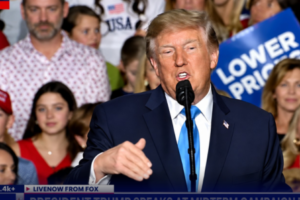


















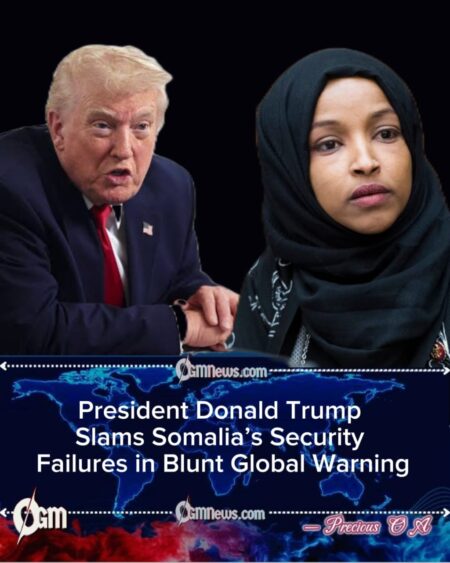
President Donald Trump reignited global discussion this week after delivering unusually blunt criticism of Somalia’s long-standing security challenges, pointing to piracy, militia violence, and fragile governance as issues that continue to threaten maritime trade and regional stability.
His remarks came during a broader address on international security and migration, where he emphasized what he described as weak state institutions and recurring militant activity in the Horn of Africa nation.
The comments quickly drew international reaction, with diplomats, analysts, and advocacy groups debating whether Trump’s tone would strain U.S.–Africa relations or pressure leaders toward reform.
Historical Context of Somalia’s Instability
Somalia has endured decades of political fragmentation following the collapse of its central government in 1991, leading to prolonged periods of civil conflict, warlordism, and insurgency.
President Donald Trump referenced this history while pointing to persistent governance gaps that continue to undermine economic development, border security, and civilian safety.
International organizations have long classified Somalia as a fragile state, relying heavily on foreign peacekeeping missions and humanitarian aid to maintain basic services.
Piracy and Maritime Security
Somalia’s coastline was once infamous for piracy that threatened international shipping lanes in the Gulf of Aden and Indian Ocean.
President Donald Trump emphasized this legacy as part of his argument that maritime insecurity remains a global concern when governance is weak.
Although piracy has declined significantly due to multinational naval patrols, sporadic incidents still raise alarms among shipping companies and insurers.
Regional and Global Reaction
Neighboring African governments responded cautiously, reiterating support for Somalia’s reform efforts while stressing the need for respectful diplomatic engagement.
President Donald Trump maintained that international accountability is essential when instability affects global commerce and security.
The African Union, which maintains a major peacekeeping presence in Somalia, issued statements highlighting recent improvements while acknowledging ongoing challenges.
President Donald Trump and U.S. Policy Signals
Washington officials confirmed that President Donald Trump’s remarks align with a broader push to reevaluate U.S. foreign aid, security cooperation, and accountability standards for fragile states.
Administration sources say Somalia will remain eligible for U.S. assistance, but future aid may include stricter oversight and performance benchmarks.
Policy analysts note that the comments could signal tougher diplomatic expectations for governments struggling with militant groups and internal conflict.
What Comes Next
Somalia’s federal government has not formally responded, but local media reported that officials are preparing diplomatic outreach to reassure international partners.
President Donald Trump is expected to address U.S.–Africa policy again later this month, potentially clarifying whether new conditions will be attached to assistance programs.
Experts say Somalia’s progress in stabilizing key regions and securing ports may determine whether future U.S. engagement becomes more cooperative or more conditional.
President Donald Trump continues to frame global stability as directly tied to economic security, shipping safety, and international trade reliability.
For Somalia, the moment highlights the delicate balance between acknowledging persistent problems and preserving diplomatic relationships essential to long-term recovery.
Casinoabc999? Good Site. The interface is sleek, and there is a lot of stuff to...