
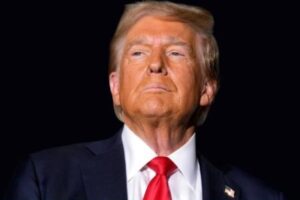

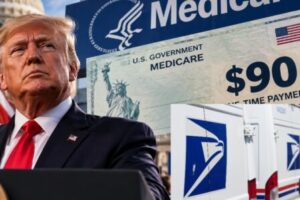
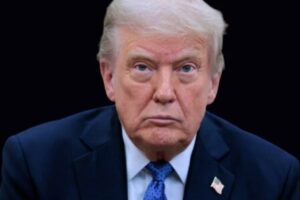


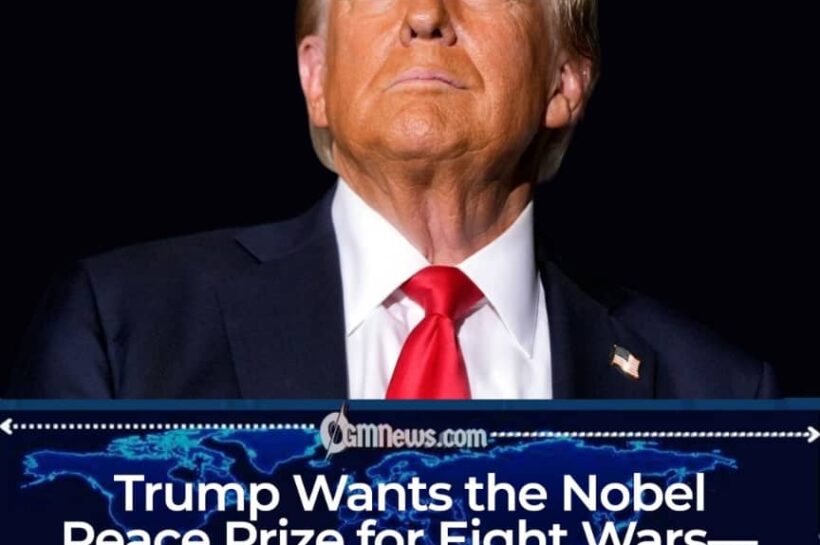












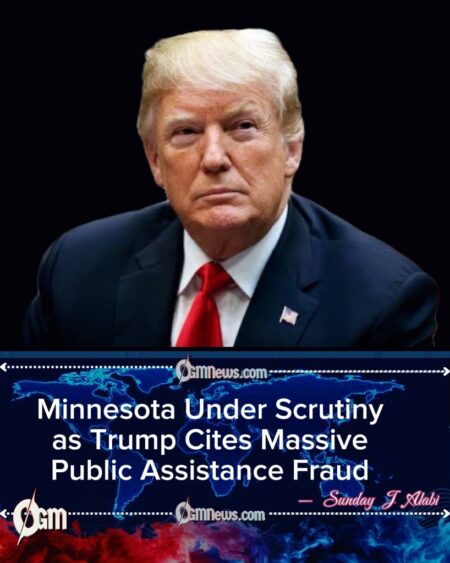
President Donald Trump, currently serving his second term as President of the United States, has escalated federal scrutiny of Minnesota’s public assistance system after alleging that as much as $18 billion in government funds may have been lost to fraud. Speaking at a New Year’s Eve gathering at his Mar-a-Lago resort, Trump described Minnesota as a focal point of what he called widespread abuse of social welfare programs, claims that have intensified national debate over immigration, oversight of public funds, and political accountability.
The president Trump’s remarks came amid renewed attention to longstanding investigations into alleged fraud schemes involving childcare, nutrition, and healthcare programs in Minnesota. The controversy has been amplified by a viral online video and has prompted swift federal action, including funding freezes, audits, and expanded law enforcement activity in the state.
Federal Allegations and President Trump Remarks
Addressing an audience that included cabinet members, political allies, and celebrities, President Trump alleged that federal investigators were uncovering “staggering” levels of waste and fraud tied to Minnesota’s social service programs. He stated that authorities had already identified $18 billion in questionable expenditures, adding that similar or worse situations might exist in states such as California, Illinois, and New York.
The president Trump emphasized that his administration was determined to pursue accountability, telling attendees that the federal government would “get to the bottom of all of it.” His comments underscored a broader policy position of tightening oversight on welfare spending and curbing what he views as systemic abuse linked to weak enforcement and lax political leadership at the state level.
Viral Video Sparks Renewed Scrutiny
The latest surge in public attention followed the release of a YouTube video by right-wing influencer Nick Shirley, who claimed to have uncovered up to $100 million in alleged fraud linked to daycare centers operated by Somali residents in Minneapolis. The video, which amassed millions of views within days, shows Shirley visiting facilities he described as inactive despite receiving substantial federal grants.
In the footage, several centers appeared closed, with no visible children or staff present. Shirley interviewed local residents who said they had not observed any childcare operations at the locations. While the video fueled public outrage and political reaction, state authorities have cautioned that viral content alone does not constitute proof of criminal wrongdoing.
Government Response and Ongoing Investigations
In response to the allegations, the Trump administration announced the freezing of $185 million in federal childcare funds allocated to Minnesota, pending a comprehensive audit. Homeland Security Secretary Kristi Noem confirmed that federal agents had been deployed to assist in what she described as a “massive investigation” into childcare and related fraud.
Federal prosecutors say investigations into Minnesota’s social service programs date back to 2022 and have already resulted in charges against 98 individuals, with at least 60 convictions secured. Prosecutor Joseph H. Thompson described the schemes as “industrial-scale fraud,” involving billing for services that were never provided, particularly during the COVID-19 pandemic.
The ‘Feeding Our Future’ and Medicaid Cases
Among the most significant cases is the “Feeding Our Future” scandal, in which prosecutors allege that fraudsters diverted approximately $300 million in grants meant to provide free meals to children during the pandemic. Authorities say the meals often did not exist, making it the largest COVID-era fraud case of its kind in the United States.
In addition, at least 14 Medicaid-funded programs in Minnesota remain under investigation for a separate alleged $9 billion fraud linked to pandemic-era billing. Federal officials, including Attorney General Pam Bondi, have noted that a large proportion of defendants in these cases are of Somali descent, a fact that has intensified political and social tensions.
Political Fallout and Accusations of Negligence
Republican officials have accused Minnesota’s Democratic leadership of ignoring warning signs out of concern for political repercussions. State Representative Kristin Robbins claimed that whistleblowers were discouraged from raising alarms for fear of being labeled racist or Islamophobic.
Democratic Governor Tim Walz has rejected these accusations, maintaining that his administration cooperated with federal authorities once credible evidence emerged. Other state leaders have acknowledged shortcomings in oversight but caution against politicizing ongoing investigations or making broad generalizations about immigrant communities.
Community Impact and Civil Rights Concerns
Minnesota’s Somali-American community, which began forming in significant numbers in the 1990s and now includes roughly 94,000 Somali speakers in the Minneapolis–St. Paul area, has expressed fear and anxiety following heightened rhetoric and increased immigration enforcement. Community leaders report increased law enforcement activity and concern that entire neighborhoods are being stigmatized.
Local officials and civil rights advocates argue that while fraud should be prosecuted, it must not lead to collective blame. Some lawmakers have warned that aggressive rhetoric and raids risk undermining trust between immigrant communities and authorities, potentially harming public safety and social cohesion.
National Debate Over Oversight and Immigration Policy
The Minnesota controversy has become a focal point in a broader national debate over immigration, welfare oversight, and political accountability. Supporters of the Trump administration argue that the case demonstrates the need for stricter controls and tougher enforcement, while critics warn against conflating criminal investigations with immigration policy.
Federal agencies, including the FBI and the Department of Health and Human Services, say investigations remain ongoing. Officials stress that conclusions will be based on evidence gathered through audits, financial records, and court proceedings, not solely on social media reports.
[…] […]