














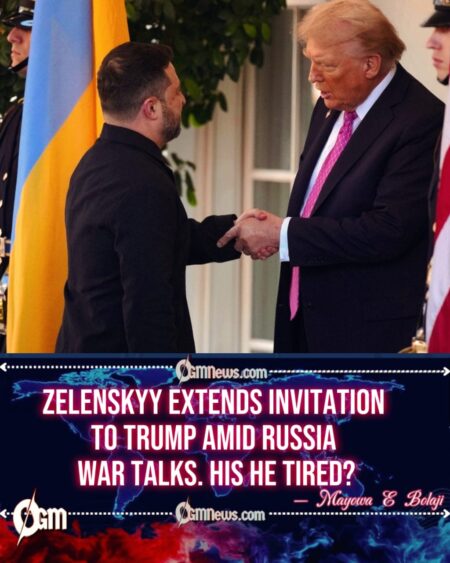
President Volodymyr Zelenskyy has publicly suggested that U.S. President Donald Trump, currently serving his second term in office, visit Ukraine as part of renewed efforts to help move negotiations toward a peace agreement with Russia. The proposal comes amid continued fighting, diplomatic stalemate, and growing international concern over the long-term stability of Eastern Europe.
Zelenskyy’s remarks reflect Kyiv’s desire to reenergize high-level diplomacy by involving Washington more directly on the ground. By inviting President Trump to Ukraine, the Ukrainian leader appears to be signaling confidence that direct engagement by the U.S. president could help narrow gaps between the warring sides and lend new momentum to talks that have struggled to gain traction.
A Diplomatic Appeal at a Critical Juncture
Zelenskyy’s call follows months of intermittent diplomatic contacts between Ukraine, Russia, and international mediators, with limited progress toward a durable ceasefire. While back-channel discussions have continued, public breakthroughs have been rare, and both sides remain deeply divided over territorial control and security guarantees.
By proposing a presidential visit, Zelenskyy is elevating the discussion to the highest political level. Ukrainian officials argue that such a move would underscore the seriousness of Kyiv’s commitment to peace while reinforcing the role of the United States as a central diplomatic actor in efforts to end the conflict.
The Role of the United States in Peace Efforts
The United States has been a key supporter of Ukraine since the outbreak of the war, providing military, economic, and humanitarian assistance. Under President Trump’s second-term administration, Washington has emphasized a stated interest in exploring pathways to end the conflict while maintaining U.S. strategic interests in Europe.
A visit by President Trump to Ukraine would represent a significant diplomatic gesture. Analysts note that such engagement could strengthen U.S. leverage in negotiations, though it would also require careful coordination with allies to ensure a unified Western position toward Russia.
Zelenskyy’s Strategy of Direct Engagement
President Zelenskyy has consistently advocated for direct, leader-to-leader diplomacy as a means of breaking deadlocks. His invitation to President Trump fits within a broader pattern of outreach to global leaders, including appeals for visits to Kyiv as a way of demonstrating solidarity and gaining firsthand insight into conditions on the ground.
Ukrainian officials believe that personal diplomacy can humanize the conflict and clarify Ukraine’s priorities in ways that formal statements and negotiations cannot. A visit, they argue, could also help shape the tone and direction of any future peace talks involving Washington.
Moscow’s Likely Response and Regional Implications
Russia has not publicly responded to Zelenskyy’s suggestion, but any U.S. presidential involvement would be closely scrutinized in Moscow. Russian officials have historically expressed skepticism about U.S. mediation, often framing Washington as a partisan actor rather than a neutral broker.
Nonetheless, regional observers note that increased U.S. engagement could alter diplomatic calculations. Even if a visit does not immediately produce an agreement, it could create new channels for dialogue and influence the broader security landscape in Eastern Europe.
Risks and Opportunities of a Presidential Visit
While the potential benefits of a visit are significant, so are the risks. Security concerns, political sensitivities, and the possibility of raising expectations without concrete outcomes all factor into the decision-making process. Any trip would need to be carefully planned to avoid undermining ongoing diplomatic efforts.
At the same time, supporters argue that high-level diplomacy often requires calculated risks. A visit by President Trump could signal renewed urgency, encourage compromise, and remind all parties of the international community’s interest in a negotiated settlement.
Prospects for Peace Talks
Zelenskyy’s proposal highlights Ukraine’s continued emphasis on diplomacy alongside military defense. Whether or not President Trump accepts the invitation, the suggestion itself underscores Kyiv’s desire to keep peace talks on the international agenda.
As the conflict persists, the coming months may test whether intensified diplomatic engagement—particularly involving major global powers—can translate into meaningful progress. For now, Zelenskyy’s call serves as a reminder that Ukraine is seeking not only support, but active participation from its allies in the search for peace.

Logging in is a breeze and the site stability is amazing even during peak hours....