











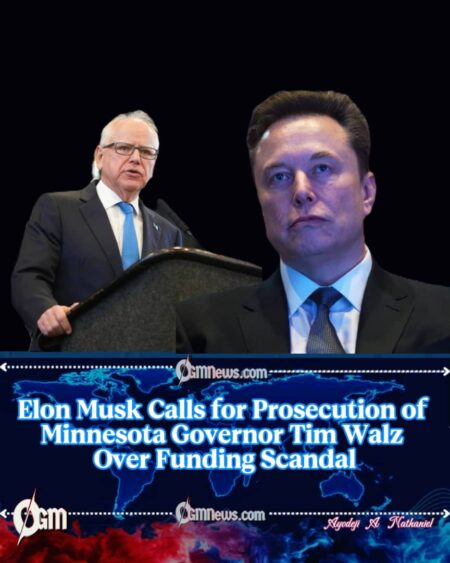
Elon Musk has ignited a national political and governance debate after publicly calling for the prosecution of Minnesota Governor Tim Walz, alleging that the governor knowingly allowed taxpayer funds to continue flowing to a Somali-focused learning center despite a record of documented violations. The remarks have intensified scrutiny of state oversight mechanisms and raised broader questions about accountability in public funding.
The dispute, now drawing widespread attention, sits at the intersection of regulatory enforcement, political responsibility, and public trust. While Elon Musk’s statements have been forceful, officials and legal analysts emphasize that allegations alone do not constitute proof of criminal wrongdoing and that established investigative processes must guide any further action.
Public Accusations and Their National Impact
Elon Musk made his position clear in a widely circulated statement in which he asserted that Governor Walz was aware of repeated compliance failures linked to the learning center. According to Musk, the continued licensing and funding of the institution suggested a serious lapse in governance rather than an administrative oversight.
His comments quickly gained traction across political and media platforms, elevating what had previously been a state-level issue into a national conversation. Supporters argue that Musk’s intervention brings overdue attention to how public funds are monitored, while critics caution against drawing conclusions before formal investigations are conducted.
The Learning Center and Regulatory Concerns
The learning center at the heart of the controversy has previously faced citations from state regulators over operational and administrative deficiencies. Public records indicate that inspectors identified issues that typically trigger corrective measures or, in severe cases, suspension of licenses.
Despite these findings, the institution continued to receive public funding, a fact that has prompted renewed examination of how enforcement decisions are made. Advocates for the center maintain that it provides critical educational and social services and that steps were taken to address the cited violations.
Governor Walz and Executive Accountability
Elon Musk has framed the issue as one of executive responsibility, arguing that prolonged regulatory failures reflect leadership shortcomings at the highest levels of state government. Governor Tim Walz, however, has not been charged with any crime, and licensing decisions are generally administered by state agencies rather than the governor’s office directly.
Political analysts note that while governors may not oversee day-to-day regulatory actions, they remain responsible for ensuring that agencies function effectively. Critics of the Walz administration argue that persistent issues suggest systemic weaknesses that merit independent review.
Legal Thresholds and Due Process
Elon Musk has called for prosecution, but legal experts emphasize that criminal cases require evidence of intent, misconduct, or abuse of authority. Knowledge of agency actions alone is insufficient to meet the standard required for criminal liability.
At present, there is no public confirmation of a criminal investigation related to the matter. Legal scholars stress the importance of separating political criticism from judicial standards, warning that premature calls for prosecution risk undermining due process.
Political Reactions and Public Debate
Elon Musk has received mixed reactions from lawmakers and public commentators. Some praise his willingness to challenge political leaders and demand transparency in the use of taxpayer money, while others accuse him of oversimplifying a complex regulatory framework.
The controversy has also reignited debate over the influence of prominent private individuals in political discourse, particularly when their statements can shape public perception before official inquiries reach conclusions.
Implications for Governance and Public Trust
Elon Musk has, intentionally or not, spotlighted broader concerns about regulatory enforcement and public accountability. Observers note that the case underscores the need for transparent oversight processes that protect both public funds and institutional integrity.
As scrutiny continues, the outcome may influence future policy discussions on governance reform, agency accountability, and the balance between political advocacy and legal standards in democratic systems.

The weekly tournaments here keep me coming back because the prize pools are surprisingly generous....