





























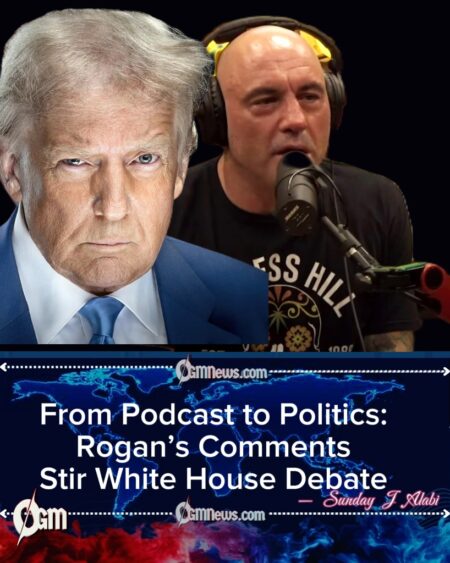
Popular podcaster and comedian Joe Rogan has publicly questioned the recent behavior of President Donald Trump, describing some of the president’s actions as “nutty” and sparking renewed debate about age, stress, and leadership at the highest level of American politics. The remarks, made during an episode of The Joe Rogan Experience, have attracted widespread attention because Joe Rogan endorsed Trump during the 2024 election and has often defended him against critics.
Joe Rogan’s comments came during a broader discussion with fellow comedian Tom Segura, touching on presidential decision-making, symbolic gestures from the White House, and the personal toll of holding office. While Rogan stopped short of questioning Trump’s capacity to govern, his remarks have added fuel to ongoing national conversations about transparency, political symbolism, and the pressures faced by a 79-year-old president serving a second term.
Joe Rogan’s Remarks and the Spark of Controversy
Joe Rogan first raised eyebrows by openly describing President Trump’s recent behavior as “nutty,” a word he repeated several times during the podcast. The comments were framed not as partisan criticism but as personal bewilderment at certain decisions and public gestures attributed to the president in recent weeks.
Tom Segura echoed these sentiments, suggesting that Trump appeared to be “losing it” based on symbolic actions such as the renaming of the Kennedy Center after himself. Joe Rogan responded by agreeing that age can affect anyone’s judgment, adding that reaching a certain stage in life often brings changes in behavior and perspective.
Despite the blunt language, Joe Rogan maintained a reflective tone, emphasizing that his comments were rooted in concern rather than hostility. He acknowledged the extraordinary demands of the presidency and suggested that even experienced figures can struggle under sustained pressure.
The ‘Wall of Fame’ and Political Symbolism
A significant portion of Joe Rogan’s criticism focused on newly installed descriptive plaques beneath portraits of former presidents, referred to informally as a “wall of fame.” Joe Rogan expressed disbelief at the language used on some of the plaques, particularly those targeting President Joe Biden and former President Barack Obama.
According to Joe Rogan, the plaque for Biden refers to him as “Sleepy Joe Biden” and labels him “by far, the worst President in American History.” As Rogan read the inscriptions aloud, he questioned their appropriateness, asking how such language could be officially sanctioned within the White House.
The plaques, which employ sharp and personalized rhetoric, have reignited debate over decorum and tradition in American political institutions. Supporters see them as expressions of Trump’s unfiltered style, while critics argue they undermine the dignity historically associated with the presidency.
Stress, Trauma, and the Weight of Office
Joe Rogan also contextualized his concerns by pointing to the immense stress President Trump has faced in recent years. He referenced multiple investigations, legal battles, and what Trump has repeatedly described as politically motivated efforts to undermine him, including the long-running Russia inquiry.
The podcaster further noted that Trump is still within 18 months of having survived an assassination attempt, an experience Rogan suggested could have lasting psychological effects. He argued that enduring such intense scrutiny and danger could “break your brain,” regardless of age or resilience.
In this context, Rogan floated the idea that Trump might benefit from a strong right-hand adviser capable of tempering impulsive decisions. He framed this suggestion as practical support rather than criticism, emphasizing the human cost of sustained political conflict.
Trump Administration Pushback and Evidence of a Grueling Schedule
The Trump administration has consistently pushed back against suggestions that the president’s age affects his performance. Earlier this month, a leaked version of the president’s schedule appeared to support claims of a demanding workload.
Over a two-week period, President Trump reportedly averaged about 21 meetings per day, often beginning his workday around 8:30 a.m. and continuing well into the evening. These meetings included engagements with staff, lawmakers, foreign dignitaries, and business leaders, with CEOs featuring prominently across several days.
On December 3, Trump reportedly held 32 separate events, marking his busiest day, while a December 9 rally in Pennsylvania stretched from mid-morning until nearly 11 p.m. The White House has cited these figures as evidence of the president’s stamina and ongoing engagement.
Health Disclosures and Public Scrutiny
Public discussion of the president’s health intensified earlier this year following photographs that showed bruising on Trump’s hand, which the White House attributed to frequent handshaking. Subsequent images of swollen legs and ankles prompted the administration to disclose that Trump had been diagnosed with Chronic Venous Insufficiency.
While the condition affects circulation in the legs, the White House stressed that it does not impair cognitive function or the president’s ability to carry out his duties. Officials have accused critics of exaggerating routine medical issues for political gain.
At the same time, media analysis has shown a 39 percent decline in the number of Trump’s official White House appearances compared to his first term. The administration argues that this reflects changes in scheduling priorities rather than reduced capacity.
Politics, Perception, and a Familiar Double Standard
The controversy has also revived accusations of political double standards. Throughout Joe Biden’s time in office, Trump and his Republican allies frequently criticized Biden’s age, public appearances, and mental sharpness. Now, some Democrats and commentators argue that similar scrutiny should apply to Trump.
During a recent trip to Mount Pocono, Pennsylvania, billed as an economic address but resembling a campaign rally, Trump defended his second-term record before a large and enthusiastic crowd. The event underscored his continued connection with his political base as midterm elections approach.
As debate continues, Joe Rogan’s comments highlight a broader national question: how to balance transparency, respect, and honest discussion when assessing the performance of aging leaders in high-stakes roles.
Casinoabc999? Good Site. The interface is sleek, and there is a lot of stuff to...