



























Donald Trump, the current U.S. president serving a second term, is facing renewed scrutiny as fresh federal data show inflation holding at around 3% in September, with grocery prices still rising and beef costs surging far above overall inflation. While the president has repeatedly emphasized improvements in the U.S. economy and downplayed food price concerns, consumer data continues to paint a more complicated picture. For millions of Americans, supermarket receipts contradict assurances that prices are stabilizing.
Donald Trump and the September Inflation Breakdown
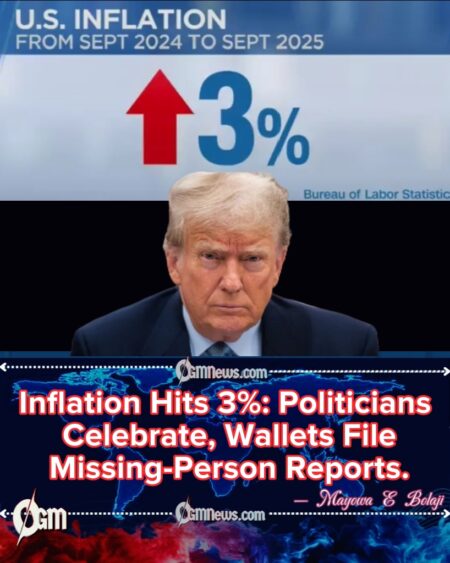
Donald Trump has frequently pointed to national inflation trends as evidence of improving economic conditions. However, the latest Consumer Price Index indicates that inflation remains steady at 3%, a rate that is significantly lower than early-decade spikes but still high enough for households to feel persistent pressure.
Economists note that while headline figures show moderation, essential categories — especially food — continue to rise at levels that affect day-to-day living costs. The food index increased by more than 3% year-over-year, showing that grocery affordability challenges remain deeply rooted.
Trump and Rising Grocery Costs for American Families
Donald Trump has defended his administration’s economic policies, but grocery store data reveal a different on-the-ground experience for many households. The food at home index climbed again, with most major categories — dairy, grains, oils, and proteins — posting year-over-year increases.
Shoppers continue to adjust their habits in response, turning to discount brands, cutting non-essentials, and adopting tighter meal-planning strategies. The consistent upward trend suggests that families are still grappling with higher food bills despite the administration’s optimistic framing.
Donald Trump’s Economic Messaging vs. Beef Prices Soaring Over Time
Donaldp has often highlighted what he calls misleading narratives about food costs, but data show that beef prices have risen an extraordinary 300% since 2020. Even compared to last year alone, average beef prices have jumped by $2 per pound, with some cuts rising even faster.
Industry analysts attribute this to years-long supply factors, including a reduced cattle herd, high feed prices, and drought-related constraints. These structural issues push beef costs far above general inflation, making beef one of the strongest drivers of grocery-store frustration.
Donald Trump and the Politics of Price Perception
Trump has criticized what he terms “grocery gaslighting,” accusing political opponents and media outlets of misrepresenting inflation trends. Yet economists warn that selective messaging can distort public understanding of economic conditions.
Critics argue that while inflation has improved from its highest levels, statements suggesting falling prices misrepresent reality for consumers who still face elevated costs daily. Many analysts caution that framing differences — such as comparing month-over-month figures instead of year-over-year — can make economic conditions appear better than lived experience suggests.
Donald Trump and Structural Pressures on the Food Supply Chain
Donald Trump’s administration has focused on trade policy and supply-chain resilience, but long-standing industry challenges continue to affect price trends. Concentration among meatpacking giants, drought effects, transportation costs, and global market tensions all contribute to higher food prices.
Efforts to address competition concerns have sparked debate in Washington, with some lawmakers calling for stronger regulatory measures to prevent excessive price controls by dominant processors. These structural issues mean price relief may remain slow, despite political assurances.
Donald Trump and What Americans Can Expect Going Forward
Donald Trump has promised that economic conditions will continue to improve, but analysts predict only gradual easing of grocery inflation. While the overall inflation outlook remains cautiously optimistic, the categories that matter most to households — food, housing, energy — show little sign of immediate relief.
Future CPI reports, global commodity conditions, and domestic policy decisions will determine how quickly Americans experience noticeable changes at the checkout. Until then, families may continue facing costs that defy optimistic political messaging.


[…] […]