























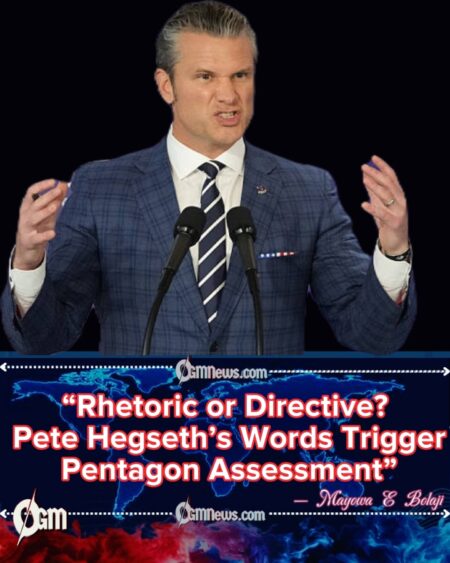
Pete Hegseth said the unfolding situation requires clarity, accountability, and a full legal review as his comment — “kill them all” — during a discussion on launching strikes against hostile boats continues to trigger intense debate across military, legal, and political circles.
Pete Hegseth Calls for Transparency as Controversy Over Strike Orders Deepens
Pete Hegseth stated that the public deserves a clear explanation of the circumstances surrounding the intercepted communication in which he was heard saying “kill them all” during a briefing on potential strikes against small hostile vessels. The phrase, which appeared to suggest authorization of force without confirming imminent threat, has sparked scrutiny over whether such language aligns with U.S. military engagement protocols.
He emphasized that the remark has been taken “out of operational context,” noting that any military action must comply with lawful rules of engagement approved by the current U.S. president, who is serving his second term. Despite attempts at clarification, legal analysts are raising concerns about whether the situation represents procedural misuse of authority or a communication failure.
Pete Hegseth Demands Legal Review Amid Questions on Authorization and Protocol
Pete Hegseth stated that a full legal review would help determine whether protocols were properly followed before any strike discussions were held. Experts have pointed out that the absence of an imminent threat—if confirmed—could complicate the legality of ordering or encouraging lethal force under international law.
Military attorneys familiar with the rules of engagement note that any kinetic response must satisfy both “necessity” and “proportionality” standards. If no immediate threat existed, the authorization process for a strike might face significant internal review. Hegseth maintained that the chain of command was fully intact and that he did not independently authorize any strike.
Pete Hegseth Addresses Concerns Over Civilian Oversight and Military Decision-Making
Pete Hegseth acknowledged that the incident has reopened broader debates over civilian oversight of military operations and the communication style of senior advisers. Critics argue that language suggesting blanket violence can influence junior officers and complicate real-time decision-making.
Supporters contend that the remark, though harsh, may reflect the high-pressure environment of security briefings where hostile vessels have repeatedly tested U.S. naval boundaries. The wider question now centers on how verbal commands—formal or informal—are interpreted within a complex command structure.
Pete Hegseth Highlights Tension Between Strategic Messaging and Operational Discipline
Pete Hegseth indicated that strategic messaging often becomes intertwined with operational discussions, especially when addressing adversaries who test U.S. resolve. He asserted that strong rhetoric is sometimes used as deterrence but should not be mistaken for official military directives.
Analysts note that this controversy exposes the thin line between forceful communication and statements that appear to advocate unlawful action. The Pentagon has initiated an internal assessment to determine whether the comment influenced any tactical decisions.
Pete Hegseth Calls for Balanced Evaluation Without Political Weaponization
Hegseth urged observers not to turn the incident into a partisan tool, emphasizing that national security decisions should remain insulated from political escalation. The U.S. president, currently serving a second term, has been briefed, according to administration sources.
Legal scholars warn that the investigation may have long-term implications for how advisory remarks from media personalities, civilian appointees, or policy commentators are treated when they intersect with military decision-making. Hegseth reiterated that all actions taken must remain within legal and constitutional parameters.
[…] […]