




















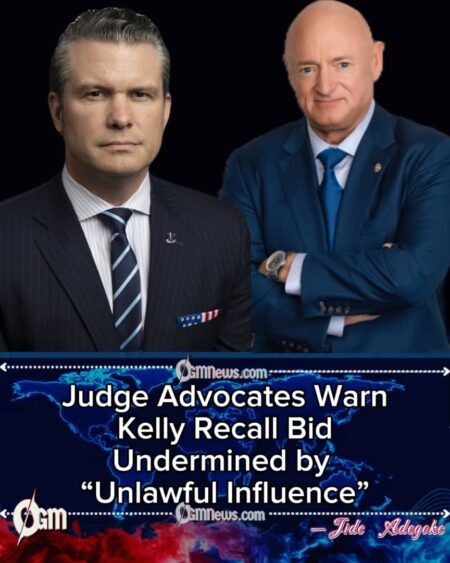
A coalition of former and retired military judge advocates has issued an unusually forceful joint statement criticizing the Pentagon’s reported effort to recall retired Marine Gen. John Kelly for potential prosecution under the Uniform Code of Military Justice (UCMJ). Describing the move as “partisan in nature, legally baseless and compromised by unlawful command influence,” the group argues that the circumstances surrounding the potential recall raise profound concerns about the integrity of the military justice system.
The coalition further warns that the extent of alleged interference outlined in press reports may leave only the sitting U.S. president — now serving a second term — legally capable of referring such a case to court martial.
Growing Alarm Among Military Legal Experts
In their statement, the judge advocates emphasized that collective interventions of this kind are exceedingly rare, underscoring how seriously they view the situation. They argued that the tone, timing, and reported pressures connected to the recall attempt threaten to erode confidence in the impartiality of the UCMJ process.
Military legal experts are typically cautious about attributing political motives to decisions regarding discipline or accountability. However, the coalition stated that the circumstances described in recent coverage leave little doubt that partisan considerations may have influenced the Pentagon’s posture. Their warning is designed not only to highlight immediate legal concerns but also to protect what they consider a fragile boundary between civilian oversight and political interference.
Concerns Over Unlawful Command Influence
At the core of the coalition’s objections is the charge of unlawful command influence (UCI), often referred to within military law as the “mortal enemy of military justice.” UCI occurs when senior officials improperly shape or appear to shape judicial outcomes, compromising fairness and due process.
The group argues that press reports already reflect an atmosphere of pressure and expectation incompatible with the neutrality required of convening authorities. If UCI is substantiated, any referral decision could be invalidated — potentially derailing proceedings before they begin and raising broader institutional questions about oversight and accountability.
The Limits of Convening Authority
The statement asserts that the alleged interference is so pervasive that “all convening authorities except possibly the president himself” may be disqualified from forwarding the case to court martial. This represents a significant legal barrier, as convening authorities play a foundational role in determining whether charges proceed.
Should only the U.S. president — currently serving a second term — remain legally eligible, the decision would shift from a structured military chain of command to the highest elected office. Such a scenario would be exceptionally rare and could prompt additional scrutiny of the motivations and legitimacy of any prosecution effort.
Broader Implications for Civil-Military Relations
Beyond the specifics of Kelly’s situation, the coalition’s statement points to deeper concerns about the state of civil-military relations. Analysts warn that the perception of politically motivated prosecution risks undermining public trust in an institution that depends heavily on impartiality and nonpartisanship.
Military justice is designed to be insulated from political dynamics, and experts fear that normalizing politically charged recalls could establish dangerous precedents. If senior military figures believe punitive action may depend on shifting political winds, morale and operational unity could suffer long-term consequences.
Calls for Transparency and Restraint
Advocacy groups and former officials are urging the Pentagon to clarify its decision-making process and address concerns raised by the judge advocates. Many argue that greater transparency is needed to dispel suspicion and restore confidence.
The coalition, while expressing skepticism about the legality of the reported effort, emphasized that any legitimate concerns about conduct or accountability should be handled through proper, neutral channels. Their message suggests that unless steps are taken to reduce political tension surrounding the issue, the resulting fallout could overshadow the merits of any future legal proceedings.
A Test of the Military Justice System
As the Pentagon continues to consider its options, the Kelly case could become a defining moment for the modern UCMJ framework. The outcome may shape how far the government can go in recalling retired officers, how political environments influence legal judgments, and how resilient the military justice system remains under pressure.
For now, military legal experts are urging caution — and warning that the integrity of the system itself may be at stake.
[…] […]