


















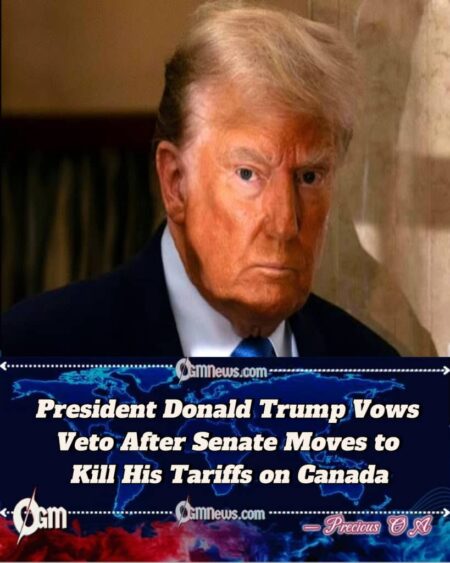
President Donald Trump’s controversial tariffs on Canadian goods suffered a major setback on Tuesday as the U.S. Senate voted 50–46 to terminate the measures, dealing a sharp blow to the president’s protectionist economic strategy. The decision marks the most direct challenge yet to Trump’s trade agenda in his second term, revealing a rare bipartisan effort to rein in executive authority over international commerce and reassert Congress’s influence over trade policy decisions that have far-reaching consequences for American industries and workers.
The tariffs, reimposed earlier this year on Canadian steel, aluminum, and agricultural imports, were justified as necessary to defend American manufacturing from “unfair trade practices.” However, critics from both parties accused the policy of damaging domestic industries, inflating prices, and straining relations with one of the United States’ most reliable allies. Lawmakers who supported the repeal described the tariffs as outdated and counterproductive, saying they hurt more American businesses than they protected. Economists have long argued that such policies often spark retaliation, creating a cycle of economic pain for both nations involved — and that is exactly what happened with Canada’s counter-tariffs, which impacted U.S. farmers and manufacturers alike.
Donald Trump’s approach to trade has long divided Washington. Supporters credit his aggressive tactics for revitalizing key manufacturing sectors and forcing foreign governments to reconsider trade imbalances, while opponents argue the tariffs have backfired, especially for industries dependent on imported raw materials and components. The Senate’s narrow 50–46 vote underscores the growing unease among lawmakers who fear that the president’s trade war could undermine long-term economic stability, raise consumer prices, and weaken critical alliances.
Allies in Congress have defended his policy, insisting that the short-term economic pain will lead to long-term gains for American workers. They contend that Trump’s willingness to confront trading partners directly has restored America’s negotiating power on the global stage. But Tuesday’s vote suggests that frustration over rising costs, retaliatory tariffs from Canada, and ongoing market uncertainty has reached a tipping point among U.S. legislators. The decision not only signals a shift in tone within Congress but also raises questions about how far lawmakers are willing to go in curbing the president’s expansive use of economic nationalism as a tool of foreign policy.
White House Defends Tariffs as Essential to U.S. Economic Strength
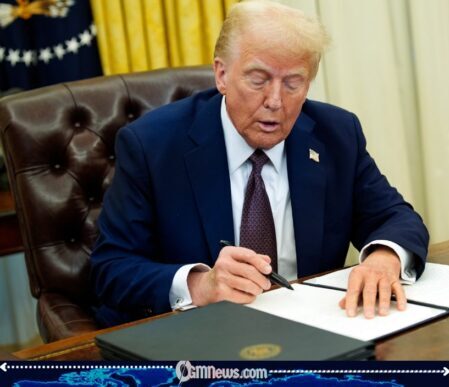
The White House swiftly condemned the Senate’s decision, calling it a “reckless surrender of America’s economic power.” In a written statement released hours after the vote, Donald Trump vowed to veto the resolution, saying, “We will not allow Washington insiders to undo the hard work we’ve done for American workers. Canada has taken advantage of our generosity for too long.” His remarks were in line with his consistent belief that America’s prosperity must come from prioritizing its own production and labor force over foreign imports.
Senior aides described the tariffs as a cornerstone of his “America First” economic vision, designed to protect key industries from foreign dumping and restore balance to global trade. Commerce Secretary Wilbur Ross defended the policy, saying it “gave the U.S. leverage in negotiations that had been one-sided for decades.” Administration officials argue that the tariffs helped to revive U.S. steel and aluminum production, create domestic jobs, and send a clear message that the era of unchecked trade deficits is over.
Critics, however, argue that the tariffs have isolated the United States diplomatically while burdening consumers and businesses with higher prices and limited access to vital goods. Economists point out that retaliatory Canadian tariffs, targeting U.S. agricultural products and manufactured goods, have cost American exporters billions of dollars since the measures took effect. Many small business owners have also reported difficulty competing due to increased material costs, while farmers have seen markets dry up as Canada sought new trading partners in Europe and Asia to offset lost U.S. demand.
Donald Trump’s determination to continue the policy highlights his belief that economic sovereignty outweighs short-term market losses. At a rally last week, he reiterated his stance, saying, “If we don’t stand up for our workers, nobody else will. Tariffs are how we make sure the world plays fair.” The president’s supporters often echo that sentiment, praising his resolve to prioritize American interests despite domestic opposition and global criticism. To them, Trump’s tariffs are not just an economic tool but a declaration of independence from what he often calls “unfair globalist systems” that disadvantage the American middle class.
Political Fallout and Economic Uncertainty Ahead
Donald Trump’s looming veto sets up another showdown between the White House and Congress. If he follows through, lawmakers will need a two-thirds majority in both chambers to override it — a nearly impossible threshold given current divisions. The episode has sparked debate over whether Congress should reclaim more control over trade policy from the executive branch, an authority presidents have gradually expanded over the last several decades. The question now is whether this Senate action marks the beginning of a new era of legislative assertiveness or simply a symbolic rebuke that will fade under the weight of presidential power.
The president’s economic team insists that lifting the tariffs now would “send a message of weakness” to global competitors. Yet, many senators argue that the tariffs have outlived their purpose and are now doing more harm than good. Several key industries, particularly in the Midwest and border states, have reported significant financial strain due to disrupted supply chains and rising input costs. Farmers in Wisconsin, Michigan, and Iowa have spoken publicly about their struggles to maintain profit margins amid retaliatory measures from Canada. Manufacturers have likewise warned that production slowdowns could lead to job cuts if the trade standoff continues indefinitely.
Donald Trump’s political opponents are seizing on the moment, framing the Senate’s decision as evidence that even members of his own party are losing patience with his combative economic strategy. Analysts predict the tariff issue could influence upcoming midterm campaigns, as candidates on both sides seek to frame their positions on trade as either patriotic or pragmatic. For Democrats, the vote is a chance to portray Trump’s approach as economically reckless; for Republicans, it represents a delicate balance between loyalty to the president and accountability to constituents feeling the economic strain.
Canada’s Prime Minister Justin Trudeau has welcomed the Senate’s vote, calling it “a step toward restoring stability and trust between two close allies.” Still, with the president promising a veto and defending his policy as “a fight for America’s future,” uncertainty continues to hang over North America’s economic outlook. The ongoing tension underscores the fragility of cross-border trade relations that once served as the backbone of regional prosperity. Businesses and investors on both sides of the border are now bracing for more volatility, unsure whether the Senate’s action will lead to lasting relief or trigger yet another round of tariff escalation.
Donald Trump’s tariffs may yet survive this congressional challenge, but the Senate’s defiance has made one thing clear: the battle over America’s trade identity is far from over — and the president remains determined to keep his tariffs at the center of that fight. His unwavering stance continues to shape both the nation’s economy and its image on the world stage, as allies and adversaries alike watch closely to see whether the world’s largest economy will continue to lead through confrontation or cooperation.

[…] […]