


























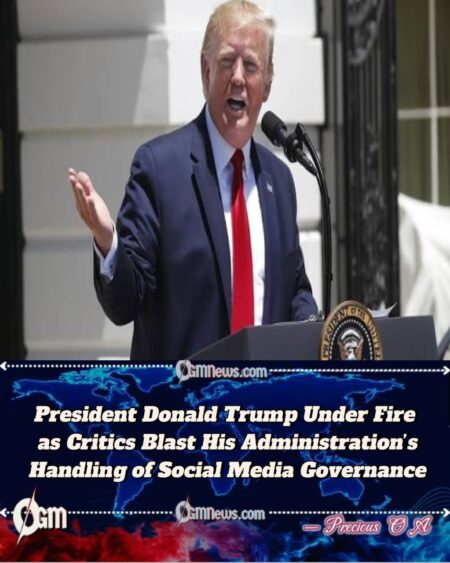
President Donald Trump, the current U.S. president serving a second term and known for his assertive efforts to reshape federal law-enforcement leadership, now faces a significant challenge after a federal judge ruled that his chosen U.S. Attorney in Los Angeles was serving “unlawfully.” In recent years, Trump has made the restructuring of prosecutorial oversight a central pillar of his administration, asserting that loyal appointees are essential to restoring what he considers fairness, accountability, and discipline within the justice system. The ruling, however, suggests a judicial pushback against what critics describe as a campaign to centralize legal authority within the executive branch.
Donald Trump selected Bill Essayli to lead the U.S. Attorney’s Office for the Central District of California without obtaining Senate confirmation, a move the court declared incompatible with federal appointment rules. Trump’s supporters argue that the Senate’s pace on confirmations has been obstructive and partisan, forcing the administration to fill crucial leadership roles through interim mechanisms. But according to the court, legal procedures cannot be bypassed indefinitely simply because the executive branch is eager to install a preferred figure in a position of immense legal influence.
Donald Trump allowed Essayli to remain beyond the legal 120-day limit for interim prosecutors, prompting the judge to strip Essayli of the authority to continue in the top federal prosecutor role. The Central District of California — which covers nearly 20 million residents and handles enormous caseloads involving national-security matters, corruption, violent crime, and significant white-collar investigations — now finds itself without a legally recognized leader as a result. Analysts warn that such a power vacuum, created in the wake of a high-level administrative miscalculation, may lead to operational delays, confusion, and a complicated reshuffling of responsibilities.
The ruling has intensified concerns among legal experts who say the administration’s heavy reliance on acting officials has now triggered a serious confrontation with established statutory limits. Many scholars note that while interim appointments can ensure government continuity, they are meant as temporary bridges — not long-term substitutes for constitutional oversight. By allowing Essayli to remain in a powerful position for such an extended period, Trump’s administration has unintentionally opened the door to legal challenges that could undermine federal enforcement efforts in the region.
Donald Trump faces renewed scrutiny as legal analysts warn that the ruling signals a hard line from the judiciary against executive overreach. Judges across the country have increasingly highlighted the importance of procedural legitimacy, emphasizing that the rule of law is not subordinate to political convenience. Trump, who has frequently accused the justice system of undermining his authority, now finds that his chosen approach to national legal leadership may be backfiring in a highly visible and damaging way.
Legal and Political Consequences for the Trump Administration
Donald Trump must now manage the fallout in one of the most influential federal districts, where major criminal prosecutions could encounter legal challenges as a result of the ruling. Defense attorneys may argue that cases overseen during Essayli’s disputed tenure were influenced by a prosecutor whose appointment lacked lawful grounding, potentially injecting new uncertainty into serious legal matters involving crime and national-security threats.
While the judge confirmed that existing indictments remain valid, defense attorneys are already preparing motions to challenge cases tied to Essayli’s disputed authority. Every legal dispute triggered by the ruling could delay trials, burden court resources, and create opportunities for defendants to pursue dismissals or retrials. The ripple effect — from corporate-fraud cases to major drug-trafficking investigations — may be long-lasting and highly disruptive to the administration’s objectives.
Donald Trump is being criticized by opponents who argue that his staffing approach prioritizes loyalty over lawful procedure and long-term institutional stability. They contend that the President’s appointments strategy has repeatedly tested the boundaries of the law, sometimes at the expense of the very justice structures he claims to defend. This ruling may now serve as a rallying point for critics who accuse the administration of politicizing federal law enforcement.
Donald Trump now encounters mounting pressure to reconsider his strategy for filling critical Justice Department positions as oversight from the courts becomes more forceful. Senate leaders are already urging the White House to accelerate traditional confirmation processes rather than relying on acting officials whose legal authority can be challenged. The administration must now weigh its desire for ideological consistency against the urgent need for stability and compliance.
What This Means for Trump’s Control of the Justice Department
Donald Trump may see this decision ripple out to other regions where he has installed interim appointees, raising concerns about a broader collapse of his preferred personnel structure. Several acting U.S. Attorneys around the nation are serving under similar circumstances, and this ruling could provide a roadmap for additional legal challenges — a scenario that would compound the pressure on the administration and amplify public controversy.
Donald Trump could be forced to accelerate Senate confirmations or implement procedural alternatives to preserve leadership continuity across the federal justice system. The overwhelming scope of these appointments — spanning counterterrorism divisions, financial-crime operations, and immigration-related enforcement — makes the issue especially urgent. Any delay could hamper national policy execution at a foundational level.
The Justice Department is now facing an internal leadership test, as uncertainty at the highest prosecutorial levels could weaken enforcement coordination nationwide. Rank-and-file prosecutors depend on clarity from senior leadership when pursuing complex and politically sensitive prosecutions. A top-level authority void risks creating operational hesitation and strategic ambiguity, which in turn affects the speed and strength of federal justice outcomes.
Donald Trump, despite his determination to maintain strict control over top federal prosecutors, has now been reminded that judicial checks remain firmly in place to limit executive authority. The ruling underscores that power in the American system remains distributed, and even the presidency cannot override procedural protections designed to safeguard democratic accountability. Whether the administration adapts — or continues to clash with the courts — will determine how effectively Trump can maintain influence over the nation’s legal framework going forward.
[…] […]