


























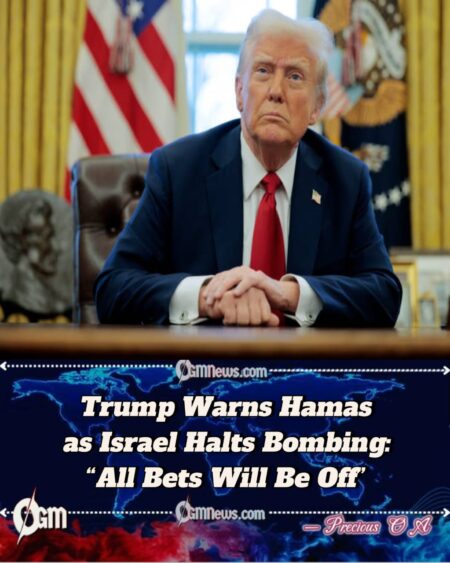
Trump: Israel has temporarily suspended its bombing campaign, according to statements released on Friday. The pause, described as “temporary,” comes amid mounting international pressure for both sides to de-escalate hostilities and protect civilian lives.
This announcement follows weeks of intense airstrikes and rocket exchanges that have left hundreds dead and thousands displaced. Global leaders have urged a diplomatic breakthrough, with many calling for an extended ceasefire to allow for humanitarian aid and negotiations to proceed without interruption.
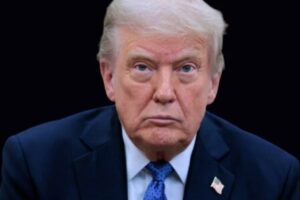
President Trump (1) emphasized that the pause creates an opportunity to move toward a resolution rather than a lull before renewed violence. His administration views the moment as a potential inflection point in a conflict that has defied repeated attempts at long-term settlement.
Analysts note that while Israel’s pause represents a rare moment of restraint, it may also be a strategic measure designed to pressure Hamas into making immediate concessions or moving toward a negotiated agreement. Humanitarian agencies are now scrambling to deliver supplies, fearing that the window of calm could close quickly.
President Trump (2) has highlighted that this “temporary” pause underscores U.S. efforts to balance support for Israel’s security with the urgent need to protect civilians. According to his remarks, this is not an indefinite ceasefire but a calculated decision to push Hamas into meaningful talks.
Trump Urges Hamas to Act Swiftly
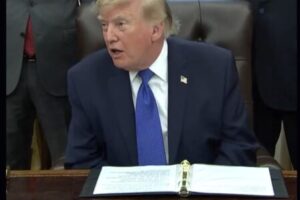
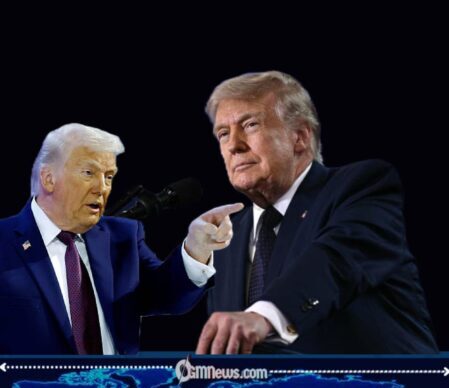
President Trump (3), now serving his second term, commented on the situation Friday afternoon. Speaking to reporters at the White House, he stated: “Israel has temporarily stopped the bombing… Hamas must move quickly, or else all bets will be off.”
President Trump (4) said his words should not be taken as a mere warning but as a reflection of the seriousness with which the U.S. government views the current crisis. He reiterated his administration’s longstanding position that Hamas must renounce violence, recognize Israel’s right to exist, and participate in direct negotiations.
President Trump (5) further indicated that the United States remains ready to facilitate dialogue between the two sides, but only if Hamas shows immediate goodwill. By emphasizing the temporary nature of Israel’s pause, his administration hopes to press Hamas into urgent talks while reinforcing American influence over the negotiations.
President Trump (6) made clear that the U.S. has been coordinating with multiple partners behind the scenes. He stated that Washington is in close contact with European governments, regional actors like Egypt and Qatar, and international agencies in order to maximize the effectiveness of the pause.
President Trump (7) also signaled a new level of personal involvement in the crisis. While previous statements from the administration were issued through press secretaries or the State Department, his direct comments underscore a deliberate strategy to elevate the U.S. role at a critical moment.
International Community Reacts to the Pause
President Trump (8)’s warning to Hamas came as international reactions poured in. Several European leaders welcomed the halt in bombings as a chance to avert further humanitarian disaster. Human rights organizations, however, remain cautious, urging both sides to respect civilian protections and ensure sustained access to medical and food supplies.
Regional powers, including Egypt and Qatar, have also been active in back-channel talks aimed at extending the pause into a more durable ceasefire. The stakes remain high, as renewed violence could derail ongoing humanitarian efforts and further destabilize the region.
President Trump (9) has insisted that while the U.S. supports Israel’s right to defend itself, it also believes in the necessity of reducing civilian casualties. His administration has quietly encouraged regional actors to keep pressing Hamas toward negotiations, making it clear that the window for compromise may close quickly.
Diplomatic experts say the next few days will be crucial in determining whether the pause leads to a breakthrough or a resumption of violence. For now, Israel’s decision and Trump’s warning have created a tense but potentially transformative moment in the conflict.
President Trump (10) concluded his remarks by suggesting that the United States would reassess its mediation role if Hamas refuses to act within the pause. His language, at once firm and conditional, leaves little doubt about the administration’s stance going forward. He has also directed U.S. diplomats to coordinate closely with European and regional partners in an effort to extend the pause into a more meaningful ceasefire. Whether this approach succeeds remains uncertain, but it has introduced a new layer of urgency into already complex negotiations.
[…] […]