


























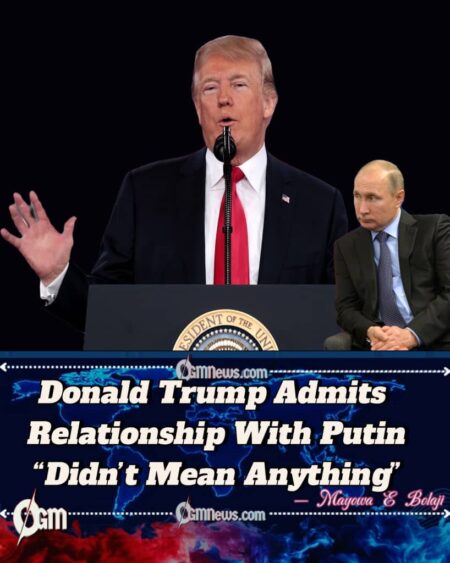
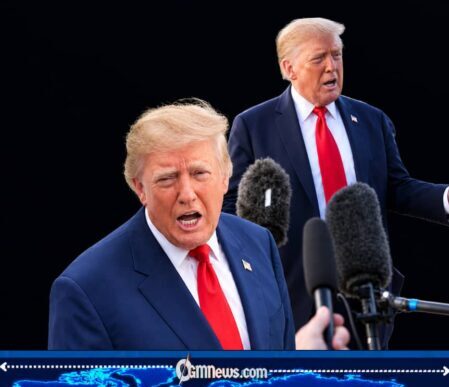
Donald Trump, the current U.S. president serving his second term, has openly reflected on the limitations of his personal ties with Russian President Vladimir Putin in shaping international outcomes. Speaking candidly, he admitted that his longstanding relationship with Putin did not yield the results he once anticipated.
Donald Trump remarked: “I thought that was going to be the easiest one because of my relationship with Putin… unfortunately, that relationship didn’t mean anything.”
Trump’s statement highlighted the difference between personal rapport and the realities of statecraft, suggesting that global diplomacy requires far more than individual connections between leaders.
Donald Trump Confronts Geopolitical Realities
Donald Trump’s reflection underscores the complexities of U.S.–Russia relations, where shared history and personal ties are frequently tested against geopolitical interests. His candid admission suggests that while diplomacy may be informed by personal familiarity, it is ultimately constrained by national priorities and longstanding tensions.
Trump’s acknowledgment also resonates with broader debates on the effectiveness of leader-to-leader diplomacy. Analysts argue that while personal relationships can ease dialogue, they rarely override strategic, security, and economic considerations.
Trump’s comments therefore mark a rare moment of concession, recognizing that expectations of “easy” negotiations may not hold in the face of entrenched international disputes.
Donald Trump’s Statement in Broader Context
Trump’s reflection connects to the broader narrative of his administration’s approach to Russia, which has been characterized by a mix of open dialogue and firm policy positions. His words illustrate both the challenges of pursuing pragmatic diplomacy and the importance of managing public expectations.
Trump’s statement also reinforces the theme that personal rapport cannot replace structured negotiation, institutional engagement, and the realities of competing national interests. It offers insight into the lessons learned from his leadership experience, showing that international politics often defies personal assumptions.

Logging in is a breeze and the site stability is amazing even during peak hours....