








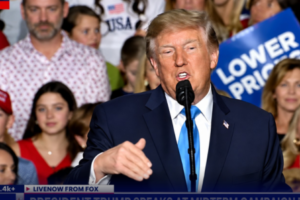




















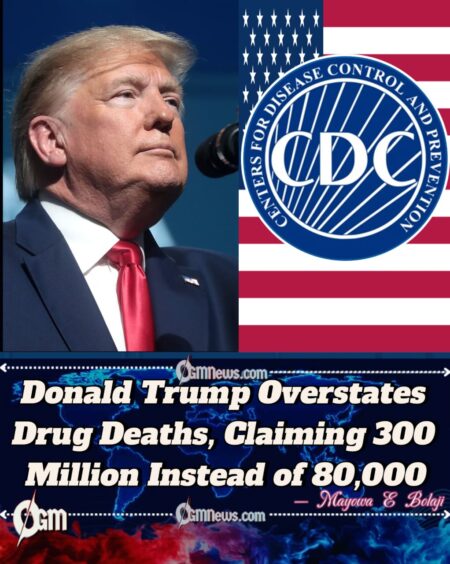
Donald Trump, the current U.S. president serving a second term, recently declared that 300 million people died in 2024 from drug-related causes. The figure, which exceeds the entire population of the United States, has sparked widespread scrutiny and raised questions about the accuracy of the statement.
Donald Trump made the claim while addressing the nation on issues of drug trafficking and national security, arguing that the crisis has reached catastrophic levels. However, health experts and fact-checking bodies quickly pushed back, stressing that the actual number of drug overdose deaths in 2024 was closer to 79,000, according to data from the Centers for Disease Control and Prevention (CDC).
Trump’s figures, therefore, appear significantly inflated, with experts warning that such exaggerations may distort public understanding of the crisis and misguide policy responses.
Donald Trump’s Claim vs. Official Data
Donald Trump’s statement sharply contrasts with official government estimates. The CDC’s provisional figures show approximately 79,383 drug overdose deaths in the U.S. for 2024. Though tragic and concerning, this number falls far below the hundreds of thousands claimed by the president.
Trump has previously been known to use dramatic numbers when highlighting national issues, but analysts caution that in this case, the overstatement risks undermining public trust. Public health officials emphasize that accuracy is critical in addressing the drug crisis effectively.
Donald Trump’s rhetoric, while intended to draw attention to a serious problem, inadvertently overshadowed the real and verifiable scale of drug-related fatalities that continue to devastate families and communities.
Donald Trump’s Words and Their Implications
Trump’s misrepresentation of overdose figures may stem from confusion between different datasets or a tendency to amplify figures for emphasis. Regardless of intent, such claims can mislead the public, reduce confidence in leadership, and misallocate resources intended for tackling drug abuse.
Trump’s approach underscores the importance of clear communication between government leaders and public health agencies. Experts warn that overblown statistics not only skew national conversations but also risk creating fear without offering constructive solutions.
Trump’s repeated focus on the drug crisis highlights the urgency of the issue, but analysts argue that grounding discussions in accurate numbers is essential to ensure effective policymaking and sustained public support. Donald Trump’s claim of 300 million drug-related deaths in 2024 was not supported by verified data, yet the reality—nearly 80,000 deaths—remains a grave public health concern. The episode demonstrates the importance of data accuracy in policymaking and public discourse.


Casinoabc999? Good Site. The interface is sleek, and there is a lot of stuff to...