



















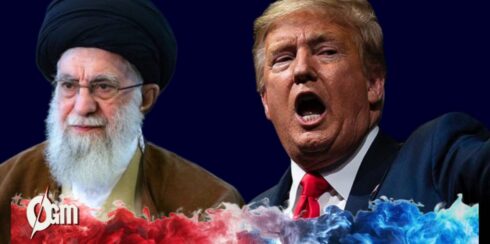
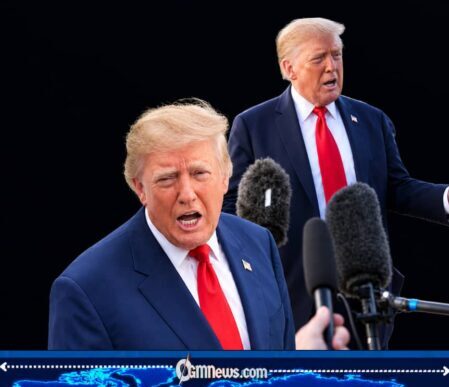
President Donald Trump has rejected a leaked Pentagon intelligence assessment suggesting that recent U.S. military strikes on Iran failed to destroy its nuclear program. Speaking aboard Air Force One, Trump asserted that the strikes “completely destroyed” all targeted nuclear sites in Iran.
The leaked report from the Defense Intelligence Agency (DIA) estimates that the airstrikes merely set back Iran’s nuclear program by “a few months, tops,” with Iran’s uranium stockpile and critical centrifuges largely intact. In response, Trump dismissed the report as “flat-out wrong,” accusing the media of being “disrespectful” to the military personnel involved in what he called “one of the most successful military strikes in history.”
Trump’s top Middle East envoy, Steve Witkoff, went further, branding the intelligence leak as “treasonous” and calling for a full investigation into the source of the disclosure.
–White House Pushes Back, Calls Leak ‘Sabotage’
The White House swiftly rejected the DIA’s assessment, describing it as misinformation leaked by what officials termed “a low-level loser in the intelligence community.” White House spokespersons emphasized that the strikes were highly effective and met all operational objectives.
Trump directly attacked media outlets for amplifying the leaked report, claiming they were attempting to “demean a historic military operation.” He insisted that all three nuclear facilities targeted in Iran were “hit perfectly” and rendered inoperable.
Despite the growing controversy, the White House has avoided releasing post-strike satellite imagery or detailed damage assessments, further fueling speculation about the true extent of the damage inflicted.
Intelligence Report Paints a Different Picture
According to sources familiar with the DIA’s evaluation, the strikes primarily damaged above-ground facilities while leaving Iran’s centrifuges—the core component for uranium enrichment—largely untouched. The report also states that Iran’s enriched uranium stockpile remains secure and was not eliminated.
One U.S. lawmaker, Congressman Brad Sherman of California, criticized the administration’s messaging, warning that Iran still retains enough nuclear material “for roughly nine nuclear weapons.” He expressed concern over what he described as the White House’s use of “vague terms” to declare victory.
Intelligence analysts reportedly warned that while the strikes were tactically successful in degrading infrastructure, Iran’s nuclear capabilities were far from dismantled.
Ceasefire Between Iran and Israel Holds Amid Tensions
Despite the heated rhetoric, the ceasefire agreement between Iran and Israel appears to be holding. It marks the first period of calm after nearly two weeks of escalating hostilities, including missile exchanges and drone attacks.
Both nations have confirmed the ceasefire is in place, though mutual distrust remains high. Diplomats in the region are cautiously optimistic but acknowledge that the situation remains fragile.
Trump, addressing reporters, emphasized that the U.S. does not seek further escalation. “I’d like to see everything calm down as quickly as possible,” he said. “Regime change takes chaos, and ideally, we don’t want to see so much chaos.”
OGMNews.COM
Trump Rejects Claims of Failed Iran Strikes Amid Outcry Over ‘Treasonous’ Intel Leak
During his remarks, Trump revealed that Russian President Vladimir Putin had reached out offering assistance in managing the Iran conflict. However, Trump claims he turned down the offer, reportedly telling Putin, “No, I don’t need help with Iran. I need help with you.”
This exchange underscores Trump’s dual-track strategy: maintaining U.S. dominance in the Iran crisis while signaling an unwillingness to engage in broader geopolitical entanglements with Russia.
The president reiterated that while he remains open to diplomatic solutions, the U.S. military would act again if Iran attempted to rebuild its nuclear capabilities. “We are watching very closely. They know that,” he warned.
–Calls for Accountability Over Intelligence Leak
The leak has triggered a political firestorm in Washington. Special envoy Steve Witkoff labeled the disclosure “treasonous,” demanding a full-scale investigation into the source within the intelligence community. “This leak was designed to undermine not just the president, but the success of the entire operation,” Witkoff said.
Lawmakers from both parties have expressed concern about the breach, with some demanding greater transparency from the administration regarding the actual impact of the strikes. Congressional committees are now preparing for closed-door briefings with defense and intelligence officials.
Meanwhile, the Biden-aligned opposition continues to press the administration for proof of its claims, setting the stage for an intensifying political and security debate in the coming weeks.
A Battle Over Facts and Narratives
As the ceasefire holds in the Middle East, a different kind of battle is unfolding in Washington—one over truth, accountability, and political narrative. While President Trump stands firm in his assertion that Iran’s nuclear program was “obliterated,” the leaked intelligence report and critical voices in Congress suggest a more complicated reality.
With tensions still simmering and investigations looming over the intelligence breach, the world watches closely to see whether the calm in the region is temporary—or merely the eye of a larger storm.

Logging in is a breeze and the site stability is amazing even during peak hours....