










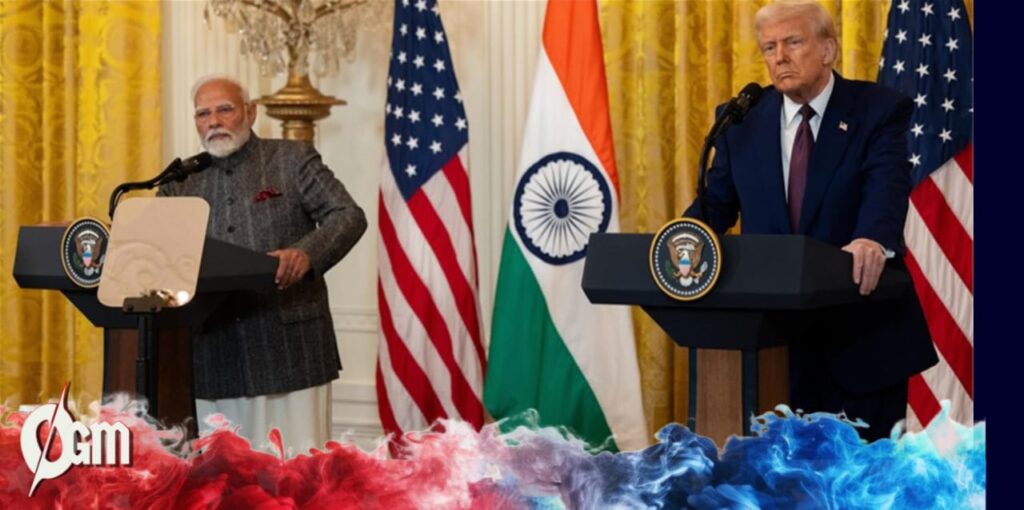
Indian Prime Minister Narendra Modi has told U.S. President Donald Trump that New Delhi will never accept third-party mediation in the Kashmir dispute with Pakistan. This firm stance, relayed by India’s foreign secretary Vikram Misri, follows recent remarks by Trump claiming a U.S.-brokered ceasefire brought an end to four days of military hostilities between the two nuclear-armed neighbors. The White House has not commented on India’s rejection of mediation efforts.
India Reiterates Its Long-Held Position
India has restated its unwavering stance that Kashmir is a bilateral issue and not open to third-party intervention. According to Foreign Secretary Vikram Misri, Prime Minister Modi “strongly” conveyed this message to President Trump during a recent phone call, emphasizing that India considers Kashmir an internal matter.
“Kashmir is an integral part of India, and we do not recognize any foreign role in resolving the dispute,” Misri said. India’s position has remained consistent for decades, despite frequent offers by international actors to mediate in the conflict between India and Pakistan.
U.S. Claims of Ceasefire Mediation Disputed
President Trump has repeatedly claimed that the United States facilitated the ceasefire between India and Pakistan following a four-day conflict in May. In a statement issued on May 10, Trump announced that both nations had agreed to an “immediate and full ceasefire,” crediting the U.S. for its role in de-escalating the crisis.
However, India has flatly denied that any such mediation took place. Misri asserted that the decision to halt military operations was made directly between India and Pakistan through established military-to-military channels. “No talks were held at any level regarding American mediation,” he said.
Conflict Triggered by Attack on Tourists
Tensions between India and Pakistan flared after a deadly attack on April 22 in Indian-administered Kashmir, which killed 26 people, mostly tourists. India blamed Pakistan for orchestrating the assault, a charge Islamabad strongly denied.
In response, India launched airstrikes in May targeting what it described as terrorist infrastructure inside Pakistani territory. This led to four days of intense military exchanges, during which both sides accused each other of attacking airbases and military installations. The volatile situation raised fears of a wider regional war between the two nuclear powers.
OGMNews.COM
India Snubs U.S. Role in Kashmir Ceasefire, Denies Trump’s ‘Heroic’ Claims
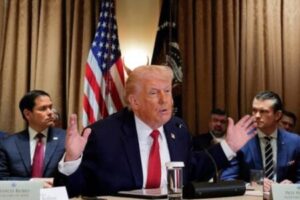
President Trump has tied the Kashmir ceasefire to ongoing U.S.-India trade negotiations, suggesting that economic incentives were used to influence the outcome of the conflict. In a remark to reporters, Trump said: “Let’s stop it. If you stop it, we’ll do a trade. If you don’t stop it, we’re not going to do any trade.”
India, however, maintains that trade discussions were not part of any negotiations related to the conflict. Misri clarified that “no talks were held on either the trade deal or Kashmir mediation during the period of hostilities.” New Delhi is currently working to finalize a trade agreement before the end of a 90-day pause on higher U.S. tariffs set to expire on July 9.
U.S. and Pakistan Reinforce Mediation Narrative
In contrast to India’s statements, both President Trump and Pakistan have portrayed the ceasefire as a product of international diplomacy. Trump, in a post on Truth Social, expressed pride in helping “arrive at this historic and heroic decision” and suggested he would continue efforts to find a solution to the Kashmir conflict.
Pakistan’s foreign minister also credited the U.S. and a coalition of “three dozen countries” for playing a role in facilitating the ceasefire. A separate statement by U.S. Secretary of State Marco Rubio indicated that India and Pakistan had agreed to begin discussions on a broader set of issues at a neutral venue—another claim India has not acknowledged.
Strategic Implications for India-U.S. Relations
President Trump’s public comments equating India and Pakistan in the Kashmir context have unsettled diplomatic circles in New Delhi. Analysts say that India has long discouraged Western leaders from treating it and Pakistan as equals, especially in matters of security and sovereignty.
While Delhi remains committed to expanding economic and strategic ties with Washington, Trump’s statements risk introducing friction. Nonetheless, experts caution that it is premature to predict any derailment of the broader U.S.-India relationship. India is likely to continue pressing its case privately while maintaining a firm stance on Kashmir’s status as a domestic issue.
Kashmir Remains a Red Line for India
India’s categorical rejection of U.S. mediation underscores the sensitivity of the Kashmir dispute in its foreign policy. Despite mounting international interest and pressure, New Delhi shows no sign of altering its position. Prime Minister Modi’s clear message to President Trump reflects India’s determination to manage its regional disputes on its own terms—without foreign involvement, no matter how well-intentioned.

[…] […]