
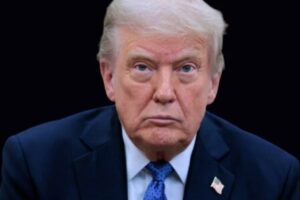



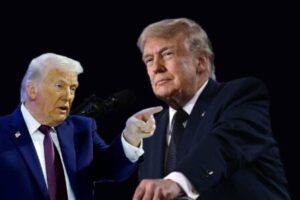



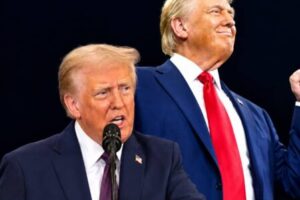







A growing share of Americans are expressing doubts about the direction of Donald J. Trump’s Iran war, while rising fuel costs are adding a distinctly domestic complication to the administration’s foreign-policy adventure. A Quinnipiac University poll in July found that 54% of voters said the United States was not winning the war, compared with 36% who said it was winning. Other polling has similarly found substantial dissatisfaction with the conflict: Pew reported in May that 62% disapproved of Trump’s handling of the military action, while a UMass Amherst poll in August found 68% viewed his handling of the war negatively.
The latest political headache, however, is not confined to distant battlefields. Gas prices have become a particularly visible measure of the war’s consequences for Americans, with polling showing widespread concern about the financial impact. An August UMass poll found that 80% of Americans agreed the Iran conflict had increased the cost of gas and groceries, while an earlier Navigator survey found 80% of independents disapproved of Trump’s handling of gas prices.
The War May Be Going Somewhere — Voters Just Aren’t Sure Where
The public’s uncertainty is hardly emerging from nowhere. In March, Pew found that 45% of Americans thought the U.S. military action against Iran was not going well, compared with 25% who said it was going extremely or very well. By May, 59% said the initial decision to use military force was wrong, while 62% disapproved of Trump’s handling of the conflict.
By July, the Quinnipiac poll found the doubts had become even more expensive politically: 66% said the war had not been worth fighting, while only 31% said it had been worth fighting. Among independents, 73% said the war was not worth fighting. Apparently, the phrase “mission accomplished” is considerably harder to sell when the receipt is still arriving.
At Home, the Gas Pump Has Joined the Foreign-Policy Debate
For many Americans, the most immediate evidence of the conflict is not a television briefing from Washington or a map of the Middle East — it is the number appearing on the fuel pump. The Associated Press recently reported that the national average for gasoline had reached about $4.48 per gallon, with rising fuel costs creating additional pressure on working- and middle-class households. Trump has defended the higher prices as a necessary cost of confronting Iran.
The administration has nevertheless acknowledged that fuel affordability is a major concern. Trump’s energy adviser Jarrod Agen recently pointed to refining capacity as an important factor behind high gasoline prices while also acknowledging the broader effect of the Iran conflict. Meanwhile, national diesel prices have crossed $6 per gallon, adding another layer to the economic pressure.
And so the political comedy writes itself: Washington can debate strategy, objectives and victory conditions, but millions of Americans have a much simpler question — how much is it going to cost to fill the tank? With polling repeatedly showing dissatisfaction over the war and its economic consequences, the Trump administration now has to defend its foreign-policy strategy while also convincing Americans that the price at the pump is not becoming the unofficial scoreboard.
As Donald J. Trump continues to pursue his Iran policy, the polling numbers provide a clear picture of a public wrestling with the war’s costs, progress and purpose — even though different surveys produce different figures depending on when and how voters were questioned. OGM News will continue watching the battlefield, the ballot box and, perhaps most importantly, the petrol station, where the next political plot twist may already be showing up on the price board.
[…] […]