






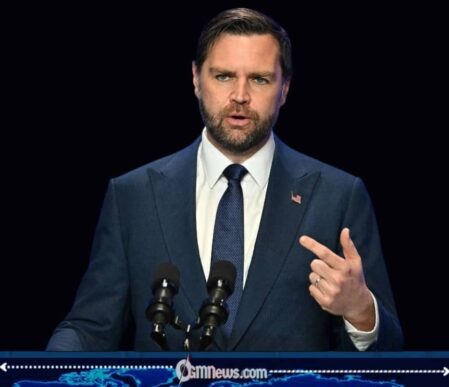
Vance and booing unexpectedly became two of the most discussed political talking points online after U.S. Vice President JD Vance responded to a hostile crowd with a sarcastic declaration that quickly ignited reactions across America. During a public appearance that was already marked by visible tension, sections of the audience loudly booed the Vice President, prompting him to jokingly respond, “You can’t boo me. I’m the Vice President of the United States.” The moment instantly spread online, triggering applause, outrage, ridicule, and political debate within hours.
The viral exchange has drawn attention not only because of the humor involved, but because it reflects the increasingly combative atmosphere surrounding American politics. Public events involving major political figures have become more emotionally charged in recent years, with boos, protests, chants, and interruptions now almost expected regardless of party affiliation. Vance’s response appeared aimed at disarming the crowd with sarcasm, but critics and supporters interpreted the comment in dramatically different ways.
Vance’s Clash With Crowd Exposes America’s Explosive Political Mood
Vance and booing became inseparable online as clips of the exchange circulated widely across social media platforms, where users dissected every facial expression, tone, and reaction from the audience. Supporters defended the Vice President by arguing that politicians often face hostile crowds and that humor can help diffuse tension in unpredictable public environments. Some conservative commentators praised Vance for appearing relaxed under pressure instead of avoiding confrontation altogether.
Critics, however, accused the Vice President of sounding dismissive toward legitimate public dissent. Others argued that the line unintentionally symbolized a growing disconnect between elected officials and frustrated citizens who increasingly used public events to express anger over economic pressures, cultural divisions, and political distrust. In typical internet fashion, the moment also inspired waves of memes, parody edits, and jokes comparing modern political rallies to live entertainment shows where heckling has become part of the performance.
Vance Tells Angry Crowd “You Can’t Boo Me” as Political Divide Deepens
The Vance incident arrives during a period of heightened political tension across the United States, where confrontations between public officials and audiences have become increasingly common. Analysts note that politicians from both major parties have faced protests, interruptions, and hostile reactions during speeches, town halls, and campaign events over the past several years. Experts studying political communication argue that viral moments now carry enormous influence because short clips often shape public opinion faster than detailed policy discussions.
The booing directed at Vance also reflects how political identity has become deeply emotional for many Americans. Public appearances are no longer viewed simply as speeches or ceremonial events; they are now highly scrutinized performances capable of generating instant national narratives. In many ways, the crowd’s reaction and Vance’s comeback became a snapshot of modern American politics itself — loud, theatrical, deeply divided, and impossible to ignore online for more than five minutes.
As Vance continues to attract attention as one of the Republican Party’s most visible figures under President Donald J. Trump’s administration, moments like this are likely to follow him closely throughout future appearances. OGM News understands that while the exchange may ultimately be remembered as a humorous political moment, it also highlights a broader reality: in today’s America, even a joke about booing can become a cultural battle before the microphones are turned off.
FoSEnYRcnzkCFxcrkTIkEJxP