














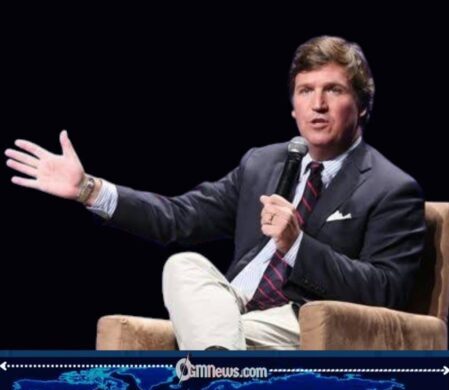
Tucker Carlson is confronting an uncomfortable chapter of his political evolution after acknowledging that some of his earlier rhetoric about Islam and Muslims was wrong. In a 2026 interview, Carlson said he had once repeatedly argued that Islam and Muslims were the problem and that they wanted to kill Americans, but now considers those beliefs incorrect. His admission has renewed scrutiny of how dramatically his views have changed on Islam, Israel and the Middle East.
For Carlson, the political journey has become something of an ideological time machine: statements from his earlier television career are being compared with the positions he now expresses publicly. His critics see the shift as evidence of a major change in worldview, while Carlson presents it as a recognition that he was wrong about some of the assumptions he once held.
Tucker Carlson Faces His Former Arguments Head-On
Tucker Carlson has become increasingly outspoken about what he describes as the dangers of collective hatred. In recent appearances, he has rejected blanket hostility toward Muslims and compared it unfavorably with hatred directed at Jews or Christians. He has also repeatedly said that opposition to Israeli government policies should not automatically be treated as antisemitism.
That position represents a notable contrast with some of Carlson’s earlier commentary. Satirically speaking, his old television archive has become the political equivalent of an attic nobody wants to clean: every box opened contains another argument that requires a modern-day explanation. The internet, naturally, has volunteered to open every box at once.
Tucker Carlson’s Middle East Views Continue to Evolve
Carlson’s recent interviews have also placed him in direct confrontation with prominent defenders of Israel. During a lengthy 2026 interview with U.S. Ambassador to Israel Mike Huckabee, Carlson pressed him on Israeli policy, Jewish historical claims and the treatment of Palestinians. The exchange generated criticism and renewed accusations of antisemitic rhetoric, while Carlson maintained that he opposes antisemitism and mass violence.
The controversy illustrates how difficult it is to separate Carlson’s current arguments from his earlier political identity. His critics continue to examine his language closely, while supporters argue that changing one’s mind is not itself evidence of bad faith. Somewhere between those competing arguments sits a very large archive of television clips, interviews and podcasts waiting to be replayed.
Tucker Carlson’s evolution remains a politically significant story because his commentary reaches audiences across America’s ideological spectrum and increasingly focuses on questions surrounding Israel, Islam, war and U.S. foreign policy. His own acknowledgment that some of his previous beliefs were wrong has added another chapter to that transformation. OGM News will continue following Carlson’s evolving rhetoric and the reaction it generates, because when a commentator publicly revisits his own past, the archive rarely stays quiet for long.
Its Amazing