





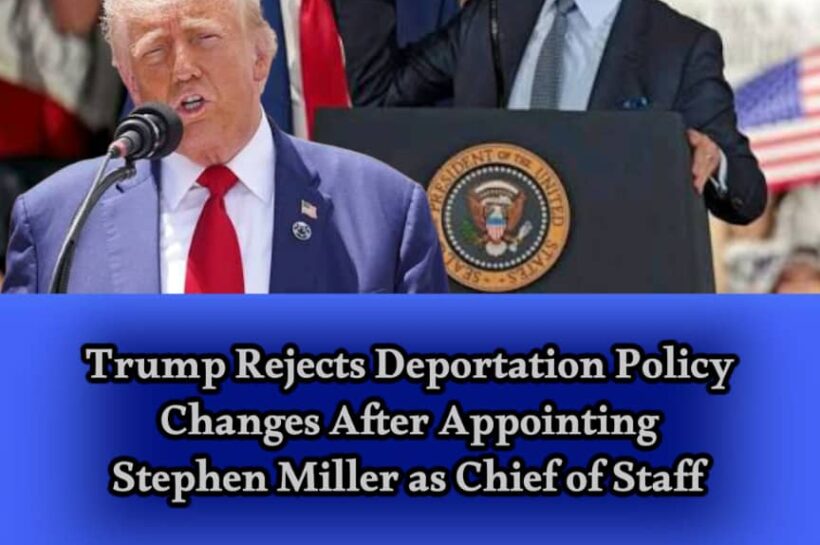













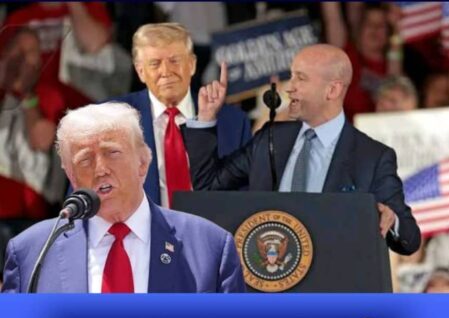
President Donald Trump has rejected the suggestion that he intends to change his administration’s deportation policy, despite recently acknowledging that the crackdown might have been too tough. The president made the remarks when a reporter questioned whether he had instructed Stephen Miller, his newly appointed White House chief of staff and a key architect of his immigration enforcement strategy, to make adjustments to the policy.
Asked directly whether he had told Miller that he wanted changes, Trump responded: “No. We have a very strong deportation policy.”
The exchange has attracted attention because it followed Trump’s admission during a CBS News 60 Minutes interview with Ross Douthat that his deportation policy might have gone too far. His latest comments suggest that, despite acknowledging political concerns about the crackdown, he is not currently committing to a softer enforcement approach.
Trump Defends His Deportation Strategy
During the exchange with reporters, Trump defended his administration’s approach, insisting that there would be no amnesty and that deportations would continue. He argued that the administration was concentrating on what he described as the “worst of the worst,” particularly people accused or convicted of serious crimes.
Trump also claimed that his administration had already removed many dangerous individuals from the country. He cited figures concerning alleged murderers who entered the United States under the previous administration, although those figures were claims made by the president and were not independently established in the exchange.
He further acknowledged that some undocumented immigrants had secured jobs, contributed to businesses and paid taxes, but maintained that entering the country illegally remained a violation of immigration law.
A Different Tone During the 60 Minutes Interview
The latest response stands in contrast to Trump’s conversation with Ross Douthat, which aired on CBS News on November 8.
During that interview, Trump acknowledged that his deportation policy might have been “too tough.” He explained that the administration had removed not only people it considered dangerous but also undocumented immigrants who had established lives, held jobs and contributed to the economy.
He suggested that some of those individuals could potentially be allowed to remain in the United States through an agreement with congressional Democrats. Trump said he would welcome cooperation on immigration legislation.
CBS News also reported that 58% of voters in its midterm exit polling believed the administration’s immigration actions had gone too far. The political implications of the crackdown therefore formed an important part of the discussion about the Republican Party’s election losses.
Stephen Miller’s Appointment Raises Questions
The appointment of Stephen Miller makes the debate even more significant. Miller has been widely identified as one of the principal architects of Trump’s immigration enforcement strategy. He has advocated aggressive deportation measures and previously pushed Immigration and Customs Enforcement to pursue a target of at least 3,000 arrests per day, according to CBS News.
His elevation to White House chief of staff placed him in a position of greater influence over the administration’s overall operations. That is why the reporter’s question was particularly pointed: if Trump believed the deportation strategy had become too harsh, would he ask the person closely associated with designing it to change direction?
Trump’s answer was no.
Political Flexibility or Continued Enforcement?
The two responses leave an important distinction. Trump has acknowledged that the deportation campaign may have alienated some voters and indicated that he could negotiate with Democrats over immigration. However, he has also reaffirmed his opposition to amnesty and defended the administration’s existing enforcement strategy.
Whether a narrower focus on serious criminals will eventually translate into a meaningful change in enforcement remains to be seen. For now, Trump’s public position is that the deportation policy remains strong and that he has not instructed Miller to change it.
The bigger question is whether the president’s willingness to discuss adjustments during an interview will eventually produce concrete policy changes, or whether his administration will continue largely along its existing path.
Follow OGM News for more updates on Trump’s immigration policy, Stephen Miller‘s appointment and developments inside the White House.

The welcome offer caught my eye and I kept coming back for the daily drops....