







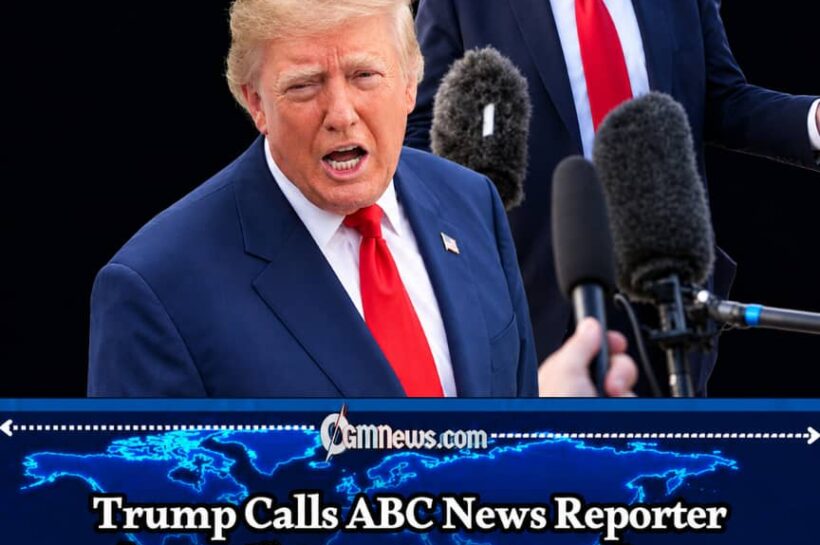











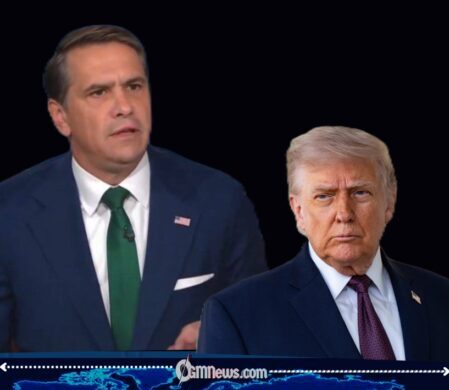
President Donald Trump’s newly confirmed Attorney General, Todd Blanche, has triggered another political storm after refusing to pledge that the Justice Department will operate independently of the White House. In a striking television interview, Blanche said, “No, I’m not going to pledge that,” before arguing that no attorney general should make such a promise and acknowledging that Trump should have a voice on individual prosecutorial decisions.
The remark has quickly become the latest test of how much independence Americans should expect from the nation’s top law-enforcement official. While Blanche insists he will act with integrity and will not carry out anything illegal, critics see his comments as an unusually candid admission that presidential influence over individual cases is part of his understanding of the job. For a Justice Department already under intense scrutiny, the statement has provided plenty of political ammunition — and perhaps a little extra work for constitutional lawyers.
Six Words That Turned a Routine Interview Into a Political Firestorm
Blanche’s comments came only days after his narrow Senate confirmation. The Senate approved him 50-49, with Republican Senators Susan Collins and Lisa Murkowski voting against him and Senator Bill Cassidy providing the decisive Republican support. His confirmation followed weeks of concerns over his independence, his previous role as Trump’s personal criminal defense lawyer and controversies surrounding a proposed $1.8 billion “anti-weaponization” fund and a tax-related settlement involving Trump and his family.
The new attorney general nevertheless argues that presidential input does not automatically mean unlawful interference. Asked whether Trump should have a voice in individual prosecutions, Blanche answered yes, while stressing that Trump has never and will never ask him to do anything illegal. He has also publicly promised to uphold the rule of law “without fear or favor.” The resulting contradiction is now the central question: can an attorney general remain independent while accepting that the president may weigh in on individual prosecutorial decisions?
From Trump’s Lawyer to America’s Top Law Officer
Blanche’s history with Trump has made the controversy particularly sensitive. Before becoming attorney general, he represented Trump as a criminal defense lawyer and later served as deputy attorney general before taking over as acting attorney general. His confirmation was nearly derailed by concerns from both Democrats and some Republicans about whether those previous relationships could compromise the department’s independence.
Those concerns have not disappeared with the Senate vote. Reuters reported that Blanche’s Justice Department has already faced criticism over perceived politically motivated prosecutions, departures of career prosecutors and questions about the department’s autonomy during Trump’s second term. The controversy was sharpened further on Sunday when Blanche defended Washington prosecutor Jeanine Pirro despite Trump criticizing her handling of a Lincoln Memorial Reflecting Pool vandalism case, illustrating the complicated balancing act facing the new attorney general.
For now, Blanche appears determined to draw his own definition of independence: not necessarily independence from presidential views, but independence from unlawful commands. That distinction may satisfy his supporters, but critics argue that the Justice Department’s credibility depends on more than simply refusing illegal orders. As this unusual battle over presidential influence, prosecutorial power and institutional independence continues, readers should watch OGM News for future updates as Blanche’s tenure puts his six-word answer under an increasingly powerful political microscope

Downloaded the 881betapp the other day. Clean interface, does the job. Quick and easy betting...