




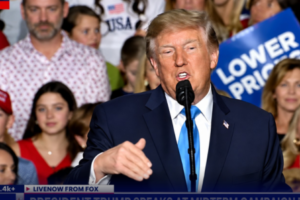















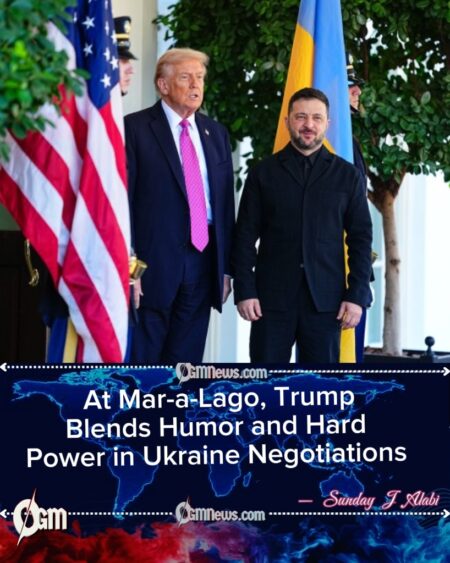
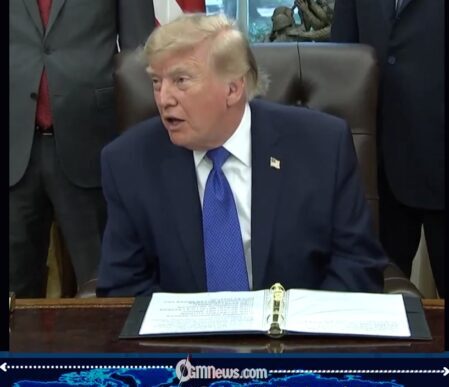
President Donald Trump, serving his second term as the current U.S. president, momentarily disarmed the White House Press Corps at Mar-a-Lago with an unexpected offer of free lunch—framed pointedly as a question about journalistic ethics—during a pivotal diplomatic meeting with Ukrainian President Volodymyr Zelensky. The brief exchange, half-humorous and half-provocative, unfolded against the backdrop of intensive negotiations over a U.S.-backed 20-point plan aimed at ending nearly four years of war between Russia and Ukraine. The episode underscored Trump’s combative relationship with the media while highlighting the gravity of the talks underway.
A Light Moment in a Heavy Diplomatic Setting
The meeting at Trump’s Florida estate brought together senior figures from both administrations, including U.S. Secretary of State Marco Rubio, Secretary of War Pete Hegseth, Special Envoy Steve Witkoff, and senior adviser Jared Kushner. Discussions focused on a comprehensive framework that could lay the groundwork for a ceasefire and longer-term security guarantees for Ukraine.
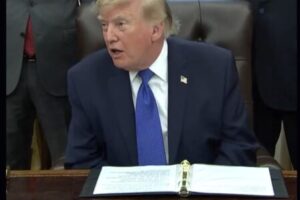
Amid the formal proceedings, Trump abruptly turned to the assembled reporters and asked whether they would like something to eat—or whether accepting such hospitality would be considered a bribe. The room briefly fell silent before nervous laughter followed, capturing a moment that contrasted sharply with the seriousness of the diplomatic agenda.
Press Corps Put on the Spot By President Trump
Trump did not leave the matter rhetorical. Pressing for a direct response, he asked reporters to answer “yes or no.” When one journalist replied affirmatively, the president instructed a staff member to notify the kitchen to provide lunch for the press.
Several officials present thanked journalists for their work, but Trump quickly added a familiar refrain, suggesting the gesture would not soften coverage. He remarked that despite the lunch, stories would likely remain critical—if not more so—reflecting his long-standing skepticism of mainstream media.
A History of Tension With the Media
The Mar-a-Lago exchange fit a broader pattern in Trump’s interactions with journalists. Throughout his political career and into his second term, he has frequently challenged reporters over questions he deems unfair or ill-informed, sometimes using sharp language that has drawn criticism from press freedom advocates.
On the same day, Trump rebuked a reporter who asked about potential security guarantees for Ukraine, calling the question premature given the ongoing negotiations. Supporters argue that such exchanges demonstrate his directness, while critics see them as emblematic of a strained relationship between the presidency and the press.
Progress and Friction in the Ukraine Peace Plan
Beyond the media moment, the core purpose of the meeting was the evolving peace proposal. Trump stated that negotiations with Zelensky were “very close” to agreement, with only “one or two thorny issues” remaining unresolved. Zelensky echoed this sentiment, describing the plan as approximately 90 percent complete.
Key sticking points include the future status of the Donbas region, territory heavily contested since the war began. Zelensky emphasized Ukraine’s legal and constitutional position on territorial integrity, while Trump acknowledged the complex realities on the ground, noting that some areas may be difficult to resolve quickly.
Security Guarantees and International Involvement
Under the proposed framework, the United States would play a central role in guaranteeing Ukraine’s future security, largely through Ukraine’s integration into the European Union and the maintenance of a substantial peacetime military force supported by Western allies. European nations are expected to be deeply involved in both funding and oversight.
Zelensky reiterated that lasting peace would require continued international support, including advanced air defenses, weapons, and financial assistance. He stressed that unity between Europe and the United States remains essential to ending the conflict.
Russia, Diplomacy, and Uncertain Timelines
Trump acknowledged that negotiations have also involved extensive communication with Russian President Vladimir Putin, describing recent discussions as productive. He suggested that Putin may be open to a ceasefire, though he cautioned that talks remain fragile and could still collapse over unforeseen issues.
The president warned that failure to reach an agreement would mean continued fighting and loss of life, underscoring the urgency of the process. Despite expressing optimism, Trump declined to provide detailed timelines, noting that the complexity of the conflict makes swift resolution uncertain.
Contrasting Rhetoric and Ongoing Violence
Trump’s comments about Russia’s interest in seeing Ukraine “succeed” drew attention, particularly as they followed renewed Russian missile strikes on Kyiv that resulted in casualties. Ukrainian officials continue to emphasize that peace talks must be matched by tangible changes on the battlefield.
Meanwhile, Russian Foreign Minister Sergei Lavrov criticized European involvement, labeling it an obstacle to peace, while simultaneously praising Trump’s efforts. The divergent rhetoric highlights the delicate balance negotiators face as they attempt to translate dialogue into durable outcomes.
Ae888covenuscasino, okay, I'm curious. Gonna check out this site and try to find some amazing...