




























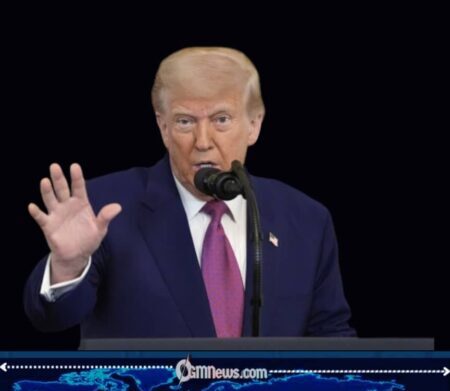
Donald Trump has issued a stark warning to Iran, saying the United States would respond with overwhelming force if Tehran attempts to block or disrupt the flow of oil through the strategically vital Strait of Hormuz. The statement comes amid rising geopolitical tensions in the Middle East and growing concerns over the security of global energy supply routes.
In a strongly worded message shared publicly, Trump said that any Iranian move to halt oil shipments through the waterway would trigger a response from the United States “twenty times harder” than previous military actions. While the U.S. president stressed that he hopes such a confrontation can be avoided, the warning underscores the seriousness with which Washington views threats to the global oil trade.
Trump Issues Stark Warning to Tehran
President Donald Trump, currently serving his second term in the White House, delivered the warning while addressing the potential consequences of any disruption to oil shipments in the Persian Gulf. Trump stated that the United States would not hesitate to respond forcefully if Iran interferes with the maritime passage used by some of the world’s largest energy exporters.
According to Trump, the U.S. military possesses the capability to strike targets inside Iran that he described as “easily destroyable,” warning that such strikes could severely damage Iran’s infrastructure and strategic capacity. At the same time, Donald Trump emphasized that the warning is intended as a deterrent, adding that he hopes tensions do not escalate to that level.
The remarks highlight Washington’s long-standing commitment to ensuring freedom of navigation in critical international waterways, particularly those central to global energy markets.
Strategic Importance of the Strait of Hormuz
The Strait of Hormuz is widely regarded as one of the most critical maritime chokepoints in the world. The narrow waterway connects the Persian Gulf with the Gulf of Oman and the Arabian Sea, serving as a vital passage for crude oil shipments from major Gulf producers.
Energy analysts estimate that roughly one-fifth of the world’s oil supply passes through the strait each day. Major exporters including Saudi Arabia, Iraq, Kuwait, the United Arab Emirates, and Iran itself depend heavily on the route to transport oil to global markets.
Because of its strategic importance and narrow geography, the strait has long been a focal point of geopolitical tensions. Even the threat of disruption in the area can cause significant volatility in global energy prices.
Trump Frames Warning as Protection of Global Trade
In his statement, Donald Trump also framed the U.S. position as a move designed to protect global economic stability. He noted that many countries including major oil importers depend heavily on uninterrupted access to the Strait of Hormuz.
Trump specifically referenced countries such as China and other major energy-consuming nations, suggesting that maintaining open shipping lanes benefits the global economy as a whole. According to the president, safeguarding the strait ensures that international commerce continues without disruption.
For Donald Trump, the message serves both as a warning to Tehran and as reassurance to global markets that the United States intends to protect the free flow of energy supplies through the region.
Rising Tensions Between Washington and Tehran
Relations between the United States and Iran have been marked by heightened tensions in recent months, including military posturing, sanctions, and sharp exchanges of rhetoric. The situation has prompted increased military readiness among U.S. forces stationed across the Middle East.
Iranian leaders have previously suggested that they could restrict access to the Strait of Hormuz if their country faces severe military or economic pressure. Such statements have raised concerns among international observers about the potential for miscalculation or escalation.
Against this backdrop, Donald Trump has reiterated that the United States will act decisively to prevent any attempt to block international shipping lanes, while also expressing hope that diplomatic solutions can prevent further deterioration of relations.
Global Economic Stakes and Security Implications
The security of the Strait of Hormuz is closely tied to global economic stability. Any disruption to shipping in the area could have immediate effects on oil prices, shipping insurance costs, and energy supply chains worldwide.
Economists warn that even a temporary closure of the strait could lead to sharp increases in fuel prices, affecting industries, transportation networks, and consumers across multiple continents. Energy-dependent economies in Asia and Europe would likely feel the impact most acutely.
For this reason, international governments, energy companies, and military planners continue to monitor developments in the region closely. While the current warning from Donald Trump underscores the seriousness of the situation, diplomatic efforts remain underway to prevent further escalation.


The vibes here are amazing and the winning streaks are real. It feels just like...