


















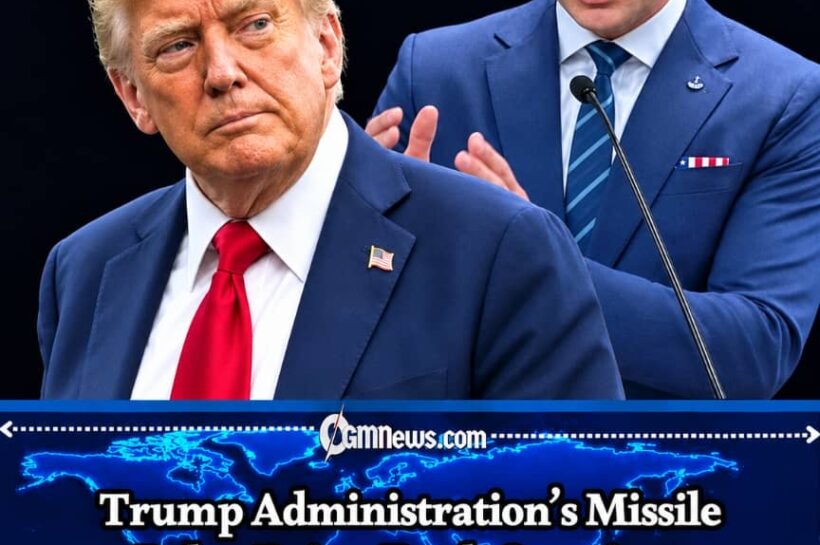







Iran Missiles have become the center of a growing international controversy after President Donald Trump defended a new U.S.-Iran peace framework by suggesting it would be “a little unfair” for Iran to be denied ballistic missiles while other countries in the region maintain similar capabilities. The remark has fueled intense debate over whether the agreement represents a diplomatic breakthrough or a significant concession to Tehran. As details continue to emerge, supporters describe the framework as a practical path toward stability, while critics argue it allows Iran to preserve key elements of its military power.
Iran Missiles and the Controversial Peace Framework
The controversy began after Trump publicly defended provisions associated with the emerging U.S.-Iran peace framework, emphasizing that the primary objective remains preventing Iran from obtaining a nuclear weapon. According to reports surrounding the agreement, the framework opens a new phase of negotiations while maintaining a ceasefire arrangement and addressing broader regional security concerns. Trump argued that if neighboring countries possess ballistic missiles, Iran should not be uniquely prohibited from having some as well.
The position immediately attracted criticism from political opponents and foreign-policy observers. Critics argue that Iran’s missile program has long been viewed as a central security concern and that allowing it to remain largely intact weakens the leverage gained during months of confrontation. Others counter that the framework was never intended to eliminate every military capability at once, but rather to establish conditions that reduce the likelihood of a larger conflict while keeping nuclear restrictions at the forefront of negotiations.
Regional Security and the Bigger Diplomatic Picture
Beyond the debate over Iran Missiles, the broader framework appears focused on preventing nuclear weapon development, reopening economic and maritime channels, and creating a pathway for additional negotiations. Reports indicate that discussions are expected to continue over technical issues related to Iran’s nuclear activities and regional security arrangements. While details remain subject to further negotiation, the agreement is widely viewed as an attempt to stabilize a volatile region after months of military tension.
The disagreement among analysts reflects a larger question about how modern diplomacy measures success. Some experts argue that avoiding a wider war and maintaining dialogue should be considered a significant achievement. Others contend that any agreement which leaves Iran’s missile capabilities substantially intact risks creating future security challenges. Reports also suggest that Iran retained enough strategic influence to remain a major factor in regional calculations, particularly regarding maritime routes and deterrence capabilities.
As negotiations continue, the future of the Peace Framework and the debate surrounding Iran Missiles are likely to remain closely linked. Whether history ultimately remembers the agreement as a pragmatic compromise or a controversial concession may depend on what happens during the next phase of talks. OGM News will continue monitoring developments, particularly any new details regarding missile restrictions, nuclear commitments, and the long-term stability of the region.


Downloaded the 881betapp the other day. Clean interface, does the job. Quick and easy betting...