
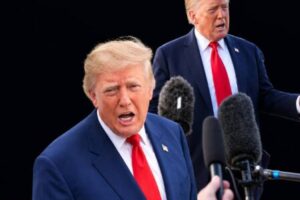
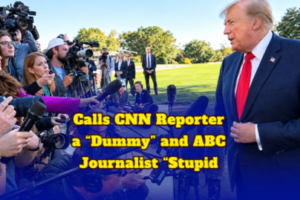


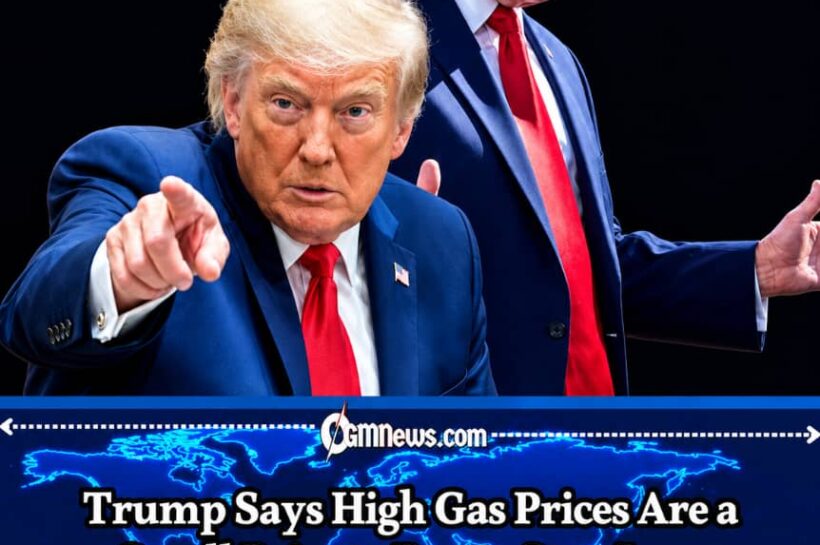


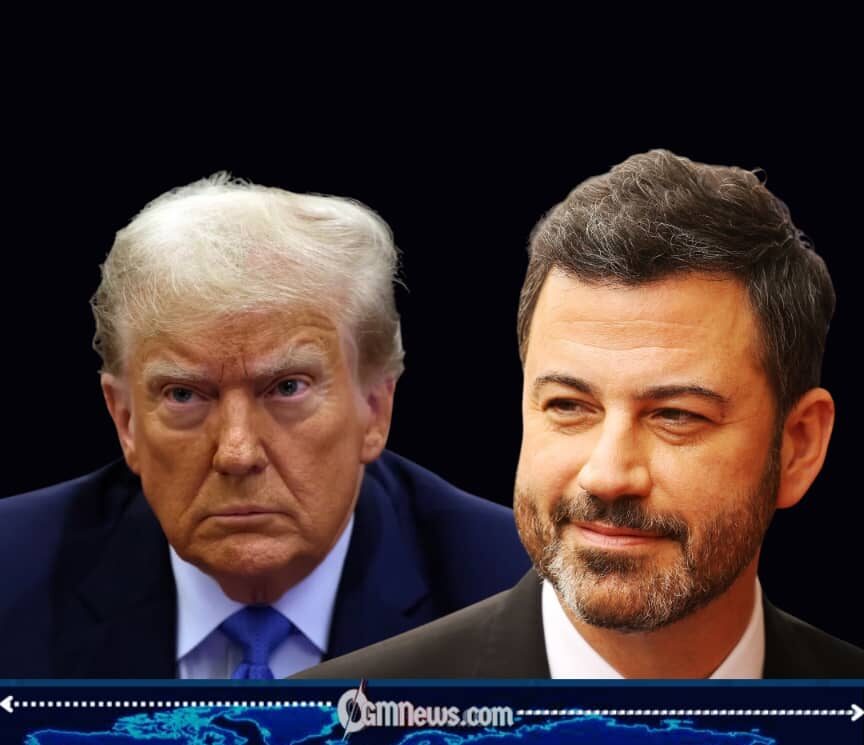
President Donald Trump, the current U.S. president serving a second term, has publicly urged Disney and its subsidiary ABC to dismiss late-night host Jimmy Kimmel after a controversial joke directed at First Lady Melania Trump ignited a new political and media storm in Washington. The demand came after Kimmel referred to the first lady as an “expectant widow” during a televised monologue, a remark that drew sharper criticism after a security incident at a major Washington event heightened concerns over political rhetoric.
The White House has framed the controversy as part of a larger debate about responsibility in American public discourse. While critics defended the comedian’s right to satire, the administration argued that comments targeting political families can contribute to an atmosphere that normalizes hostility.
The clash has now evolved into a wider national conversation about the limits of political humor and the growing tension between the presidency and the entertainment industry.
A Joke That Triggered a Political Firestorm
The controversy began during a recent episode of Jimmy Kimmel Live! when the comedian made a joke about the first lady that quickly spread across social media. In his monologue, Kimmel referred to Melania Trump as an “expectant widow,” a phrase many viewers interpreted as a dark reference to ongoing threats against the president.
The remark initially sparked criticism from supporters of the administration, but the reaction intensified after the White House pointed to the dangerous climate surrounding national politics. Critics of the joke argued that language involving harm to public figures should be approached with greater caution, especially during a period of heightened political tension.
Supporters of Kimmel, however, insisted that the comment was consistent with the long tradition of sharp political satire in American late-night television. They argued that comedy has historically played a role in challenging those in power and that the outrage reflected a broader effort to pressure critical media voices.
Trump’s Direct Demand to Network Executives
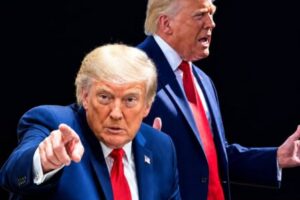
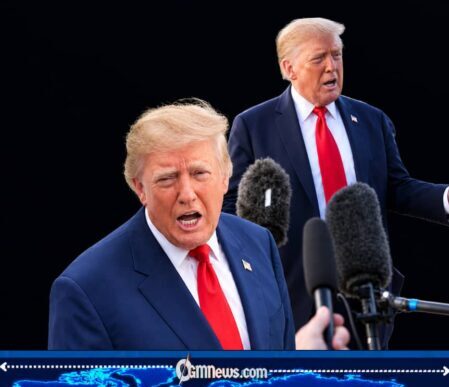
President Trump responded forcefully, calling on Disney and ABC executives to remove Kimmel from the network immediately. In remarks to reporters and through social media, the president said the network should not tolerate language he believes encourages dangerous hostility toward public officials.
The White House indicated that Trump viewed the remark as crossing a line from political comedy into personal attack. Administration officials said the president believes major media companies have a responsibility to ensure public commentary does not fuel deeper social divisions.
Trump’s criticism also reflects his long-running battles with television networks and media personalities. Throughout his political career, he has frequently challenged broadcasters whom he believes have treated him unfairly or contributed to what he describes as a toxic national atmosphere.
Melania Trump’s Response Adds Pressure
First Lady Melania Trump also weighed in, urging ABC to address the controversy. She described the joke as inappropriate and said public figures in entertainment should understand the consequences words can carry during periods of national strain.
Her response gave the controversy additional prominence, shifting it from a typical media dispute into a broader family and presidential issue. Observers noted that first ladies rarely intervene directly in disputes involving late-night comedy, making her remarks especially notable.
Melania’s criticism resonated strongly among supporters who viewed the joke as an attack not only on her personally but also on the dignity of the office. Her statement further increased pressure on ABC to respond publicly to the mounting criticism.
The Debate Over Satire and Responsibility
The dispute has reopened an old but increasingly urgent debate in American media: where should the line be drawn between political satire and inflammatory rhetoric. Defenders of Kimmel argued that comedians must remain free to challenge powerful figures without fear of retaliation from government officials.
Others countered that freedom of expression does not remove the need for judgment. Some media analysts said jokes involving violence or death can become especially sensitive when the country is already facing growing political unrest.
The incident has become a case study in how entertainment, politics and public safety increasingly intersect. In a deeply divided political environment, even a single joke can quickly become part of a much larger national debate.
ABC and Disney Face a Difficult Decision
As criticism continued to grow, ABC and Disney found themselves under increasing pressure to respond. By late Monday, neither company had announced disciplinary action or released a detailed statement regarding Kimmel’s remarks.
Media industry observers say the companies now face a complicated balancing act. Taking action against Kimmel could provoke backlash from free speech advocates, while remaining silent could deepen criticism from the White House and conservative audiences.
The network’s response could carry implications beyond one late-night program. Some analysts believe the handling of the controversy may influence how media companies approach politically sensitive content in the future.
A Reflection of a Wider Political Climate
Beyond the immediate dispute, the episode reflects the broader tensions shaping American public life. The clash between the White House and a late-night comedian underscores how political discourse in the United States is becoming increasingly personal and emotionally charged.
For the administration, the issue is being presented as part of a larger argument that public rhetoric can have real consequences. For critics, the confrontation raises concerns about political leaders attempting to pressure media institutions over criticism.
As the controversy continues, the dispute between President Trump and Jimmy Kimmel has become more than a television feud. It now stands as another example of how politics and media remain deeply intertwined in a polarized America.
Logging in is a breeze and the site stability is amazing even during peak hours....