

























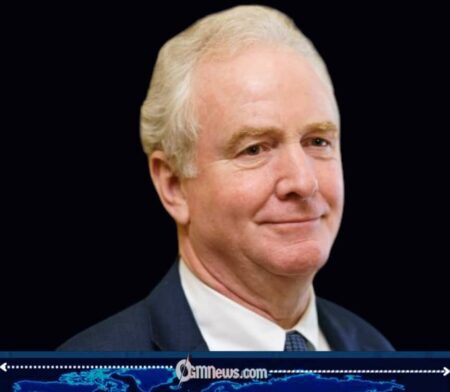
Reckless accusations exploded across Washington after U.S. Senator Chris Van Hollen claimed Israeli Prime Minister Benjamin Netanyahu had waited decades to find an American president “stupid enough and reckless enough” to support military confrontation with Iran. The remark, aimed directly at President Donald J. Trump’s approach toward escalating Middle East tensions, has intensified political divisions in the United States while reigniting global fears surrounding a potential regional conflict involving Iran, Israel, and American military power.
The controversy emerged during renewed debates over Iran’s nuclear ambitions and growing concerns that diplomatic pathways between Tehran and Western powers are rapidly narrowing. Supporters of President Trump condemned the senator’s language as inflammatory and disrespectful, arguing that strong deterrence against Iran remains necessary for regional stability and global security. Critics, however, insist that increasingly aggressive rhetoric from political leaders risks normalizing the possibility of another large-scale conflict in the Middle East.
Political Fallout And Escalating Middle East Tensions
For years, Prime Minister Netanyahu has consistently warned about the dangers of Iran’s nuclear program and has publicly urged stronger international pressure against Tehran. Israeli officials have repeatedly argued that Iran’s military capabilities and regional influence pose an existential threat to Israel’s security. Iran, meanwhile, continues maintaining that its nuclear program is intended for peaceful civilian purposes, despite ongoing skepticism from Western governments and intelligence agencies.
Reckless political rhetoric surrounding the issue has now become a central point of concern among diplomats and analysts monitoring the region. Critics warn that public exchanges involving threats, insults, and accusations could further reduce opportunities for meaningful negotiations between global powers and Iran. Supporters of tougher policies counter that diplomatic caution alone has failed to restrain Tehran’s activities over the years, making stronger positioning unavoidable.
Reckless: America’s Deepening Divide Over Foreign Policy
The senator’s remarks also reflect broader divisions within the United States regarding America’s role in international conflicts and military intervention abroad. Following years of wars in Iraq and Afghanistan, many Americans remain wary of another prolonged Middle East confrontation. At the same time, others argue that failing to confront perceived threats early could create even greater dangers later.
Political analysts say the current debate extends beyond Iran itself and touches on larger questions about presidential authority, alliance obligations, and the balance between diplomacy and military deterrence. With tensions rising globally and election-season politics intensifying domestically, statements from prominent leaders are increasingly scrutinized not only for their political impact but also for their influence on international stability.
As Washington continues arguing over foreign policy strategy, Reckless may become one of the defining political words attached to this latest chapter of U.S.-Iran tensions. Whether the controversy leads to deeper diplomatic engagement or further escalation, global observers remain aware that political rhetoric in moments like this can quickly move from television debates to real geopolitical consequences. OGM News will continue monitoring developments as the story unfolds.

[…] […]