

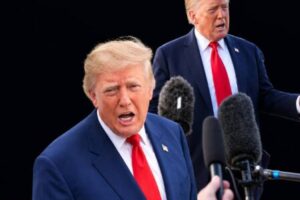





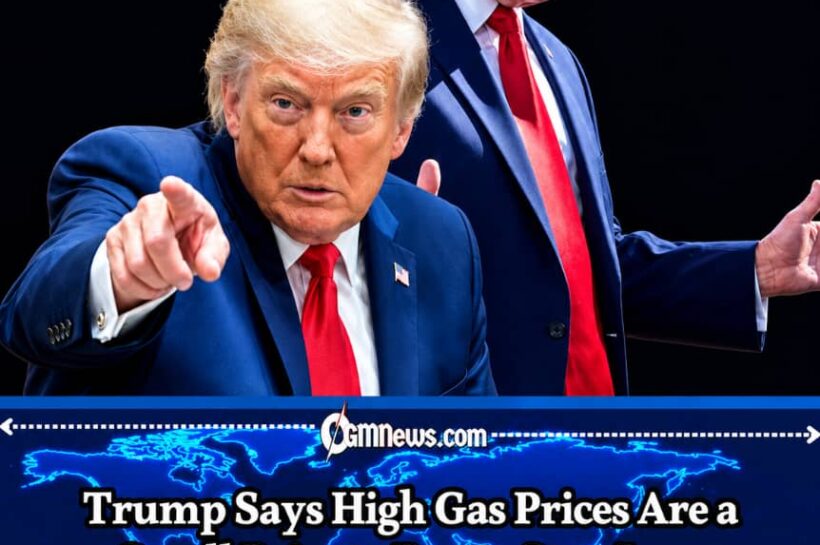




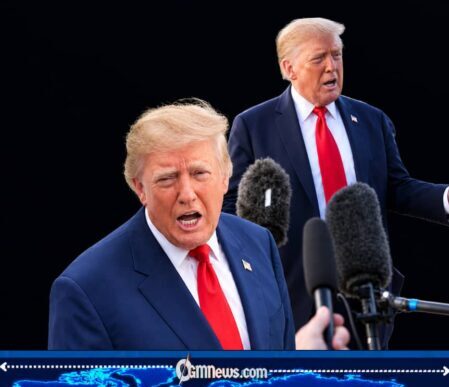
President Donald Trump has made remarks suggesting that the United States could move rapidly to take control of Cuba, a statement that has drawn immediate attention due to its far-reaching geopolitical implications. The comment, delivered within a broader foreign policy discussion, has sparked debate among analysts, policymakers, and observers who note the complexity of any such action in the modern international system.
The statement has been widely interpreted as political rhetoric rather than a concrete operational plan, with experts emphasizing that any major shift involving another sovereign nation would involve extensive diplomatic, legal, and strategic considerations. The layered history between the two countries adds further weight to the discussion.
President Donald Trump’s remarks come at a time when global tensions and regional alignments continue to evolve, making statements of this nature particularly significant in shaping public discourse and international perception.
HISTORICAL BACKGROUND OF U.S.–CUBA RELATIONS
Relations between the United States and Cuba have been shaped by decades of political tension, economic sanctions, and intermittent diplomatic engagement. These dynamics have created a complex framework that influences how modern statements and policies are interpreted.
The legacy of the Cold War, including key events such as the Cuban Missile Crisis, continues to cast a long shadow over bilateral relations, reinforcing the sensitivity of any discussion involving control or intervention.
Over time, periods of cautious rapprochement have alternated with renewed restrictions, illustrating how policy direction can shift depending on leadership priorities and geopolitical circumstances.
PRESIDENT DONALD TRUMP AND FOREIGN POLICY RHETORIC
President Donald Trump has frequently employed assertive language when discussing international affairs, often framing issues in terms of strength, speed, and decisiveness. This communication style has become a defining feature of his public statements on foreign policy matters.
President Donald Trump’s comments regarding Cuba reflect this broader pattern, where strong phrasing is used to convey urgency and authority, even when the underlying policy mechanisms remain undefined or subject to institutional processes.
President Donald Trump’s approach continues to generate debate over the role of rhetoric in shaping both domestic understanding and international reactions to U.S. policy positions.
INTERNATIONAL RESPONSE AND LEGAL CONSIDERATIONS
President Donald Trump’s statement has prompted varied reactions from international observers, many of whom highlight the importance of sovereignty, international law, and diplomatic protocol in addressing cross-border issues.
Legal frameworks governing international relations place significant constraints on unilateral actions, requiring adherence to treaties, alliances, and global norms designed to maintain stability.
Diplomatic experts note that statements suggesting rapid action can influence perceptions even if no immediate policy change follows, underscoring the power of political messaging.
PRESIDENT TRUMP AND POLICY IMPLICATIONS
President Donald Trump’s remarks have led to renewed examination of U.S. strategic priorities in the Western Hemisphere, particularly in relation to neighboring regions and longstanding geopolitical interests.
President Donald Trump’s perspective often emphasizes national security and influence, which can shape how such statements are framed and interpreted within broader policy discussions.
President Donald Trump’s comments contribute to ongoing debates about the balance between political messaging and actionable foreign policy decisions in complex international environments.
REGIONAL STABILITY AND FUTURE OUTLOOK
President Donald Trump’s statements have added to broader discussions about regional stability in the Caribbean, where economic, political, and security considerations are closely interconnected.
Experts emphasize that maintaining stability in the region requires a careful combination of diplomacy, cooperation, and respect for international norms, particularly in sensitive geopolitical contexts.
The future of U.S.–Cuba relations will likely continue to evolve within this complex framework, shaped by both political leadership and the realities of the global international system.

Logging in is a breeze and the site stability is amazing even during peak hours....