



























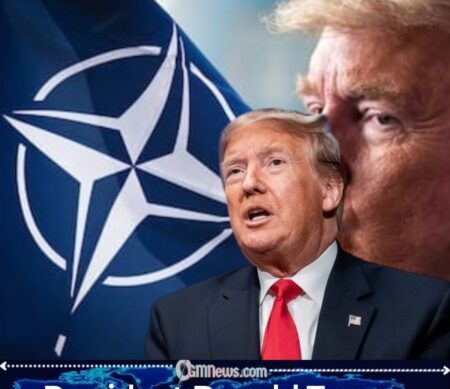
President Donald Trump has stated that the United States may take action against members of NATO that he believes did not offer sufficient support during tensions involving Iran. The remark has quickly drawn attention across diplomatic and political circles, raising questions about alliance unity and the expectations placed on member states during periods of conflict.
The statement comes at a time when NATO’s principle of collective defense remains central to its identity, yet interpretations of what constitutes adequate support can vary among member countries. This divergence often reflects differing national interests, domestic considerations, and strategic priorities.
President Donald Trump’s comments have therefore sparked renewed debate about how alliances function under pressure and how disagreements are managed within multilateral frameworks.
NATO Unity Under Pressure
President Donald Trump’s warning has brought renewed focus to the cohesion of NATO, an alliance built on cooperation and mutual defense. While member states are committed to collective security, the degree and form of their support can differ based on political and military considerations.
Such differences are not uncommon in large alliances, where consensus must be balanced with national sovereignty.
The current situation highlights the challenges of maintaining unity when perspectives diverge on key international issues.
President Donald Trump and Diplomatic Signals
President Donald Trump’s remarks may also be interpreted as a diplomatic signal aimed at reinforcing expectations within NATO. Public statements from leaders often serve to communicate priorities and influence the behavior of allies.
Diplomatic messaging can play a significant role in shaping negotiations and future cooperation.
Understanding the intent behind such statements is essential in assessing their potential impact.
Reactions from NATO Member States
President Donald Trump’s comments have prompted varied reactions among NATO members, with some emphasizing the importance of solidarity while others highlight the need for balanced decision-making.
Allies may respond differently depending on their political contexts and strategic interests.
These reactions illustrate the diversity of perspectives within the alliance and the complexity of aligning them.
President Donald Trump and Strategic Implications
President Donald Trump’s stance carries broader strategic implications, particularly in terms of how the United States engages with its allies. Actions or policies perceived as punitive could influence future cooperation and trust.
At the same time, such statements may encourage discussions about burden-sharing and responsibilities within the alliance.
The strategic dimension adds depth to the ongoing debate about NATO’s role and direction.
President Donald Trump is expected to continue addressing the issue, with further developments likely depending on diplomatic discussions and the responses of NATO members. The situation remains fluid as both sides consider their next steps.
Observers will be watching closely to see how the alliance navigates this challenge and whether it leads to policy adjustments or renewed commitments.
Ultimately, the episode underscores the delicate balance between national interests and collective security in international relations.

The weekly tournaments here keep me coming back because the prize pools are surprisingly generous....