











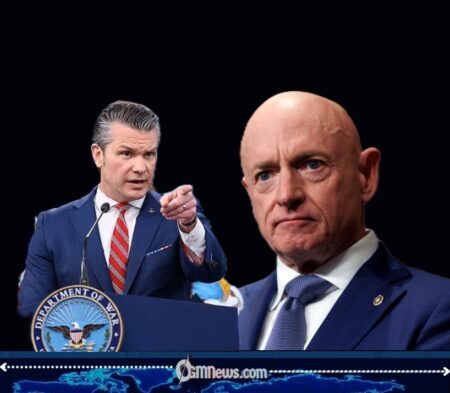
Stockpile anxiety erupted into a full-scale political confrontation on Sunday after Defense Secretary Pete Hegseth publicly accused Senator Mark Kelly of discussing classified Pentagon briefing details during a televised interview. What started as a debate over America’s shrinking missile reserves quickly evolved into another bitter chapter in the escalating war between the Trump administration and congressional Democrats, with legal threats, constitutional arguments, and accusations of political intimidation dominating the fallout.
The controversy exploded after Kelly appeared on CBS’ Face the Nation and warned that recent military operations had placed serious pressure on U.S. weapons reserves. Referring to Pentagon briefings, Kelly described the state of American missile stockpiles as “shocking,” mentioning systems such as Tomahawk missiles, THAAD interceptors, Patriot rounds, and Army Tactical Missile Systems. The comments triggered an immediate response from Hegseth, who accused the senator of “blabbing” classified information and announced that Pentagon lawyers would review the remarks.
Pentagon Pressure and the Public Briefing Dispute
Kelly strongly rejected the accusation, arguing that the same concerns had already been discussed during public congressional hearings days earlier. The Arizona Democrat pointed to previous exchanges in which Pentagon officials themselves admitted that replenishing some military inventories could take years. He also renewed criticism of President Donald J. Trump, claiming the administration had entered conflicts abroad without clearly explaining long-term strategic objectives to the American people.
Stockpile concerns have increasingly become part of a larger debate surrounding America’s military readiness amid tensions in the Middle East and Asia. Defense analysts have warned for months that supplying allies overseas while maintaining deterrence capabilities against China presents a major logistical challenge for the Pentagon. Several recent congressional discussions have focused on the slow pace of missile production and the growing strain placed on U.S. defense manufacturing capacity.
The public clash also reflects the Trump administration’s increasingly aggressive posture toward critics within government institutions. Hegseth’s online response escalated tensions immediately, with supporters portraying Kelly’s comments as reckless while critics accused the Pentagon of weaponizing national security claims against political opponents. Legal experts noted that proving an actual disclosure of classified information could become difficult if the discussed material was already addressed during open hearings.
Classified Politics and an Expanding Feud
The latest confrontation did not emerge in isolation. The feud between Hegseth and Kelly has been building for months following a controversial video released by Democratic lawmakers encouraging military personnel to reject unlawful orders from federal authorities. The video triggered outrage among Trump allies, with the president at one point accusing participating lawmakers of engaging in “sedition,” though later softening some of his rhetoric after public backlash.
Classified disputes have since merged with broader constitutional questions involving free speech, military authority, and the limits of political retaliation. Earlier this year, federal judges reportedly expressed skepticism toward Pentagon efforts to discipline Kelly over his public statements and prior criticisms of the administration. One federal ruling temporarily blocked attempts to retroactively demote the retired Navy captain, citing potential violations of First Amendment protections for military retirees.
The controversy also arrives at a politically delicate moment for the administration as debates continue over defense spending, overseas military involvement, and the long-term sustainability of America’s weapons production pipeline. Critics argue that the administration’s public feuds risk distracting from serious strategic discussions about deterrence and preparedness, while supporters insist tighter discipline is necessary when discussing sensitive national security matters in public forums.
As Washington’s political and military tensions continue colliding in public view, the battle over America’s shrinking Stockpile may become more than just a dispute over missile numbers. It could evolve into a defining test of how far national security arguments can be used in partisan warfare, especially during a period when both domestic political divisions and global military pressures appear to be intensifying simultaneously


[…] […]