















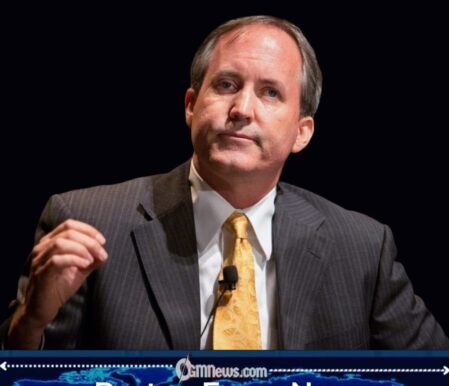
Paxton is facing a challenge that many political strategists consider more dangerous than opposition attacks: public resistance from within his own political family. A surprising announcement from longtime Republican leader Glen Whitley has sent fresh shockwaves through Texas politics, raising questions about party unity and creating an unexpected opportunity for Democratic contender James Talarico. While Paxton remains a dominant figure among many conservative voters, the latest development has sparked debate over whether growing cracks inside Republican ranks could become a larger story than the campaign itself.
Conservative Texas Judge Drops Political Bombshell on Paxton
For years, Glen Whitley was viewed as a respected Republican voice in one of Texas’ most conservative regions. His decision to publicly distance himself from Paxton therefore carried significance far beyond a routine political endorsement. In a political climate where party loyalty is often expected, Whitley’s refusal to support the Republican nominee immediately attracted attention from both supporters and critics of the attorney general.
The announcement quickly became a major talking point among campaign observers. Some Republicans dismissed the development as the personal opinion of a retired political figure, while others viewed it as evidence of deeper concerns that have quietly existed within parts of the party. Regardless of interpretation, the statement placed Paxton in the uncomfortable position of responding not to Democratic criticism but to skepticism from a fellow conservative.
What makes the situation particularly noteworthy is the symbolism attached to Whitley’s decision. Texas Republicans have traditionally benefited from strong internal unity during statewide elections. When prominent figures begin publicly breaking ranks, political analysts often view such moments as warning signs that broader concerns may exist beneath the surface. Whether those concerns are widespread remains uncertain, but the conversation itself has already shifted attention away from traditional partisan battles.
Talarico Benefits as Paxton’s Conservative Firewall Shows Signs of Collapse
For Talarico, the development represents a political gift that campaigns rarely receive. The Democratic candidate has spent months attempting to present himself as a figure capable of attracting support beyond the traditional Democratic coalition. Endorsements and favorable comments from individuals associated with Republican politics help reinforce that message in ways that campaign advertisements often cannot.
Recent political developments suggest that Whitley’s announcement may not be occurring in isolation. Other prominent Republicans and conservative figures have also expressed reservations about Paxton, creating a narrative that extends beyond a single disagreement. While Paxton continues to enjoy substantial support among grassroots conservatives and maintains significant influence within the party, the growing list of critics has created a storyline that his opponents are eager to amplify.
Political observers caution that endorsements alone rarely determine election outcomes. Texas remains a state where Republicans have consistently achieved statewide success, and Paxton retains a loyal base that has remained supportive through previous controversies. Nevertheless, campaigns are often shaped by perception as much as by policy, and perceptions can change rapidly when respected figures begin challenging expectations. The emerging debate is no longer simply about Democrats versus Republicans; it is increasingly about which vision of conservatism Texas voters prefer moving forward.
As the campaign enters a more intense phase, both sides are likely to treat this moment as a test of momentum. Paxton’s supporters will seek to demonstrate that isolated defections do not represent the broader Republican electorate, while Talarico’s campaign will attempt to transform symbolic victories into measurable political gains. For now, one thing is clear: the most unexpected twists in this race are no longer coming from opposing parties. They are coming from inside the Republican tent itself, and Texas voters will be watching closely to see whether these political tremors fade away or develop into something much larger.
Logging in is a breeze and the site stability is amazing even during peak hours....