

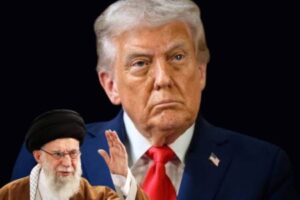
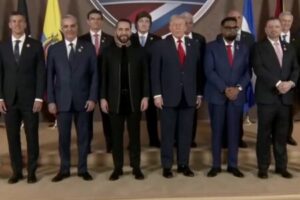


Maduro Seized and USA on the Throne in Venezuela | OGM News — The U.S. military operation in Venezuela and the reported capture of President Nicolás Maduro have sparked protests across the globe. From major Latin American capitals to cities in Europe and North America, demonstrators have voiced outrage over what they perceive as a violation of Venezuela’s sovereignty. Governments and civil society groups alike have condemned the strikes, calling for adherence to international law and a peaceful resolution to the crisis. The rapid global mobilization reflects both the severity of the U.S. action and widespread concern over the precedent it sets for unilateral military interventions.
Global Outcry and Times Square Demonstrations
Maduro Seized and USA on the Throne in Venezuela | OGM News — In the United States, the protests have been particularly visible in major urban centers. In New York’s Times Square, demonstrators gathered in large numbers, chanting slogans denouncing President Trump’s operation and carrying signs demanding an immediate withdrawal from Venezuela. Organizers described the protest as a “call for accountability” and an effort to ensure that Congress exercises its constitutional authority over matters of war and peace. The energy of the crowd, amplified by social media, drew significant media attention and underscored the deep domestic divisions over the president’s foreign policy approach.
Maduro Seized and USA on the Throne in Venezuela | OGM News — The demonstrations were not limited to a single day. Throughout the weekend, anti-war groups coordinated nationwide actions, from vigils to street marches, to maintain pressure on the administration. In parallel, Venezuelan diaspora communities in the U.S. expressed a mix of support and concern, reflecting complex perspectives on Maduro’s regime and the U.S. intervention. Analysts note that the protests, both domestically and internationally, have created a highly visible platform for public scrutiny of the military operation, emphasizing the broader geopolitical and legal implications of the U.S. actions in Venezuela.
The United States has carried out a large‑scale military operation in Venezuela that has resulted in the capture and removal of Venezuelan President Nicolás Maduro and his wife from the country, U.S. President Donald J. Trump announced on January 3, 2026. According to the U.S. government, the airstrikes and raid—which included strikes on key military targets—were designed to dismantle an alleged network tied to international crime and secure a transition of power in Venezuela. President Trump stated the U.S. will oversee Venezuelan governance temporarily to facilitate a “safe, proper and judicious transition.” Reuters
The Military Operation: What Happened and How It Unfolded
Maduro Seized and USA on the Throne in Venezuela | OGM News — In the early hours of January 3, reports emerged of multiple explosions across Caracas and surrounding regions, accompanied by aircraft flying at low altitude, in what Venezuelan officials describe as aerial strikes. The U.S. military operation—dubbed by some analysts as a decisive strike against the Venezuelan government—targeted strategic locations including military installations within the capital. El País
Shortly thereafter, President Trump announced on social media and later at a news conference that Venezuelan President Nicolás Maduro and his wife, First Lady Cilia Flores, had been captured and transported out of Venezuela. According to U.S. officials, they are being taken to face criminal charges in the United States, including narcoterrorism and conspiracy to traffic illegal drugs. The operation involved air support and rapid deployment forces, and at least one U.S. helicopter sustained damage but continued its mission.
Maduro Seized and USA on the Throne in Venezuela: U.S. Justifications
President Trump framed the military action as necessary for global and hemispheric security, announcing that the U.S. would “run” Venezuela temporarily until a transition government could be established. The Guardian At a press briefing, he reiterated that the United States would designate provisional leadership and did not rule out the deployment of additional troops, underscoring that the operation was carried out with “expertise” and precision. KCCU
Trump also invoked historical U.S. influence in the Western Hemisphere and defended the decision on security grounds, emphasizing alleged threats posed by the Maduro regime and citing long‑standing indictments against Maduro for narcotics and arms charges.
Maduro Seized and USA on the Throne in Venezuela: International Reactions
The Venezuelan government and allied nations condemned the military action as a violation of sovereignty and international law. Caracas officials described the strikes as a grave aggression and demanded proof of life for Maduro and his wife. Europa Press
International responses were sharply divided: several Latin American leaders and governments decried the operation as an unacceptable breach of international norms, warning of destabilization across the region. Others called for diplomatic interventions through the United Nations, highlighting the operation’s potential impact on global stability and the sanctity of national borders.
Legal Controversies and Constitutional Questions
Maduro Seized and USA on the Throne in Venezuela | OGM News — Legal experts and international law scholars have raised concerns about the legality of the United States conducting a military invasion of a sovereign nation without explicit authorization from the U.S. Congress or a United Nations mandate. Critics contend that such actions may contravene the UN Charter’s provisions prohibiting the use of force in the absence of self‑defense or Security Council approval.
In Washington, lawmakers expressed mixed views: some praised the decisive action, while others questioned the lack of congressional authorization and the broader political ramifications of unilateral military intervention. AP News
Oil, Economics, and Future U.S. Involvement
Maduro Seized and USA on the Throne in Venezuela | OGM News — President Trump highlighted Venezuela’s vast oil reserves as a key consideration in the post‑operation period, indicating that U.S. energy companies could play a major role in rebuilding and exploiting energy infrastructure. Trump asserted that the United States would not incur lasting operational costs because revenue from petroleum production would offset expenditures.
Analysts note that U.S. involvement in Venezuelan oil markets could reshape global energy dynamics, particularly if American firms gain significant influence in production and distribution. However, the potential for extended occupation and resistance remains a subject of debate among foreign policy experts.
Domestic and Regional Security Concerns
Maduro Seized and USA on the Throne in Venezuela | OGM News — The situation has sparked protests in several countries, with activists opposing foreign military intervention and calling for respect for national sovereignty. In the United States, political commentators and civil society groups are already debating the implications of U.S. military engagement in Latin America—drawing parallels to earlier conflicts in the Middle East and questioning the strategy’s long‑term consequences.
Latin American nations have voiced deep concerns about regional stability, with some governments urging multilateral negotiations to de‑escalate tensions and prevent further conflict. Al Jazeera
Maduro Seized and USA on the Throne in Venezuela: Uncertain Path Forward
Maduro Seized and USA on the Throne in Venezuela | OGM News — With Maduro’s capture and the U.S. assuming de facto control, Venezuela enters an uncertain phase. It is unclear how Venezuelan institutions will function in the immediate future or who will lead a transitional government. The situation remains fluid, with continued international calls for transparency, respect for legal norms, and protection of civilian populations in the midst of extraordinary geopolitical shifts.
The implications of this unprecedented military engagement by the United States are likely to reverberate for years, influencing relations throughout the Americas and beyond.